Expat Networking and Social Life in CartagenaVida social y networking para expatriados en Cartagena
Mike Chartrand
By Mike Chartrand · Updated May 2026
Specific question while you read? Ask Catalina, the Cartagena Guide concierge.¿Pregunta específica mientras lees? Pregúntale a Catalina, la concierge de Cartagena Guide.Chat with Catalina ›Habla con Catalina ›
Last updated: May 2026. Building a social circle in Cartagena is very doable, but it works differently here than in an inland city like Medellín or Bogotá. The foreign community skews toward people who are passing through or only here part of the year, so the trick is knowing which channels hold steady and how to get past the tourist bubble into real costeño life. This guide is the honest version.
Arriving somewhere new without an existing network is the part nobody warns you about. Cartagena has plenty of social opportunity, warm locals, and a steady churn of foreigners coming and going. The catch is that "coming and going" part. If you understand the shape of the scene before you arrive, you can build something real here within weeks rather than spending months wondering why it feels harder than the Instagram version suggested.
The foreign community here is different
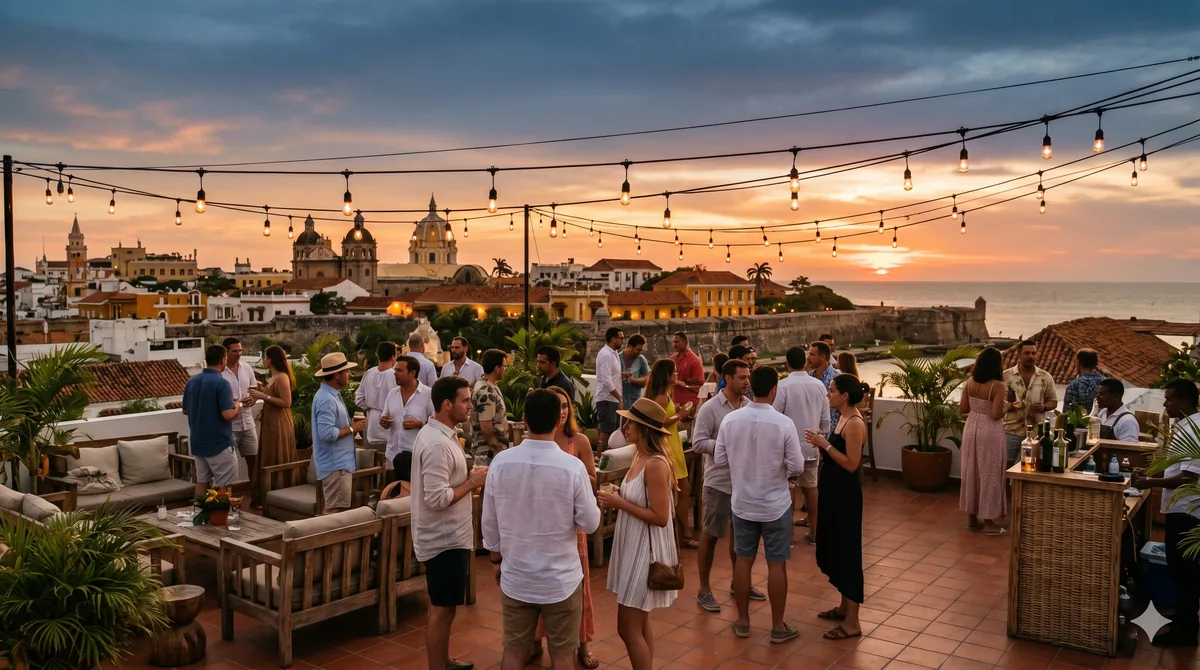
Be honest with yourself about who you are joining. Cartagena's foreign population does not look like the long-term remote-worker scene you find inland. Here it skews toward four overlapping groups: tourists on short stays, snowbirds who come for the dry season and leave when it heats up, second-home owners who appear for a few weeks at a time, and hospitality entrepreneurs who run hotels, restaurants, tour operations, and rentals.
What that means in practice: the scene is more transient than in Medellín or Bogotá. The person you click with at a beach gathering in January may be back in Toronto or Miami by April. Long-term, year-round foreign residents exist, but they are a smaller and quieter slice than the visible tourist-facing crowd suggests. None of this is a problem once you expect it. It just changes your strategy. You stop chasing the foreign crowd as your primary circle and start anchoring yourself in things that do not leave when the season ends, which mostly means Colombians and routine-based groups.
The upside of a transient scene is that newcomers are normal. Nobody thinks it is strange that you do not know anyone yet, because half the foreigners here arrived recently too. Introducing yourself is expected, not awkward.
The channels that actually work
Forget the idea that there is one master expat club to join. In Cartagena you assemble a circle out of several smaller channels, each of which reliably produces contacts.
Meetup-style and interest groups
General meetup-style gatherings (casual mixers, newcomer drinks, photography walks, board-game nights) come and go in Cartagena, and activity is seasonal. Treat them as a starting point rather than a foundation. They are good for a first handful of contacts when you land, less reliable as the thing your whole social life rests on. Check the usual online listings, but do not be surprised if a group is busy one month and quiet the next.
Language exchange and intercambio
If you are learning Spanish, and you should be, intercambio events are among the most efficient social tools you have. The format does the work for you: locals want to practice English, you want to practice Spanish, and both sides are invested in actually talking. These tend to be more stable than generic expat mixers because they draw a local crowd that lives here year-round. Pair them with classes for momentum. See our guide to studying Spanish in Cartagena for where to start.
Say this to start a conversation at a language exchange (intercambio)
Hola, soy nuevo en Cartagena. Estoy aprendiendo español, aunque todavía me falta mucho. ¿Tú hablas inglés? Podemos practicar los dos, si quieres.
Hello, I am new in Cartagena. I am learning Spanish, although I still have a long way to go. Do you speak English? We can both practice, if you want.
Fitness, running, and beach-volleyball groups
Activity-based groups produce the most durable friendships, because they put you in the same place on a regular schedule with the same people. Cartagena's coastline and warm evenings make this easy. Running and walking groups gather along the Castillogrande and Bocagrande waterfronts, beach volleyball is a natural fixture on the sand, and gyms and functional-fitness boxes carry the same tight-community feeling here that they do anywhere. The shared-effort model creates connections fast, and crucially these groups are mostly local, so they do not empty out when tourist season ends.
Hospitality-industry circles
This is a Cartagena-specific channel that does not exist in the same way inland. Because so much of the foreign community runs hotels, restaurants, bars, and tour businesses, there is a real social fabric among hospitality people. If you work in or near that world, or you are simply a regular and friendly face at the same handful of places, you plug into a surprisingly connected network. Owners and managers know each other, and they tend to welcome newcomers who treat their staff and their city well.
Church, community, and second-home-owner networks
For some people, a church or faith community is the single fastest route into a ready-made local network, and Cartagena has active congregations across denominations. Separately, second-home owners often form their own loose networks within particular buildings and condominium developments in Bocagrande, Castillogrande, and Manga. If you buy or rent long-term in one of those buildings, the people in your tower can become your first circle almost by default.
Say this when introducing yourself to a neighbor in your building
Hola, mucho gusto. Soy Mike, acabo de mudarme al piso 8. Soy de Canadá pero me quedé viviendo aquí en Cartagena. Si sabe de algún grupo de vecinos o algo por WhatsApp del edificio, me interesaría entrar.
Hello, nice to meet you. I am Mike, I just moved to the 8th floor. I am from Canada but I am staying here in Cartagena. If you know of a neighbors group or a building WhatsApp chat, I would like to join.
Meeting Colombians, not just foreigners
If you build your life only out of other foreigners in Cartagena, you are building it on the most transient layer of the city. Costeños are the part that stays. They are also, genuinely, the warmest thing about the place. Hospitality on the coast is a core social value rather than a transaction, and it is normal to be folded into family gatherings, weekend plans, and casual invitations within a few weeks of meeting someone, provided you show real interest in them and the city.
Spanish is the accelerant. This is the single biggest lever you have. Even rough, conversational Spanish, enough to joke, complain about the heat, and ask about someone's family, completely changes how quickly you are accepted. Costeño Spanish is fast and dropped-consonant, so it takes some ear-training, but the effort itself is what locals respond to. Nobody expects you to be fluent. They notice that you are trying.
What accelerates local friendships: speaking Spanish even badly, going where locals actually go instead of defaulting to tourist-facing spots, showing up consistently so you become a familiar face, and being curious about the food and the music rather than treating them as backdrop. What slows it down: staying inside the foreigner bubble, treating Cartagena as a cheaper version of somewhere else, and spending your social energy complaining about heat or bureaucracy.
Where in Cartagena things tend to happen
Cartagena's social geography matters. The three zones where expats and locals mix most naturally are the Walled City (Centro Histórico), Getsemaní, and Bocagrande, and each has a different character.
The Walled City (Centro Histórico). Plaza de los Coches, Plaza de la Trinidad, the café-lined streets of San Diego and Santo Domingo, and the outdoor seating strips along Calle del Colegio are where a lot of the visible social life happens, especially after 6pm when the heat drops. The foot traffic here is heavy and cosmopolitan, and a bar or café stool is a low-effort conversation starter. The catch is that most of the people around you are visitors. Use the walled city for casual contacts, not for building a durable circle.
Getsemaní. Just outside the walls, Getsemaní has become Cartagena's creative and arts neighborhood, with a mix of local residents, Colombian artists and small-business owners, and long-term foreign residents. The vibe is more lived-in than the Centro. Street murals, small bars, and the bohemian market scene attract people who are actually from Cartagena, not just passing through. This is the zone most likely to put you in contact with costeños who stay year-round.
Bocagrande and the waterfront. The high-rise residential strip, the Bocagrande seawall (malecón), and the beach promenade function more like a neighborhood and less like a tourist attraction than the Walled City. Early-evening walks along the seawall are a genuine local activity: families, runners, dog owners, couples. Showing up consistently here is how you become a familiar face to the people who live in those towers.
Getting out of the tourist bubble
The single biggest trap for newcomers is mistaking the Walled City and Bocagrande tourist corridor for the whole of Cartagena. The Centro Histórico is beautiful and the Bocagrande high-rise strip is convenient, but both are priced and oriented for visitors. If your entire social life happens inside those few square blocks, you will mostly meet other people who are also just visiting, and you will pay tourist prices to do it.
The fix is geographic as much as social. Spend time in neighborhoods where people actually live: Manga's leafy residential streets, Crespo near the airport, Getsemaní just outside the walls (gentrifying, but still a real neighborhood with real residents), and the quieter residential pockets of Castillogrande. The further your routines drift from the cruise-ship blocks, the more your contacts shift from fellow tourists to people who live here. Our neighborhoods guide breaks down who lives where and what each area feels like day to day, which is the practical starting point for deciding where to base yourself.
Groups for women, families, and retirees
Different stages of life have different on-ramps, and Cartagena has a few worth knowing about.
Women's groups: Informal networks of foreign and local women organize coffees, beach days, and support for newcomers. These tend to spread by word of mouth and through private online groups rather than public listings, so the fastest way in is to ask one person and let the introductions cascade.
Families: If you arrive with kids, the international and bilingual schools are social hubs in their own right. The parent networks around them are often the most stable foreign-and-local social circles in the city, precisely because families are the segment most likely to stay year-round rather than seasonally. Playground regulars, school WhatsApp groups, and weekend kids' activities do a lot of the introducing for you.
Older arrivals and retirees: Cartagena is a popular landing spot for retirees and snowbirds, so you are in good company. Second-home-owner networks, condominium communities, and faith communities tend to be the most welcoming entry points, and the pace of socializing here, long lunches, evening gatherings once the heat breaks, suits people who are not racing to a desk in the morning.
Dating and friend apps
The usual apps work in Cartagena the way they work anywhere, with a coastal twist. Mainstream dating apps are widely used by both locals and visitors, and friend-finding and language-partner apps can connect you with costeños before you even land, which is a low-pressure way to have a first coffee already lined up for week one. Two honest caveats: the tourist-heavy nature of the city means a meaningful share of app activity is people on short stays, so set expectations accordingly, and the usual common-sense safety habits apply, meet in public, tell someone where you are going. Used as one channel among several, apps are a fine supplement. As your only strategy in a transient city, they will frustrate you.
Online communities and where things get posted
A lot of Cartagena's foreigner-and-newcomer coordination happens in online groups, mostly Facebook groups and WhatsApp communities oriented around the city, expats, housing, and specific interests. This is where meetups get announced, housing leads surface first, and newcomers ask the real questions: which neighborhood is calm at night, which vet people use, where to find decent Spanish classes, who to call when the power goes out. The pattern is to join a few of these early, read for a while to get the lay of the land, then post a short introduction. You will usually get useful answers quickly. Treat these groups as a noticeboard and a starting point for in-person contact, not as the social life itself.
Costeño etiquette and the rhythm of the day
Two things shape Cartagena's social life more than anything: the warmth of the people and the heat of the climate. Both reward you for adjusting to them.
On etiquette: greetings matter. A handshake, a cheek kiss between women or between a man and a woman, asking how someone and their family are doing before getting to business, all of this is normal and noticed. Costeño culture is relationship-first. Plans are often loose and run late, and "ahora" or "ahorita" rarely means right now. Read this as flexibility rather than flakiness and you will be far less frustrated.
A few phrases that go a long way with costeños
¿Y la familia, todo bien? · ¡Qué calor tan berraco! · ¿Y tú de dónde eres, de aquí de Cartagena? · Me está gustando mucho este lugar.
How is the family, all good? · What crazy heat! · Are you from here, from Cartagena? · I am really liking this place.
Costeño Spanish moves fast and drops consonants at the ends of words ("¿Todo bien?" sounds more like "¿To bien?"). Asking someone to speak a little slower, "¿Me puede hablar un poquito más despacio?", is completely normal and costeños will respect it. They know their accent is an acquired taste.
On the heat: it dictates the clock. Midday is for staying out of the sun, and real socializing tends to happen in the evening once it cools down, which is why dinners, drinks, and gatherings skew late. Lean into the evening rhythm rather than fighting it. If you try to run your social life on a 9-to-5 northern schedule, you will be tired, sweaty, and out of sync with everyone around you.
Pacing your expectations
Building a genuine circle anywhere takes time, and Cartagena's transient layer means you should plan for some turnover in your contacts, especially the foreign ones, over your first year. That is normal here and not a sign you are doing it wrong. The way to insulate yourself is to invest early in the things that stay: Colombian friends, routine-based groups, and a couple of neighborhoods where you are a known face.
Give yourself three to six months to feel genuinely settled into a social rhythm. The first month will feel slower than you hoped. By month three, if you have shown up consistently and put even a little effort into Spanish, you will likely have more invitations than you can accept. Consistency beats intensity. The person who turns up to the same run group every week for two months ends up far more connected than the one who attends ten different one-off mixers and never goes back.
If you are still in the planning stage, our guide to relocating to Cartagena covers the logistics of the move itself, and the Spanish guide is the single best investment you can make in your social life here before you even arrive.
Catalina is our concierge. Ask her about visas, neighborhoods, healthcare, prices, anything Cartagena. She answers in chat or WhatsApp, English or Spanish, free.Catalina es nuestra concierge. Pregúntale sobre visas, barrios, salud, precios, cualquier cosa de Cartagena. Responde por chat o WhatsApp, en inglés o español, gratis.
Specific question while you read? Ask Catalina, the Cartagena Guide concierge.¿Una pregunta específica mientras lees? Pregúntale a Catalina, la concierge de Cartagena Guide.Chat with Catalina ›Habla con Catalina ›
Última actualización: Mayo de 2026. Construir un círculo social en Cartagena es totalmente posible, pero funciona diferente aquí que en una ciudad del interior como Medellín o Bogotá. La comunidad extranjera tiende hacia personas de paso o que están solo parte del año, así que el truco es saber cuáles canales se mantienen estables y cómo salir de la burbuja turística hacia la vida costeña real. Esta es la versión honesta.
Llegar a algún lugar sin una red existente es la parte de la que nadie te advierte. Cartagena tiene mucha oportunidad social, gente local calurosísima, y un flujo constante de extranjeros que van y vienen. El detalle es esa parte de "ir y venir". Si entiendes cómo es la escena antes de llegar, puedes construir algo real aquí en semanas en lugar de pasar meses preguntándote por qué se siente más difícil de lo que Instagram sugería.
La comunidad extranjera aquí es diferente
Sé honesto contigo mismo sobre quién estás conociendo. La población extranjera de Cartagena no se parece a la escena de trabajadores remotos a largo plazo que encuentras en el interior. Aquí tiende hacia cuatro grupos superpuestos: turistas en estadías cortas, "pájaros de nieve" que vienen en la estación seca y se van cuando se pone caluroso, dueños de segunda casa que aparecen por unas pocas semanas a la vez, y emprendedores de hospitalidad que manejan hoteles, restaurantes, operadores de tours y rentales.
Lo que eso significa en la práctica: la escena es más transitoria que en Medellín o Bogotá. La persona con la que conectaste en una reunión de playa en enero puede estar de vuelta en Toronto o Miami en abril. Sí existen residentes extranjeros a largo plazo y durante todo el año, pero son un grupo más pequeño y silencioso de lo que sugiere la multitud visible orientada al turismo. Nada de esto es un problema una vez que lo esperas. Solo cambia tu estrategia. Dejas de perseguir a la multitud extranjera como tu círculo principal y comienzas a anclarte en cosas que no desaparecen cuando termina la temporada, lo que mayormente significa colombianos y grupos basados en rutina.
El lado positivo de una escena transitoria es que los recién llegados son normales. A nadie le parece extraño que no conozcas a nadie aún, porque la mitad de los extranjeros aquí también llegaron recientemente. Presentarte es lo esperado, no algo incómodo.
Los canales que realmente funcionan
Olvídate de la idea de que existe un club de expats maestro al que unirse. En Cartagena armas tu círculo a partir de varios canales más pequeños, cada uno de los cuales produce contactos de manera confiable.
Grupos de Meetup e interés
Los encuentros al estilo Meetup en general (mezclas casuales, drinks para recién llegados, caminatas fotográficas, noches de juegos de mesa) van y vienen en Cartagena, y la actividad es estacional. Trátalos como un punto de partida en lugar de una base. Son buenos para un puñado de contactos iniciales cuando desembarcas, menos confiables como la cosa en la que descansa toda tu vida social. Revisa los listados en línea habituales, pero no te sorprendas si un grupo está activo un mes y tranquilo al siguiente.
Intercambio de idiomas e intercambio
Si estás aprendiendo español, y deberías hacerlo, los eventos de intercambio son una de las herramientas sociales más eficientes que tienes. El formato hace el trabajo por ti: a los locales les gusta practicar inglés, a ti te gusta practicar español, y ambos lados están invertidos en realmente hablar. Estos tienden a ser más estables que mezclas de expats genéricas porque atraen a una multitud local que vive aquí todo el año. Emparéjalos con clases para mantener el ritmo. Mira nuestra guía para estudiar español en Cartagena para saber por dónde comenzar.
Dilo para comenzar una conversación en un intercambio de idiomas
Hola, soy nuevo en Cartagena. Estoy aprendiendo español, aunque todavía me falta mucho. ¿Tú hablas inglés? Podemos practicar los dos, si quieres.
Hello, I am new in Cartagena. I am learning Spanish, although I still have a long way to go. Do you speak English? We can both practice, if you want.
Grupos de fitness, running y voleibol de playa
Los grupos basados en actividades producen las amistades más duraderas, porque te ponen en el mismo lugar en un horario regular con las mismas personas. La costa de Cartagena y las noches cálidas lo hacen fácil. Los grupos de running y caminata se reúnen a lo largo de los frentes acuáticos de Castillogrande y Bocagrande, el voleibol de playa es un elemento natural en la arena, y los gimnasios y cajas de fitness funcional tienen el mismo sentimiento de comunidad cerrada aquí que en cualquier otro lugar. El modelo de esfuerzo compartido crea conexiones rápido, y críticamente estos grupos son mayormente locales, así que no se vacían cuando termina la temporada de turismo.
Círculos de industria hotelera
Este es un canal específico de Cartagena que no existe de la misma manera en el interior. Porque gran parte de la comunidad extranjera maneja hoteles, restaurantes, bares y negocios de tours, existe un tejido social real entre la gente de hospitalidad. Si trabajas en o cerca de ese mundo, o simplemente eres una cara regular y amable en un puñado de lugares, te conectas a una red sorprendentemente conectada. Los dueños y gerentes se conocen entre sí, y tienden a recibir bien a los recién llegados que tratan bien a su personal y su ciudad.
Redes de iglesia, comunidad y dueños de segunda casa
Para algunas personas, una iglesia o comunidad de fe es la ruta más rápida hacia una red local lista para usar, y Cartagena tiene congregaciones activas en todas las denominaciones. Por separado, los dueños de segunda casa a menudo forman sus propias redes sueltas dentro de edificios particulares y desarrollos de condominios en Bocagrande, Castillogrande y Manga. Si compras o rentas a largo plazo en uno de esos edificios, la gente en tu torre puede convertirse en tu círculo inicial casi por defecto.
Dilo cuando te presentas a un vecino en tu edificio
Hola, mucho gusto. Soy Mike, acabo de mudarme al piso 8. Soy de Canadá pero me quedé viviendo aquí en Cartagena. Si sabes de algún grupo de vecinos o algo por WhatsApp del edificio, me interesaría entrar.
Hello, nice to meet you. I am Mike, I just moved to the 8th floor. I am from Canada but I am staying here in Cartagena. If you know of a neighbors group or a building WhatsApp chat, I would like to join.
Conocer colombianos, no solo extranjeros
Si construyes tu vida solo a partir de otros extranjeros en Cartagena, la estás construyendo sobre la capa más transitoria de la ciudad. Los costeños son la parte que se queda. También son, genuinamente, lo más cálido del lugar. La hospitalidad en la costa es un valor social central en lugar de una transacción, y es normal ser incluido en reuniones familiares, planes de fin de semana e invitaciones casuales dentro de unas pocas semanas de conocer a alguien, siempre que muestres un interés real en ellos y en la ciudad.
El español es el acelerador. Este es el mayor apalancamiento que tienes. Incluso español áspero y conversacional, suficiente para bromear, quejarte del calor y preguntar por la familia de alguien, cambia completamente qué tan rápido eres aceptado. El español costeño es rápido y con consonantes caídas, así que requiere algo de entrenamiento de oído, pero el esfuerzo mismo es lo que los locales notan. Nadie espera que seas fluido. Notan que estás intentando.
Qué acelera amistades locales: hablar español aunque sea mal, ir a lugares donde los locales realmente van en lugar de apegarte a lugares orientados al turismo, aparecer consistentemente para que te conviertas en una cara familiar, y ser curioso sobre la comida y la música en lugar de tratarlas como telón de fondo. Qué lo ralentiza: quedarte dentro de la burbuja extranjera, tratar a Cartagena como una versión más barata de otro lugar, y gastar tu energía social quejándote del calor o la burocracia.
Dónde en Cartagena suceden las cosas
La geografía social de Cartagena importa. Las tres zonas donde expats y locales se mezclan más naturalmente son la Ciudad Amurallada (Centro Histórico), Getsemaní y Bocagrande, y cada una tiene un carácter diferente.
La Ciudad Amurallada (Centro Histórico). Plaza de los Coches, Plaza de la Trinidad, las calles llenas de cafés de San Diego y Santo Domingo, y las áreas de asientos al aire libre a lo largo de Calle del Colegio son donde sucede gran parte de la vida social visible, especialmente después de las 6pm cuando baja el calor. El tráfico de peatones aquí es pesado y cosmopolita, y un taburete de bar o café es un iniciador de conversación sin esfuerzo. El detalle es que la mayoría de las personas alrededor tuyo son visitantes. Usa la ciudad amurallada para contactos casuales, no para construir un círculo duradero.
Getsemaní. Justo afuera de los muros, Getsemaní se ha convertido en el barrio creativo y de artes de Cartagena, con una mezcla de residentes locales, artistas colombianos y dueños de pequeños negocios, y residentes extranjeros a largo plazo. La vibra es más vivida que la del Centro. Los murales callejeros, bares pequeños y la escena del mercado bohemio atraen a personas que realmente son de Cartagena, no solo de paso. Esta es la zona más probable para ponerte en contacto con costeños que se quedan todo el año.
Bocagrande y el frente acuático. La franja residencial de rascacielos, el malecón de Bocagrande y el paseo de la playa funcionan más como un barrio y menos como una atracción turística que la Ciudad Amurallada. Las caminatas de primera hora de la tarde a lo largo del malecón son una actividad genuinamente local: familias, corredores, dueños de perros, parejas. Mostrarte consistentemente aquí es cómo te conviertes en una cara familiar para la gente que vive en esas torres.
Salir de la burbuja turística
La trampa más grande para los recién llegados es confundir la Ciudad Amurallada y el corredor turístico de Bocagrande con la totalidad de Cartagena. El Centro Histórico es hermoso y la franja de rascacielos de Bocagrande es conveniente, pero ambos están precificados y orientados para visitantes. Si toda tu vida social sucede dentro de esos pocos bloques, principalmente conocerás a otras personas que también solo están visitando, y pagarás precios de turista por hacerlo.
La solución es tan geográfica como social. Pasa tiempo en barrios donde la gente realmente vive: las calles residenciales frondosas de Manga, Crespo cerca del aeropuerto, Getsemaní justo afuera de los muros (gentrificándose, pero aún un barrio real con residentes reales), y los bolsillos residenciales más tranquilos de Castillogrande. Cuanto más tus rutinas se alejan de los bloques de cruceros, más tus contactos se desplazan de compañeros turistas a personas que viven aquí. Nuestra guía de barrios desglosa quién vive dónde y cómo se siente cada área día a día, que es el punto de partida práctico para decidir dónde establecer tu base.
Grupos para mujeres, familias y jubilados
Las diferentes etapas de la vida tienen diferentes puntos de entrada, y Cartagena tiene algunos que vale la pena conocer.
Grupos de mujeres: Redes informales de mujeres extranjeras y locales organizan cafés, días de playa y apoyo para recién llegadas. Estos tienden a propagarse de boca en boca y a través de grupos en línea privados en lugar de listados públicos, así que la forma más rápida de entrar es pedirle a una persona y dejar que las presentaciones se desencadenen en cascada.
Familias: Si llegas con niños, las escuelas internacionales y bilingües son centros sociales por su cuenta. Las redes de padres alrededor de ellas suelen ser los círculos sociales más estables entre extranjeros y locales en la ciudad, precisamente porque las familias son el segmento más probable de quedarse todo el año en lugar de estacionalmente. Los asistentes regulares al parque, grupos de WhatsApp de escuelas y actividades infantiles de fin de semana hacen mucha de la presentación por ti.
Llegadas mayores y jubilados: Cartagena es un lugar de aterrizaje popular para jubilados y pájaros de nieve, así que estás en buena compañía. Las redes de dueños de segunda casa, comunidades de condominios y comunidades de fe tienden a ser los puntos de entrada más acogedores, y el ritmo de la socialización aquí, almuerzos largos, reuniones nocturnas una vez que baja el calor, es apropiado para personas que no están corriendo hacia un escritorio en la mañana.
Apps de citas y amigos
Las apps habituales funcionan en Cartagena como funcionan en cualquier lugar, con un giro costero. Las apps de citas convencionales son ampliamente utilizadas tanto por locales como por visitantes, y las apps para encontrar amigos y socios de idiomas pueden conectarte con costeños antes de que siquiera llegues, que es una forma sin presión de tener un primer café ya alineado para la primera semana. Dos advertencias honestas: la naturaleza con mucho turismo de la ciudad significa que una parte significativa de la actividad de app es gente en estadías cortas, así que establece expectativas en consecuencia, y los hábitos habituales de sentido común de seguridad aplican, reúnete en público, cuéntale a alguien a dónde vas. Utilizadas como uno de varios canales, las apps son un buen complemento. Como tu única estrategia en una ciudad transitoria, te frustrarán.
Comunidades en línea y dónde se publican las cosas
Gran parte de la coordinación de extranjeros y recién llegados de Cartagena sucede en grupos en línea, principalmente grupos de Facebook y comunidades de WhatsApp orientadas alrededor de la ciudad, expats, vivienda e intereses específicos. Aquí es donde se anuncian los meetups, salen a la luz los primeros contactos de vivienda, y los recién llegados hacen las preguntas reales: qué barrio es tranquilo por la noche, a qué veterinario va la gente, dónde encontrar clases de español decentes, a quién llamar cuando se va la luz. El patrón es unirte a unos pocos de estos temprano, leer por un tiempo para entender cómo están las cosas, luego publica una introducción corta. Generalmente recibirás respuestas útiles rápidamente. Trata estos grupos como un tablón de anuncios y un punto de partida para contacto en persona, no como la vida social misma.
Etiqueta costeña y el ritmo del día
Dos cosas dan forma a la vida social de Cartagena más que cualquier otra cosa: la calidez de la gente y el calor del clima. Ambas te recompensan por adaptarte a ellas.
En etiqueta: los saludos importan. Un apretón de manos, un beso en la mejilla entre mujeres o entre un hombre y una mujer, preguntar cómo están alguien y su familia antes de llegar al asunto, todo esto es normal y notado. La cultura costeña es primero relaciones. Los planes suelen ser sueltos y salen retrasados, y "ahora" o "ahorita" raramente significa justo ahora. Lee esto como flexibilidad en lugar de incumplimiento y estarás mucho menos frustrado.
Algunas frases que van muy lejos con los costeños
¿Y la familia, todo bien? · ¡Qué calor tan berraco! · ¿Y tú de dónde eres, de aquí de Cartagena? · Me está gustando mucho este lugar.
How is the family, all good? · What crazy heat! · Are you from here, from Cartagena? · I am really liking this place.
El español costeño se mueve rápido y deja caer consonantes al final de las palabras ("¿Todo bien?" suena más como "¿To bien?"). Pedirle a alguien que hable un poco más lentamente, "¿Me puede hablar un poquito más despacio?", es completamente normal y los costeños lo respetarán. Saben que su acento es un gusto adquirido.
En el calor: dicta el reloj. El mediodía es para mantenerse alejado del sol, y la verdadera socialización tiende a suceder por la tarde una vez que se enfría, que es por qué las cenas, tragos y reuniones se sesgan tarde. Mantente en el ritmo nocturno en lugar de luchar contra él. Si intentas dirigir tu vida social en un horario de 9 a 5 norteño, estarás cansado, sudoroso y fuera de sincronización con todos alrededor tuyo.
Controlando tus expectativas
Construir un círculo genuino en cualquier lugar toma tiempo, y la capa transitoria de Cartagena significa que deberías planificar algo de rotación en tus contactos, especialmente los extranjeros, durante tu primer año. Eso es normal aquí y no es una señal de que lo estés haciendo mal. La forma de protegerte es invertir temprano en las cosas que se quedan: amigos colombianos, grupos basados en rutina, y un par de barrios donde eres una cara conocida.
Ponte como objetivo tres a seis meses para sentirte genuinamente asentado en un ritmo social. El primer mes se sentirá más lento de lo que esperabas. En el mes tres, si has aparecido consistentemente y has hecho incluso un pequeño esfuerzo en español, probablemente tendrás más invitaciones de las que puedas aceptar. La consistencia vence a la intensidad. La persona que aparece en el mismo grupo de running cada semana durante dos meses termina mucho más conectada que la que asiste a diez mezclas diferentes de una sola vez y nunca vuelve.
Si aún estás en la etapa de planificación, nuestra guía para mudarse a Cartagena cubre la logística del movimiento en sí, y la guía de español es la inversión individual más importante que puedes hacer en tu vida social aquí antes de que siquiera llegues.
Catalina is our concierge. Ask her about visas, neighborhoods, healthcare, prices, anything Cartagena. She answers in chat or WhatsApp, English or Spanish, free.Catalina es nuestra concierge. Pregúntale sobre visas, barrios, salud, precios, cualquier cosa de Cartagena. Responde por chat o WhatsApp, en inglés o español, gratis.