Is Cartagena Safe? An Honest Answer (2026)¿Es segura Cartagena? Una respuesta honesta (2026)
Mike Chartrand
Updated May 2026 · 10 min read
Specific question while you read? Ask Catalina, the Cartagena Guide concierge.¿Pregunta específica mientras lees? Pregúntale a Catalina, la concierge de Cartagena Guide.Chat with Catalina ›Habla con Catalina ›
Last updated: May 2026. Cartagena is one of the most-visited cities in Colombia and, in the zones where visitors actually spend their time, it is generally safe. It is also a place with real petty crime and a steady supply of practiced scams aimed at tourists. This is the honest version: where it is genuinely fine, where to pay attention, what the real risks are, and the habits that keep you out of the small fraction of trips that go wrong. The local frame for all of this is no dar papaya: do not make yourself an easy target.
The short version
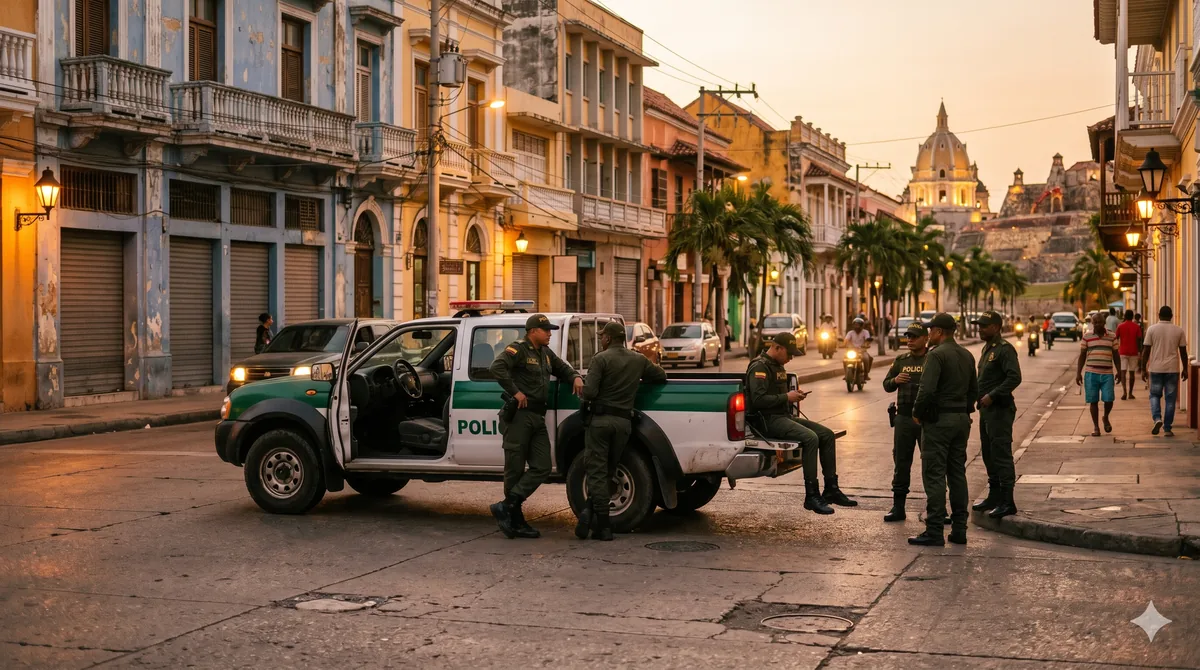
Most visitors to Cartagena have a completely uneventful trip. The city sees little violent crime against tourists; petty theft, aggressive vendors, and overcharging scams are the real risks, concentrated in specific places and times, and almost entirely avoidable with common-sense habits. The Walled City (El Centro and San Diego), the main streets of Getsemaní, and the Bocagrande hotel strip are where almost all visitors stay, and they are routinely calm by day and reasonably so by night. The risk profile here is less about danger and more about money: not getting robbed, and not getting fleeced.
The U.S. State Department keeps Colombia at Level 3 (Reconsider Travel) at the national level, driven by regions far from the coast, and Cartagena is among the cities it treats as normal for travel. The UK Foreign Office gives similar guidance. Treat Cartagena like a busy Caribbean tourist port: relaxed, but switched on.
No dar papaya: the mindset that matters
Every paisa, costeño, and long-term expat will tell you the same phrase: no dar papaya. Literally "do not give papaya," it means do not hand someone an easy opportunity. A phone left on a restaurant table, a fat wallet flashed at a beach bar, an unlocked bag on the back of a chair, a gold chain worn to the market: these are papaya. The vast majority of incidents that happen to visitors are crimes of opportunity, not planned attacks. Remove the opportunity and you remove most of the risk.
The flip side is just as important: Cartagena is warm, social, and built on tourism. The goal is not to walk around tense and suspicious. It is to keep your valuables boring and out of sight so you can actually relax into the place.
The real risks, in order
1. Pickpocketing and phone snatching
The most common crime against tourists. Risk concentrates in crowds, the narrow streets of the Walled City at night, Getsemaní's plazas during events, the beaches, the Bazurto market, and on distracted phone users walking and texting. Phone snatching from passing motorbikes (el raponazo) happens: a passenger reaches off the bike, grabs the phone, and the bike is gone.
Habits that kill this risk: keep your phone out of view on the street. Use it only when you are stopped, sitting, or indoors. Wear a crossbody bag across your body (not slung over one shoulder), zippered, in front of you in crowds. Keep your wallet in a front pocket. Never set your phone or bag on the table at a sidewalk café or beach bar.
2. Beach scams and aggressive vendors
This is the Cartagena-specific one, and it catches almost every first-timer. On the city beaches (Bocagrande) and especially on Playa Blanca on the Isla de Barú, vendors and "helpers" work the sand constantly. The recurring moves: someone puts a fresh oyster in your hand or a plate of fruit in front of you, then demands a steep price; a masseuse starts rubbing your shoulders before you have agreed to anything, then charges per minute; someone offers to take your photo or hands you a prop, then wants payment. Drinks, ceviche, and beach chairs are routinely quoted at a fair price and then billed at three or four times that.
In the Walled City and Getsemaní, a closely related setup is the bracelet or flower scam: a vendor slips a woven bracelet onto your wrist or presses a flower into your hand, then names a price once it is there. The palenqueras (women in traditional dress with fruit baskets on their heads) are a wonderful cultural feature of Cartagena, but a photo with them is a paid transaction. Agree the amount out loud before you raise a camera.
Habits that kill this risk: do not accept anything placed in your hand. Agree the exact price out loud, in pesos, before any food, drink, massage, chair, or photo. If you did not order it, do not touch it. A firm "no, gracias" repeated calmly works; you do not owe anyone a long conversation. For a calmer beach day, consider an organized day trip to the Rosario Islands over the Playa Blanca free-for-all.
Say this on the beach before accepting anything
"¿Cuánto cuesta en total? No acepto nada sin saber el precio primero."
"How much is it in total? I don't accept anything without knowing the price first."
3. Taxi overcharging
Cartagena taxis mostly do not run meters. Fares work on fixed zones, and a tourist who does not know the going rate will be quoted whatever the driver thinks they can get. This is overcharging, not danger, but it adds up fast over a week.
Habits that kill this risk: agree the fare before you get in, every single time, or use an app. Uber, DiDi, and InDriver all operate in Cartagena; the price is set in advance, the driver is tracked, and you skip the negotiation. As a rough sense of the local rate, a short hop inside the Walled City or to Bocagrande typically runs around COP 12.000 to 20.000 (USD 3 to 5 at roughly COP 4.000 per dollar), and the airport to the Centro is usually in the COP 15.000 to 30.000 range. Confirm before the ride, not after.
Say this before getting in a taxi
"¿Cuánto me cobra hasta [El Centro / Bocagrande / el aeropuerto]? Necesito saber el precio antes de subir."
"How much to [the Centro / Bocagrande / the airport]? I need to know the price before I get in."
4. ATM and card skimming
Card skimming exists, and standalone street ATMs are the highest-risk machines. Armed robbery at ATMs is occasional, not common, and rises at night.
Habits that kill this risk: use ATMs inside malls (Caribe Plaza, Mall Plaza) or inside a bank branch during business hours. Cover the keypad when you type your PIN. Withdraw what you need in one go rather than making repeated trips. Keep one card in your wallet and a backup in the hotel safe. Watch your card during restaurant payments; ask them to bring the terminal to the table, which is standard in Colombia.
5. Nightlife: drink spiking, burundanga, and the gancho ciego
Uncommon but real, and Cartagena's party-heavy nightlife scene makes it more relevant here than in most Colombian cities. The risk shows up in bars and clubs, especially when a friendly stranger insists on buying you a drink. Drinks are occasionally spiked with scopolamine (burundanga), a drug that causes compliance and memory loss. Victims typically wake up missing phones, wallets, and sometimes much more, with no memory of what happened. A related setup known as the gancho ciego (blind hook) uses an attractive stranger to build rapport quickly, then steers you to a quieter venue or back to your hotel room, where the robbery takes place. Dating-app meetups with someone you have never met carry the exact same risk.
The pattern to recognize: someone is very charming, very fast, insists on paying for drinks, and pushes to move somewhere more private. It does not fit the normal social rhythm. Trust that instinct.
Habits that kill this risk: watch your drink being poured, do not accept open drinks from strangers, and do not leave a drink unattended. If you step away from a drink, leave it. Be skeptical of a stranger who is suddenly very interested in you and very generous. Keep face-unlock turned off on your banking apps when you go out; a PIN you have to remember cannot be used on a sedated person. If you feel abruptly disoriented after a single drink, get to a trusted person or a well-lit public place immediately and ask staff for help. Call 123 if you need medical assistance.
6. Sex-tourism-adjacent scams
Cartagena has a visible sex-tourism scene, and a layer of scams sits on top of it: inflated "bar tabs," theft from hotel rooms by someone brought back, extortion, and setups involving minors that can lead to serious legal trouble. Police stings around this are real. The simplest protection is distance: the situations that produce these problems are easy to avoid entirely.
7. Heat, sun, and the sea
Cartagena is hot and humid year-round, and the sun is stronger than visitors expect. Dehydration and sunburn ruin more trips than crime does. On the open beaches, currents and tides can be deceptive; Playa Blanca and the island beaches do not always have lifeguards.
Habits that kill this risk: drink far more water than you think you need, use real sunscreen and reapply, take the midday hours indoors or in shade, and do not swim out far on unguarded beaches, especially after drinking. Bottled water is universal and cheap; stick to it.
Safety by zone
Tourist-safe, day and evening
El Centro and San Diego (inside the walls): the historic core, busy with visitors, restaurants, and tourist police. Comfortable to walk day and into the evening. Realistic risk: pickpocketing in crowds and on quiet side streets late at night.
Getsemaní (main streets): the Calle de la Sierpe, Calle del Pozo, and Plaza de la Trinidad area are lively and social well into the night. Stay on the busy, lit streets and you are fine. The edges of the barrio get quiet and less predictable after midnight.
Bocagrande, Castillogrande, El Laguito: the high-rise hotel and residential peninsula. Calm, well-policed, fine to walk day or evening. The beach vendors here are the main nuisance, not crime.
Manga: a residential island just south of the Centro, quiet and generally safe, increasingly popular with longer-stay visitors.
Fine by day, more care at night
The edges of Getsemaní: a block or two off the main plazas, the lighting drops and the foot traffic thins. Take a rideshare rather than walking these edges alone late.
The Bazurto market area: a genuine, fascinating local market and worth seeing, but chaotic and pickpocket-prone. Go in daylight, ideally with a guide or a local, carry little, and leave the jewelry and the good phone at the hotel.
Anywhere off the tourist grid: the moment you wander well beyond the walls, Bocagrande, and Manga without a specific destination, you lose the safety margin that crowds and tourist police provide. There is rarely a reason for a visitor to do this.
Go only with purpose
Cartagena's outer working-class neighborhoods (the southeastern and inland barrios) are not sensational danger zones, but they offer nothing for a visitor and far less margin if something goes wrong. If you have a real reason to go (family, business, a specific event), go with local guidance, not on a whim.
Night considerations city-wide
Locals rate Cartagena's night safety lower than its day safety, mostly because of opportunistic theft and nightlife scams, not violence. Use rideshare or an agreed taxi fare to get home, do not carry more cash than you need, and do not wander between zones on foot late at night. Inside the bars and restaurants the vibe is safe; the risk is the walk there and back.
Common scams to recognize
The beach "gift": an oyster, a piece of fruit, a bracelet, or a massage starts before you agree to it, then a price is demanded. Do not accept anything placed in your hand; agree prices first.
Change-back short scam: a vendor or driver claims the bill you handed over was smaller than it was. Count bills out loud when you pay, and try to carry small denominations.
"Friendly local" at the bar: someone strikes up a long conversation, insists on buying rounds, and steers you toward a particular club or ATM. Trust your instincts; if the attention feels off, it is.
Fake or freelance "police": rare but reported. Real Colombian police do not collect fines in cash on the street from tourists. Stay calm and polite, ask for ID, and ask to go to the nearest estación de policía.
Airport and dock "helpers": someone grabs your luggage or "guides" you to a taxi, then demands a tip well above the norm. Decline politely; use the official taxi line or your rideshare app.
Rental apartment scams: an "owner abroad" asks for a wire transfer before you have seen the place. Never pay before you inspect and have a signed agreement.
Solo travel, women travelers, and LGBT visitors
Cartagena is generally safe for solo travelers, including women, with standard precautions. Catcalling (piropos) is common in public, usually harmless, occasionally persistent. Sunglasses, headphones, and simply not engaging is the local norm. The factors that raise risk are the same anywhere: walking alone late at night, over-drinking in unfamiliar venues, accepting rides from strangers, and posting your live itinerary publicly.
For LGBT visitors, Cartagena is relatively relaxed by Colombian standards and used to international tourism; same-sex couples are a normal sight in the Walled City and Getsemaní. Public displays of affection draw less attention in tourist zones than in outlying working-class barrios, where discretion is wiser. There is a small but visible queer-friendly nightlife scene. Colombia has nationwide legal protections, including marriage equality.
If something happens
Emergency (Colombia): 123, the single consolidated line for police, medical, and fire. This is the correct number to call in Colombia; it is the local equivalent of 911. Operators typically speak Spanish.
Tourist Police (Policía de Turismo): stationed in and around the Walled City; ask any hotel for the current number and nearest post. They handle tourist-specific incidents and usually have someone who speaks some English.
Migración Colombia (non-emergency): for lost immigration documents, overstays, or visa questions, contact Migración Colombia. This is not an emergency line; for anything urgent, call 123 first.
If you are robbed: do not resist. Phones, cash, and watches are replaceable; hand them over calmly. Once you are safe, file a report. The formal process is a denuncia: you can file at a CAI police post, a police station, or online through the Fiscalía's ADenunciar portal. The report is mostly for your insurance claim and for replacing documents; recovery of stolen items is uncommon.
Say this when reporting to police or filing a denuncia
"Quiero poner una denuncia. Me robaron [mi teléfono / mi billetera / mis documentos] en [lugar]. Necesito el número de radicado para el seguro."
"I want to file a report. I was robbed of [my phone / my wallet / my documents] at [place]. I need the case number for insurance."
If your phone is stolen: use Find My iPhone or Find My Device to remote-wipe, and call your carrier to block the SIM. File the denuncia for insurance.
If your passport is stolen: file a denuncia, then contact your embassy (most are in Bogotá; Cartagena hosts honorary consuls only). Keep a photo of your passport on your phone and a scan in the cloud so replacement is faster.
The practical playbook, consolidated
Agree the fare before any taxi, or use Uber, DiDi, or InDriver.
Keep your phone out of view on the street; use it seated or indoors.
On the beach, agree every price out loud first, and accept nothing placed in your hand.
Front-pocket wallet, crossbody bag across the chest, no visible jewelry or expensive watch.
Use ATMs inside malls or banks, in daylight, and cover the keypad.
Hotel safe for the passport; carry a photo and a scan in the cloud.
Drink water constantly, wear sunscreen, and respect the midday heat and the tides.
Do not accept open drinks from strangers, and be wary of sudden generous attention at night.
Keep a card and some cash stashed separately from your main wallet.
Trust your instincts. If a person or a situation feels off, leave. No dar papaya.
What you do not need to worry about
Kidnapping: a serious problem in parts of Colombia decades ago; not a meaningful risk for a tourist in Cartagena today.
Guerrilla or armed-conflict activity: not relevant in Cartagena or its tourist zones.
Terrorism: Cartagena has not seen targeted attacks on visitors.
Tap water making you sick: Cartagena's tap water is treated and broadly considered safe in the central and tourist areas; bottled is still the easy default and is cheap, but brushing your teeth will not harm you.
Safety conditions and advice change over time. We re-verify this guide periodically and after any major incident reported in local media. Last review: May 2026.
Still have questions?¿Todavía tienes preguntas?
Catalina is our concierge. Ask her about visas, neighborhoods, healthcare, prices, anything Cartagena. She answers in chat or WhatsApp, English or Spanish, free.Catalina es nuestra concierge. Pregúntale sobre visas, barrios, salud, precios, cualquier cosa de Cartagena. Responde por chat o WhatsApp, en inglés o español, gratis.
Specific question while you read? Ask Catalina, the Cartagena Guide concierge.¿Pregunta específica mientras lees? Pregúntale a Catalina, la concierge de Cartagena Guide.Chat with Catalina ›Habla con Catalina ›
Última actualización: mayo de 2026. Cartagena es una de las ciudades más visitadas de Colombia y, en las zonas donde los visitantes pasan su tiempo, es generalmente segura. También es un lugar con hurtos menores reales y un flujo constante de estafas practicadas dirigidas a turistas. Esta es la versión honesta: dónde está genuinamente bien, dónde hay que estar atento, cuáles son los riesgos reales y los hábitos que te mantienen fuera de la pequeña fracción de viajes que salen mal. El marco local para todo esto es no dar papaya: no te conviertas en un blanco fácil.
La versión corta
La mayoría de visitantes a Cartagena tienen un viaje completamente tranquilo. La ciudad ve poco crimen violento contra turistas; los hurtos menores, los vendedores agresivos y las estafas por sobrecobro son los riesgos reales, concentrados en lugares y momentos específicos, y casi completamente evitables con hábitos de sentido común. La Ciudad Amurallada (El Centro y San Diego), las calles principales de Getsemaní y la franja hotelera de Bocagrande son donde se quedan casi todos los visitantes, y son rutinariamente tranquilas de día y razonablemente de noche. El perfil de riesgo aquí es menos sobre peligro y más sobre dinero: no ser robado y no ser estafado.
El Departamento de Estado de EE.UU. mantiene a Colombia en Nivel 3 (Reconsiderar viaje) a nivel nacional, impulsado por regiones lejos de la costa, y Cartagena está entre las ciudades que trata como normal para viajar. La Oficina de Asuntos Exteriores del Reino Unido da una orientación similar. Trata Cartagena como un puerto turístico caribeño ocupado: relajado, pero atento.
No dar papaya: la mentalidad que importa
Todo paisa, costeño y expat de largo plazo te dirá la misma frase: no dar papaya. Literalmente "no dar papaya", significa no ofrecerle a alguien una oportunidad fácil. Un teléfono dejado en la mesa de un restaurante, una billetera gorda mostrada en un bar de playa, una mochila sin cerrar en el respaldo de una silla, una cadena de oro usada al mercado: estos son papaya. La gran mayoría de incidentes que les suceden a los visitantes son crímenes de oportunidad, no ataques planificados. Elimina la oportunidad y eliminas la mayoría del riesgo.
El lado opuesto es igual de importante: Cartagena es cálida, social y construida sobre el turismo. El objetivo no es caminar tenso y sospechoso. Es mantener tus valiosos aburridos y fuera de vista para que puedas realmente relajarte en el lugar.
Los riesgos reales, en orden
1. Carterismo y robo de teléfonos
El crimen más común contra turistas. El riesgo se concentra en multitudes, las calles estrechas de la Ciudad Amurallada de noche, las plazas de Getsemaní durante eventos, las playas, el mercado de Bazurto y en usuarios de teléfono distraídos caminando y escribiendo. El robo de teléfonos desde motos que pasan (el raponazo) sucede: un pasajero se estira desde la moto, agarra el teléfono y la moto desaparece.
Hábitos que eliminan este riesgo: mantén tu teléfono fuera de vista en la calle. Úsalo solo cuando estés parado, sentado o adentro. Usa una mochila cruzada en el cuerpo (no colgada sobre un hombro), cerrada con cremallera, frente a ti en multitudes. Mantén tu billetera en un bolsillo delantero. Nunca pongas tu teléfono o mochila sobre la mesa en un café a la orilla de la calle o bar de playa.
2. Estafas de playa y vendedores agresivos
Esta es la específica de Cartagena, y atrapa a casi todos los novatos. En las playas urbanas (Bocagrande) y especialmente en Playa Blanca en la Isla de Barú, los vendedores y "ayudantes" trabajan la arena constantemente. Los movimientos recurrentes: alguien te pone una ostra fresca en la mano o un plato de frutas frente a ti, luego exige un precio empinado; un masajista comienza a frotarte los hombros antes de que hayas acordado nada, luego cobra por minuto; alguien ofrece tomarte una foto o te pasa una prop, luego quiere pago. Las bebidas, el ceviche y las sillas de playa se cotizan rutinariamente a un precio justo y luego se facturan a tres o cuatro veces eso.
En la Ciudad Amurallada y Getsemaní, una configuración estrechamente relacionada es la estafa de pulsera o flor: un vendedor te desliza una pulsera tejida en la muñeca o te presiona una flor en la mano, luego nombra un precio una vez está allí. Las palenqueras (mujeres en traje tradicional con canastas de frutas en la cabeza) son una característica cultural maravillosa de Cartagena, pero una foto con ellas es una transacción pagada. Acuerda la cantidad en voz alta antes de levantar una cámara.
Hábitos que eliminan este riesgo: no aceptes nada que te pongan en la mano. Acuerda el precio exacto en voz alta, en pesos, antes de cualquier comida, bebida, masaje, silla o foto. Si no lo pediste, no lo toques. Un firme "no, gracias" repetido calmadamente funciona; no le debes a nadie una larga conversación. Para un día de playa más tranquilo, considera un tour del día organizado a las Islas Rosario sobre el caos de Playa Blanca.
Dile esto a la playa antes de aceptar algo
¿Cuánto cuesta en total? No acepto nada sin saber el precio primero.
"How much is it in total? I don't accept anything without knowing the price first."
3. Sobrecobro en taxis
Los taxis de Cartagena mayormente no corren con taxímetro. Las tarifas funcionan por zonas fijas, y a un turista que no conoce la tarifa vigente se le cotizará lo que el conductor crea que puede conseguir. Esto es sobrecobro, no peligro, pero suma rápido en una semana.
Hábitos que eliminan este riesgo: acuerda la tarifa antes de subirte, cada vez, o usa una aplicación. Uber, DiDi e InDriver operan todos en Cartagena; el precio se fija con anticipación, el conductor se rastrea y te saltas la negociación. Como sentido aproximado de la tarifa local, un viaje corto dentro de la Ciudad Amurallada o a Bocagrande típicamente cuesta alrededor de COP 12.000 a 20.000 (USD 3 a 5 a aproximadamente COP 4.000 por dólar), y del aeropuerto al Centro generalmente está en el rango de COP 15.000 a 30.000. Confirma antes del viaje, no después.
Dile esto antes de subirte a un taxi
¿Cuánto me cobra hasta [El Centro / Bocagrande / el aeropuerto]? Necesito saber el precio antes de subir.
"How much to [the Centro / Bocagrande / the airport]? I need to know the price before I get in."
4. Clonación de tarjetas y skimming
El skimming existe, y los cajeros automáticos callejeros independientes son las máquinas de mayor riesgo. El robo a mano armada en cajeros es ocasional, no común, y aumenta de noche.
Hábitos que eliminan este riesgo: usa cajeros automáticos dentro de centros comerciales (Caribe Plaza, Mall Plaza) o dentro de una sucursal bancaria durante horario de atención. Cubre el teclado cuando escribas tu PIN. Retira lo que necesites en una sola vez en lugar de hacer viajes repetidos. Mantén una tarjeta en tu billetera y una de respaldo en la caja de seguridad del hotel. Observa tu tarjeta durante los pagos en restaurantes; pídeles que traigan la terminal a la mesa, que es estándar en Colombia.
5. Vida nocturna: adulterar bebidas, burundanga y el gancho ciego
Poco común pero real, y la escena de vida nocturna de fiesta pesada de Cartagena lo hace más relevante aquí que en la mayoría de ciudades colombianas. El riesgo aparece en bares y discotecas, especialmente cuando un extraño amistoso insiste en comprarte una bebida. Las bebidas ocasionalmente se adulteran con escopolamina (burundanga), una droga que causa obediencia y pérdida de memoria. Las víctimas típicamente se despiertan faltando teléfonos, billeteras y a veces mucho más, sin recordar qué pasó. Una configuración relacionada conocida como el gancho ciego usa a un extraño atractivo para construir rapport rápidamente, luego te dirige a un lugar más privado o de vuelta a tu habitación de hotel, donde sucede el robo. Los encuentros de aplicaciones de citas con alguien que nunca has conocido tienen exactamente el mismo riesgo.
El patrón a reconocer: alguien es muy encantador, muy rápido, insiste en pagar bebidas y te empuja a moverte a un lugar más privado. No encaja en el ritmo social normal. Confía en ese instinto.
Hábitos que eliminan este riesgo: observa tu bebida siendo vertida, no aceptes bebidas abiertas de extraños y no dejes una bebida sin vigilancia. Si te alejas de una bebida, déjala. Sé escéptico de un extraño que de repente está muy interesado en ti y muy generoso. Mantén el desbloqueo facial apagado en tus aplicaciones bancarias cuando salgas; un PIN que tienes que recordar no puede ser usado en una persona sedada. Si te sientes abruptamente desorientado después de una sola bebida, ve a una persona de confianza o a un lugar público bien iluminado de inmediato y pide ayuda al personal. Llama al 123 si necesitas asistencia médica.
6. Estafas adyacentes al turismo sexual
Cartagena tiene una escena visible de turismo sexual, y una capa de estafas se asienta sobre ella: "cuentas de bar" infladas, robo de habitaciones de hotel por alguien traído de vuelta, extorsión y configuraciones que involucran menores que pueden llevar a problemas legales serios. Los operativos policiales alrededor de esto son reales. La protección más simple es la distancia: las situaciones que producen estos problemas son fáciles de evitar completamente.
7. Calor, sol y el mar
Cartagena es caliente y húmeda todo el año, y el sol es más fuerte de lo que los visitantes esperan. La deshidratación y las quemaduras de sol arruinan más viajes que el crimen. En las playas abiertas, las corrientes y mareas pueden ser engañosas; Playa Blanca y las playas de las islas no siempre tienen guardavidas.
Hábitos que eliminan este riesgo: bebe mucha más agua de la que crees necesitar, usa protector solar real y vuelve a aplicar, toma las horas del mediodía adentro o a la sombra y no nades lejos en playas sin vigilancia, especialmente después de beber. El agua embotellada es universal y barata; cúmplela.
Seguridad por zona
Seguro para turistas, día y noche
El Centro y San Diego (dentro de las murallas): el núcleo histórico, ocupado con visitantes, restaurantes y policía turística. Cómodo para caminar día y entrada la noche. Riesgo realista: carterismo en multitudes y en calles laterales tranquilas tarde en la noche.
Getsemaní (calles principales): la Calle de la Sierpe, Calle del Pozo y el área de Plaza de la Trinidad están vivas y sociales bien entrada la noche. Quédate en las calles ocupadas e iluminadas y estás bien. Los bordes del barrio se ponen tranquilos y menos predecibles después de la medianoche.
Bocagrande, Castillogrande, El Laguito: la península de hoteles de gran altura y residencial. Tranquila, bien vigilada, bien para caminar día o noche. Los vendedores de playa aquí son la molestia principal, no el crimen.
Manga: una isla residencial justo al sur del Centro, tranquila y generalmente segura, cada vez más popular con visitantes de estadía larga.
Bien de día, más cuidado de noche
Los bordes de Getsemaní: una o dos cuadras de las plazas principales, la iluminación baja y el tráfico peatonal se adelgaza. Toma un rideshare en lugar de caminar estos bordes solo tarde.
El área del mercado Bazurto: un mercado local genuino y fascinante y vale la pena ver, pero caótico y propenso al carterismo. Ve a la luz del día, idealmente con una guía o un local, lleva poco y deja las joyas y el teléfono bueno en el hotel.
Cualquier lugar fuera de la red turística: en el momento en que te alejas bastante más allá de las murallas, Bocagrande y Manga sin un destino específico, pierdes el margen de seguridad que proporcionan las multitudes y la policía turística. Rara vez hay una razón para que un visitante haga esto.
Ve solo con propósito
Los barrios obreros exteriores de Cartagena (los barrios suroriental e interior) no son zonas de peligro sensacionalista, pero no ofrecen nada para un visitante y mucho menos margen si algo sale mal. Si tienes una razón real para ir (familia, negocios, un evento específico), ve con orientación local, no por capricho.
Consideraciones de noche en toda la ciudad
Los locales califican la seguridad nocturna de Cartagena más baja que su seguridad diurna, mayormente por robo oportunista y estafas de vida nocturna, no violencia. Usa rideshare o una tarifa de taxi acordada para llegar a casa, no lleves más efectivo del que necesitas y no deambules entre zonas a pie tarde en la noche. Dentro de los bares y restaurantes el ambiente es seguro; el riesgo es el camino allá y de vuelta.
Estafas comunes a reconocer
El "regalo" de playa: una ostra, un pedazo de fruta, una pulsera o un masaje comienza antes de que lo acuerdes, luego se exige un precio. No aceptes nada que te pongan en la mano; acuerda precios primero.
Estafa de cambio corto: un vendedor o conductor afirma que el billete que le entregaste era más pequeño de lo que era. Cuenta los billetes en voz alta cuando pagues e intenta llevar denominaciones pequeñas.
"Local amistoso" en el bar: alguien inicia una larga conversación, insiste en comprar rondas y te dirige hacia un club o cajero en particular. Confía en tus instintos; si la atención se siente rara, es.
"Policía" falso o freelance: raro pero reportado. La policía colombiana real no cobra multas en efectivo en la calle a los turistas. Mantén la calma y la educación, pide identificación y pide ir a la estación de policía más cercana.
Apartamento y "ayudantes" de muelle: alguien agarra tu equipaje o te "guía" a un taxi, luego exige una propina muy por encima de lo normal. Rechaza educadamente; usa la línea de taxi oficial o tu aplicación de rideshare.
Estafas de apartamento de alquiler: un "propietario en el extranjero" pide una transferencia bancaria antes de que hayas visto el lugar. Nunca pagues antes de inspeccionar y tener un acuerdo firmado.
Viajes en solitario, viajeras mujeres y visitantes LGBT
Cartagena es generalmente segura para viajeros en solitario, incluyendo mujeres, con precauciones estándar. El acoso callejero (piropos) es común en público, generalmente inofensivo, ocasionalmente persistente. Gafas de sol, auriculares y simplemente no participar es la norma local. Los factores que aumentan el riesgo son los mismos en cualquier lugar: caminar solo tarde en la noche, beber en exceso en lugares desconocidos, aceptar viajes de extraños y publicar tu itinerario en vivo públicamente.
Para visitantes LGBT, Cartagena es relativamente relajada según los estándares colombianos y acostumbrada al turismo internacional; las parejas del mismo sexo son un espectáculo normal en la Ciudad Amurallada y Getsemaní. Las demostraciones públicas de afecto atraen menos atención en zonas turísticas que en barrios obreros marginales, donde la discreción es más sabia. Hay una escena de vida nocturna pequeña pero visible que es amigable con queer. Colombia tiene protecciones legales nacionales, incluyendo igualdad matrimonial.
Si algo sucede
Emergencia (Colombia): 123, la línea consolidada única para policía, médica y de bomberos. Este es el número correcto para llamar en Colombia; es el equivalente local del 911. Los operadores típicamente hablan español.
Policía de Turismo: estacionada en y alrededor de la Ciudad Amurallada; pregunta a cualquier hotel por el número actual y la oficina más cercana. Manejan incidentes específicos de turismo y generalmente tienen a alguien que habla algo de inglés.
Migración Colombia (no emergencia): para documentos de inmigración perdidos, excesos de permanencia o preguntas de visa, contacta Migración Colombia. Este no es una línea de emergencia; para cualquier cosa urgente, llama al 123 primero.
Si eres robado: no resistas. Los teléfonos, el efectivo y los relojes son reemplazables; entrégalos calmadamente. Una vez que estés seguro, presenta una denuncia. El proceso formal es una denuncia: puedes presentarla en una CAI policía post, una estación de policía u en línea a través del portal ADenunciar de la Fiscalía. La denuncia es principalmente para tu reclamo de seguros y para reemplazar documentos; la recuperación de artículos robados es poco común.
Dile esto cuando reportes a la policía o presentes una denuncia
Quiero poner una denuncia. Me robaron [mi teléfono / mi billetera / mis documentos] en [lugar]. Necesito el número de radicado para el seguro.
"I want to file a report. I was robbed of [my phone / my wallet / my documents] at [place]. I need the case number for insurance."
Si tu teléfono es robado: usa Find My iPhone o Find My Device para borrar de forma remota y llama a tu operador para bloquear la SIM. Presenta la denuncia para seguros.
Si tu pasaporte es robado: presenta una denuncia, luego contacta tu embajada (la mayoría están en Bogotá; Cartagena alberga solo cónsules honorarios). Mantén una foto de tu pasaporte en tu teléfono y un escaneo en la nube para que el reemplazo sea más rápido.
El manual práctico, consolidado
Acuerda la tarifa antes de cualquier taxi, o usa Uber, DiDi o InDriver.
Mantén tu teléfono fuera de vista en la calle; úsalo sentado o adentro.
En la playa, acuerda cada precio en voz alta primero y no aceptes nada que te coloquen en la mano.
Billetera en bolsillo delantero, mochila cruzada en el pecho, sin joyas visibles ni reloj caro.
Usa cajeros automáticos dentro de centros comerciales o bancos, a la luz del día y cubre el teclado.
Caja de seguridad del hotel para el pasaporte; lleva una foto y un escaneo en la nube.
Bebe agua constantemente, usa protector solar y respeta el calor del mediodía y las mareas.
No aceptes bebidas abiertas de extraños y desconfía de la atención generosa repentina de noche.
Mantén una tarjeta y algo de efectivo guardados por separado de tu billetera principal.
Confía en tus instintos. Si una persona o situación se siente rara, vete. No dar papaya.
Qué no necesitas preocuparte
Secuestro: un problema grave en partes de Colombia hace décadas; no un riesgo significativo para un turista en Cartagena hoy.
Actividad de guerrilla o conflicto armado: no relevante en Cartagena o sus zonas turísticas.
Terrorismo: Cartagena no ha visto ataques dirigidos contra visitantes.
El agua del grifo enfermándote: el agua del grifo de Cartagena se trata y ampliamente se considera segura en las áreas centrales y turísticas; embotellada sigue siendo el defecto fácil y es barata, pero cepillarte los dientes no te hará daño.
Las condiciones de seguridad y los consejos cambian con el tiempo. Reverificamos esta guía periódicamente y después de cualquier incidente importante reportado en medios locales. Última revisión: mayo de 2026.
Still have questions?¿Todavía tienes preguntas?
Catalina is our concierge. Ask her about visas, neighborhoods, healthcare, prices, anything Cartagena. She answers in chat or WhatsApp, English or Spanish, free.Catalina es nuestra concierge. Pregúntale sobre visas, barrios, salud, precios, cualquier cosa de Cartagena. Responde por chat o WhatsApp, en inglés o español, gratis.