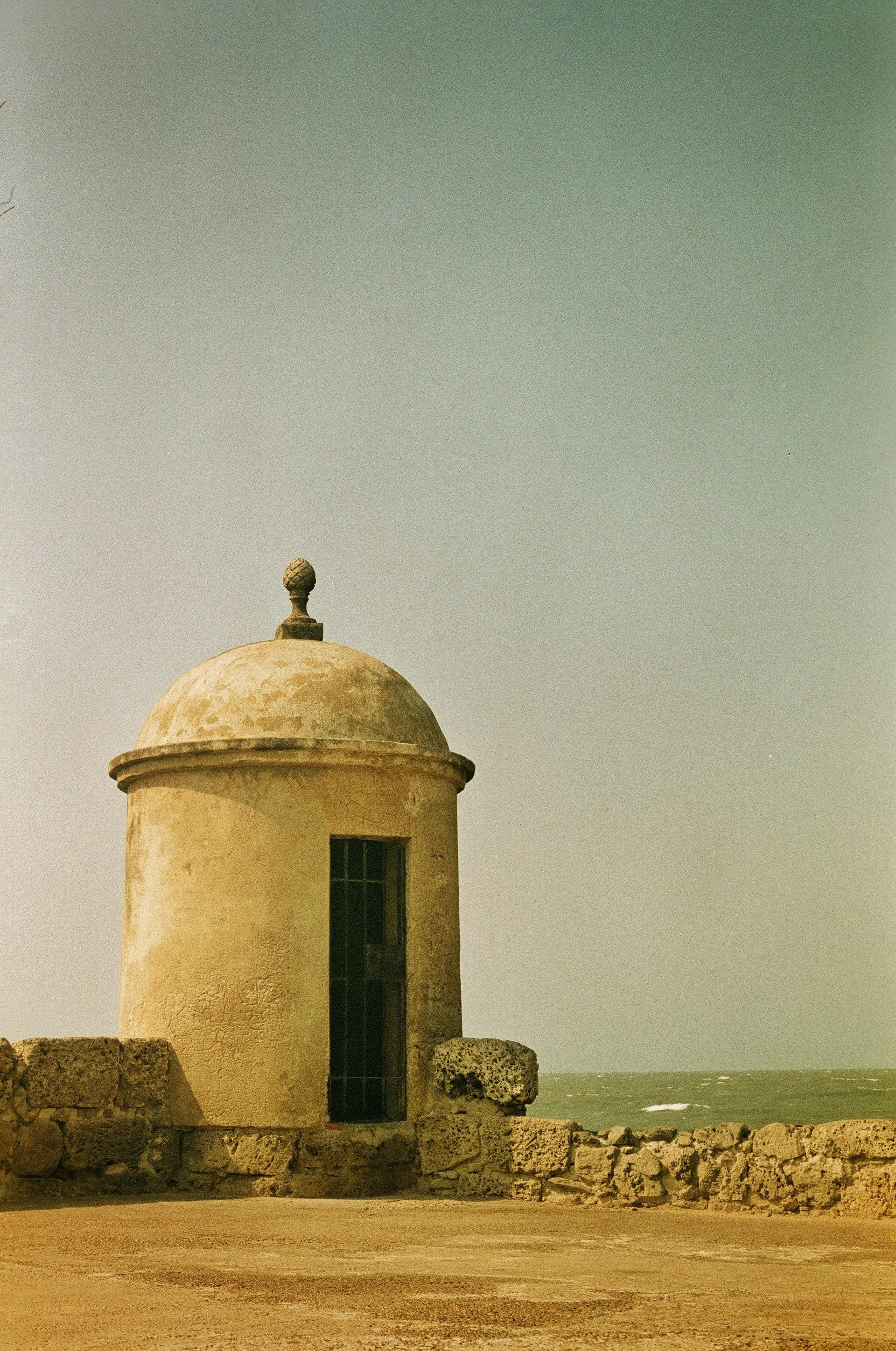
At the foot of La Popa hill - mid-tier residential, local feel.Al pie de la colina de La Popa, residencial de nivel medio y ambiente local.
Cartagena Guide
Last updated August 2026
Specific question while you read? Ask Catalina, the Cartagena Guide concierge.¿Pregunta específica mientras lees? Pregúntale a Catalina, la concierge de Cartagena Guide.Chat with Catalina ›Habla con Catalina ›
What it is
Pie de la Popa takes its name from La Popa hill, but the neighborhood itself is not on the hill, it's the residential area at its base. Its actual boundaries run from Avenida Pedro de Heredia to Lago Bazurto and the Ciénaga de las Quintas. Main streets are Calle 30 (also called Calle Real del Pie de la Popa), Calle 29D (Camino Arriba), and Calle 29B (Avenida del Lago). Mostly mid-tier apartment buildings, schools, and local services.
The vibe
Daily-life Cartagena. Not a tourist neighborhood, though many visitors pass along its edge on the way up to the Convento de la Popa (best at sunset - the view sweeps the entire city and both coastlines).
Who lives here
Middle-class Cartagenero families, students, and a growing number of longer-term expats. Rents are significantly below Bocagrande or Manga.
What's here
The neighborhood has a library and cultural center on Avenida del Lago, run by the IPCC (Instituto de Patrimonio y Cultura de Cartagena), plus the Estadio de Béisbol Los Leones, a public soccer field, two private soccer fields, and the Centro Comercial Caribe Plaza. Otherwise: neighborhood supermarkets, panaderías, schools, and an assortment of local restaurants.
The climb to the Convento de la Popa - a 17th-century convent on the highest hill in Cartagena - starts near the edge of the neighborhood. The convent itself is a worthwhile short visit (small entry fee, views are the real attraction). Take a taxi up rather than walk; the road is steep, in full sun, and runs through areas that aren't visitor-trafficked.
The honest trade-offs
Not a visitor stay. Few hotels, limited tourist infrastructure. Stay here only if you have a specific reason (family, long-term rental).
Safety on the hill climb: The convent visit is safe by taxi. On foot the path passes through residential areas - usually fine, but not somewhere most guides recommend walking, especially not at night or alone.
Best for
A short visit to the Convento de la Popa, by taxi.
Long-term rentals at lower price points.
Travelers visiting Cartagena-based family.
Spotted something?
This neighborhood profile is a living document. If a price has changed, a venue has closed, the map boundary is wrong, or something here doesn't match your on-the-ground experience, let us know. Corrections land publicly in the page's git history.
Specific question while you read? Ask Catalina, the Cartagena Guide concierge.¿Pregunta específica mientras lees? Pregúntale a Catalina, la concierge de Cartagena Guide.Chat with Catalina ›Habla con Catalina ›
Qué es
Pie de la Popa toma su nombre de la colina La Popa, pero el barrio en sí no está sobre la colina, es el área residencial en su base. Sus límites reales van desde la Avenida Pedro de Heredia hasta el Lago Bazurto y la Ciénaga de las Quintas. Sus calles principales son la Calle 30 (también llamada Calle Real del Pie de la Popa), la Calle 29D (Camino Arriba) y la Calle 29B (Avenida del Lago). Principalmente edificios de apartamentos de nivel medio, colegios y servicios locales.
El ambiente
Cartagena de vida cotidiana. No es un barrio turístico, aunque muchos visitantes pasan por su borde en el camino al Convento de la Popa (mejor al atardecer · la vista barre toda la ciudad y las dos costas).
Quién vive aquí
Familias cartageneras de clase media, estudiantes y un número creciente de expatriados de largo plazo. Las rentas están significativamente por debajo de Bocagrande o Manga.
Qué hay aquí
El barrio cuenta con una biblioteca y centro cultural en la Avenida del Lago, operado por el IPCC (Instituto de Patrimonio y Cultura de Cartagena), además del Estadio de Béisbol Los Leones, una cancha de fútbol pública, dos canchas privadas y el Centro Comercial Caribe Plaza. De lo contrario: supermercados del barrio, panaderías, colegios y una variedad de restaurantes locales.
La subida al Convento de la Popa, un convento del siglo XVII en la colina más alta de Cartagena, comienza cerca del borde del barrio. El convento en sí es una visita corta que vale la pena (entrada pequeña, las vistas son la verdadera atracción). Toma un taxi para subir en lugar de caminar; la carretera es empinada, está a pleno sol y pasa por zonas que no tienen tráfico de visitantes.
Los compromisos honestos
No es para quedarse como visitante. Pocos hoteles, infraestructura turística limitada. Quédate aquí solo si tienes una razón específica (familia, renta de largo plazo).
Seguridad en la subida de la colina: La visita al convento es segura en taxi. A pie el camino pasa por zonas residenciales, generalmente está bien, pero no es un lugar que la mayoría de guías recomienden caminar, especialmente no de noche o solo.
Mejor para
Una visita corta al Convento de la Popa, en taxi.
Rentales de largo plazo a precios más bajos.
Viajeros que visitan familia en Cartagena.
¿Viste algo?
Este perfil del barrio es un documento vivo. Si un precio ha cambiado, un lugar ha cerrado, el límite del mapa es incorrecto, o algo aquí no coincide con tu experiencia sobre el terreno, cuéntanos. Las correcciones aparecen públicamente en el historial git de la página.
Newsletter
Get the guide in your inbox
One short email each Saturday. New posts, what's on this week, and anything worth knowing about Cartagena. No spam, unsubscribe anytime.