Museums of Cartagena: Where to Go, What to SeeMuseos de Cartagena: Dónde ir, qué ver
Four museums worth a serious visit plus a half-day itinerary that hits the best of them in one morning.
Mike Chartrand
April 2026 · 9 min read
Specific question while you read? Ask Catalina, the Cartagena Guide concierge.¿Pregunta específica mientras lees? Pregúntale a Catalina, la concierge de Cartagena Guide.Chat with Catalina ›Habla con Catalina ›
Map of locations in this guide
5 locations marked. Click any marker for details.
Cartagena has four museums worth a serious visit plus a handful of smaller ones that reward focused interest. The concentration is on Plaza de Bolívar and Plaza de San Pedro Claver in the walled city. Here's the honest ranking and a half-day culture-heavy itinerary to hit the key four in one morning.
Museum quick facts (always verify at the door)
Palacio de la Inquisición: Mon to Sat 9 AM to 6 PM, Sun 10 AM to 4 PM. COP 24,000 adults. English labels on major exhibits, rest in Spanish.
Museo del Oro Zenú: Tue to Sat 9 AM to 5 PM, Sun 10 AM to 3 PM, closed Monday. Free. Excellent bilingual signage.
Museo Naval del Caribe: Daily 10 AM to 6 PM. COP 23,000 adults. Strong English signage, best in the city.
San Pedro Claver church/museum: Roughly 8 AM to 5:30 PM. COP 20,000. Partial English signage.
Castillo San Felipe: Daily 8 AM to 6 PM. COP 30,000 to 50,000. Go at 8 AM: minimal shade, fills with cruise groups by 10 AM.
Beat the heat: All four walled-city museums are air-conditioned or shaded. Morning is ideal. Rainy-day or midday-heat fallback is the Palacio or Zenú museum.
Say this (at any museum entrance)
¿Tienen señalizacion en ingles? ¿Hay audioguias disponibles?
Do you have signage in English? Are audio guides available?
Palacio de la Inquisición / Museo Histórico de Cartagena
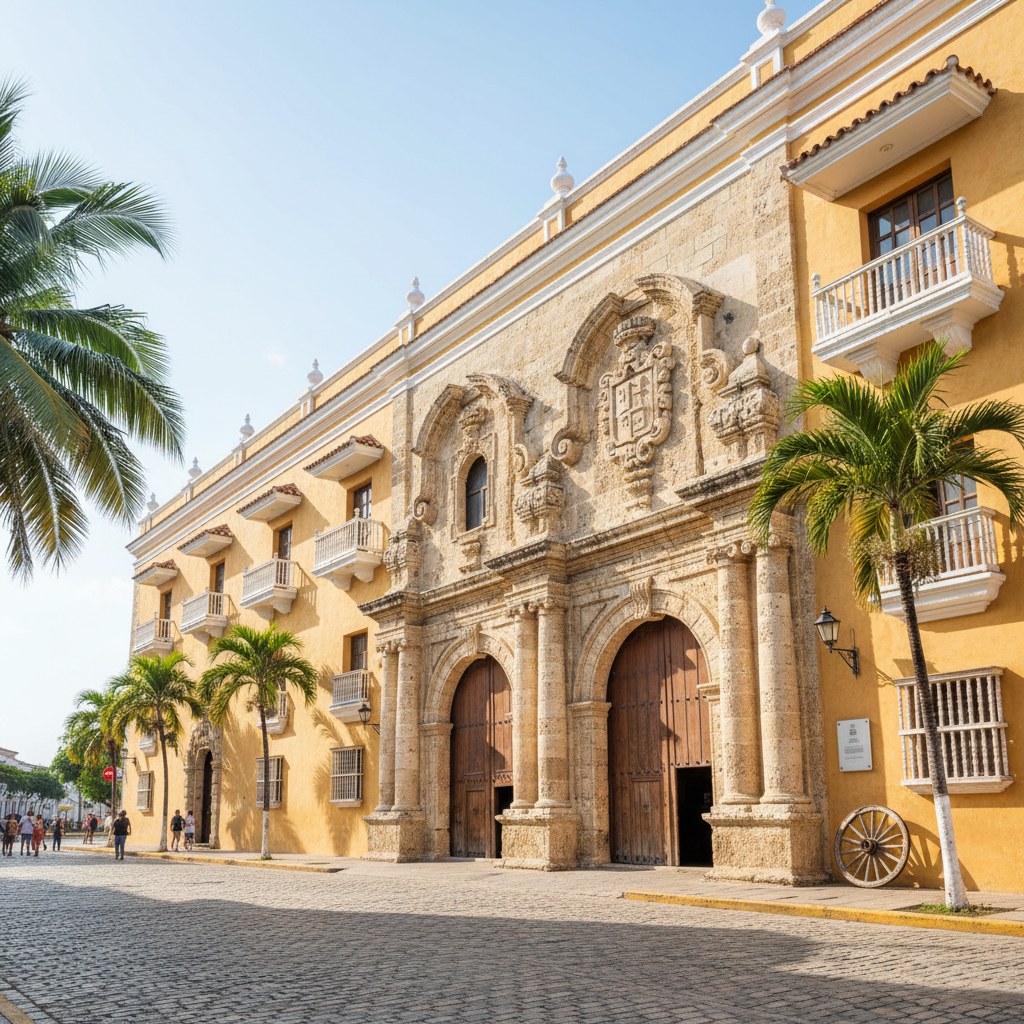
Plaza de Bolívar, walled city. The 1770 Baroque palace that housed the Tribunal of the Holy Office from 1610 to 1811, the first Inquisition tribunal in South America. Now the city's historical museum.
Entry is approximately COP 24,000 for adults, COP 20,000 for kids and seniors, free for children under five. Open Monday through Saturday 9 AM to 6 PM, Sundays and holidays 10 AM to 4 PM. Allow 45 to 60 minutes minimum, 90 minutes for the full exhibit. English signage is limited; bilingual on major labels.
The building itself is one of the finest civil colonial structures on the Caribbean coast. The collection covers pre-Columbian Zenú pottery, Inquisition-era torture instruments (removed 2015 before Pope Francis visited and partially returned), colonial armaments and paintings, independence-era artifacts including a facsimile of the 1811 Acta de Independencia. The Inquisition's jurisdiction covered Cartagena, Panama, Santa Marta, Puerto Rico, Popayán, Venezuela, and Santiago de Cuba; roughly 800 trials over 200 years with relatively few executions (three from 1570 to 1700, versus Lima's 31 and Mexico's 47). The horror was imprisonment, confiscation, and public humiliation, not mass burnings. Best single museum in Cartagena.
Museo del Oro Zenú
Plaza de Bolívar, directly across from the Palacio de la Inquisición. Free entry. Operated by Banco de la República (Banrepcultural), same network as Bogotá's Museo del Oro.
Open Tuesday through Saturday 9 AM to 5 PM, Sundays 10 AM to 3 PM, closed Mondays. Allow 45 minutes. Excellent bilingual interpretation. Ground-floor, step-free.
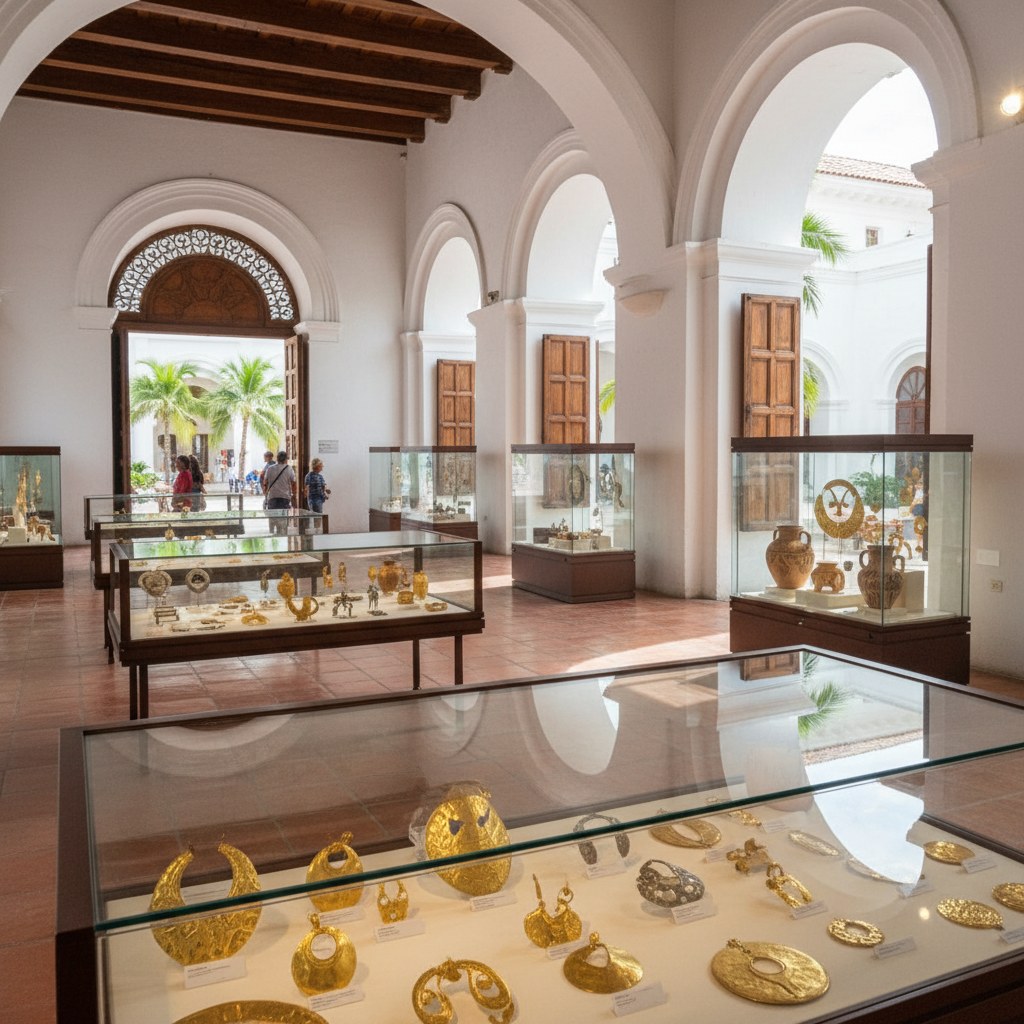
The collection: 600-plus gold, silver, and ceramic pieces focused on Zenú culture (indigenous people of the lower Sinú, San Jorge, and Cauca river basins, roughly 200 BCE to 1600 CE). The hallmark technique is Zenú false-filigree, intricate lost-wax casting that mimics filigree wire work. Also: ceramic vessels and anthropomorphic figurines, musical instruments (ocarinas), and short films on Zenú cosmology and their hydraulic engineering (they built a 2,000 square-kilometer canal system still visible from the air). Non-negotiable stop, especially because it's free and compact. Pair with the Palacio de la Inquisición across the plaza.
Museo Naval del Caribe
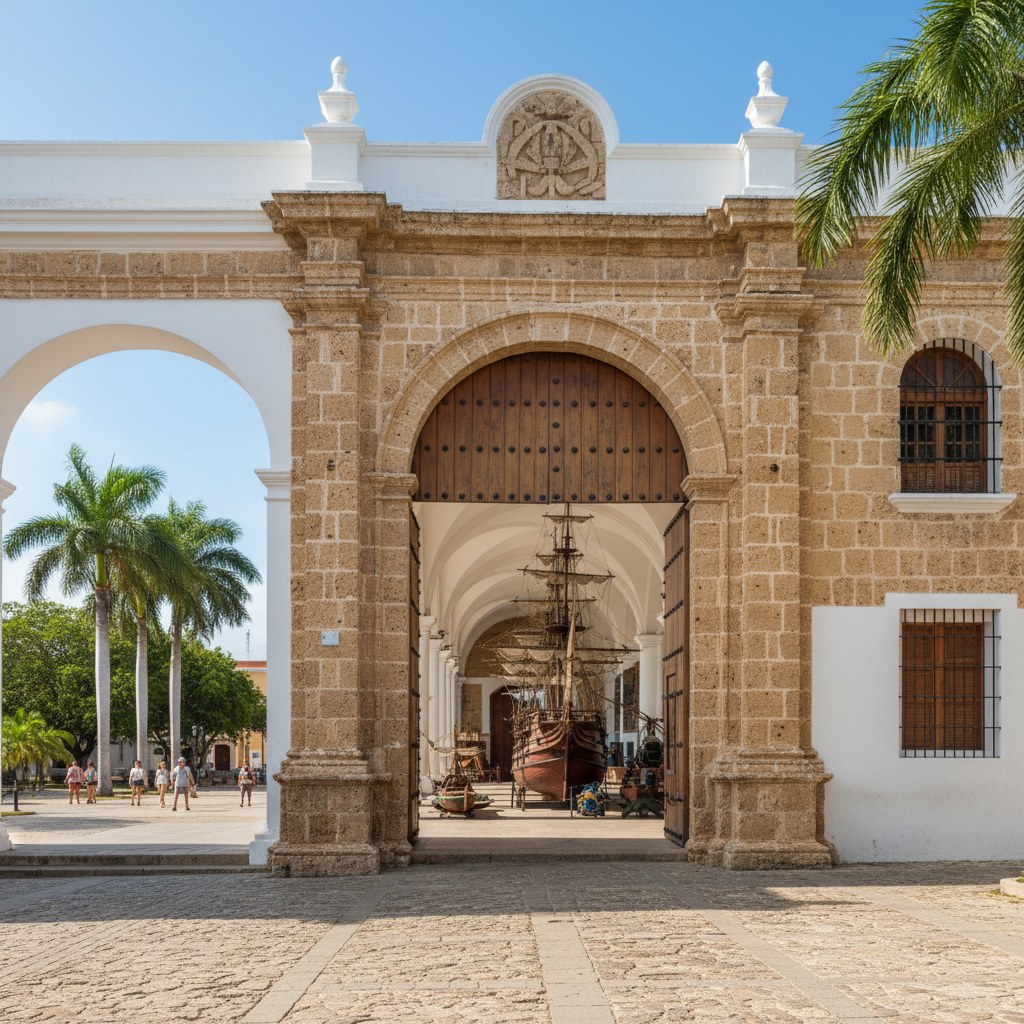
Calle San Juan de Dios, adjacent to Plaza San Pedro Claver. Housed in the former seventeenth-century Jesuit college.
Entry is approximately COP 23,000 adults, COP 10,000 students and seniors, COP 2,000 children; two-for-one on Wednesdays for Colombian nationals. Open daily 10 AM to 6 PM (extended to 9 AM during vacation periods). Allow 1.5 to 2 hours. Strong English signage, among the best-translated museums in the city.
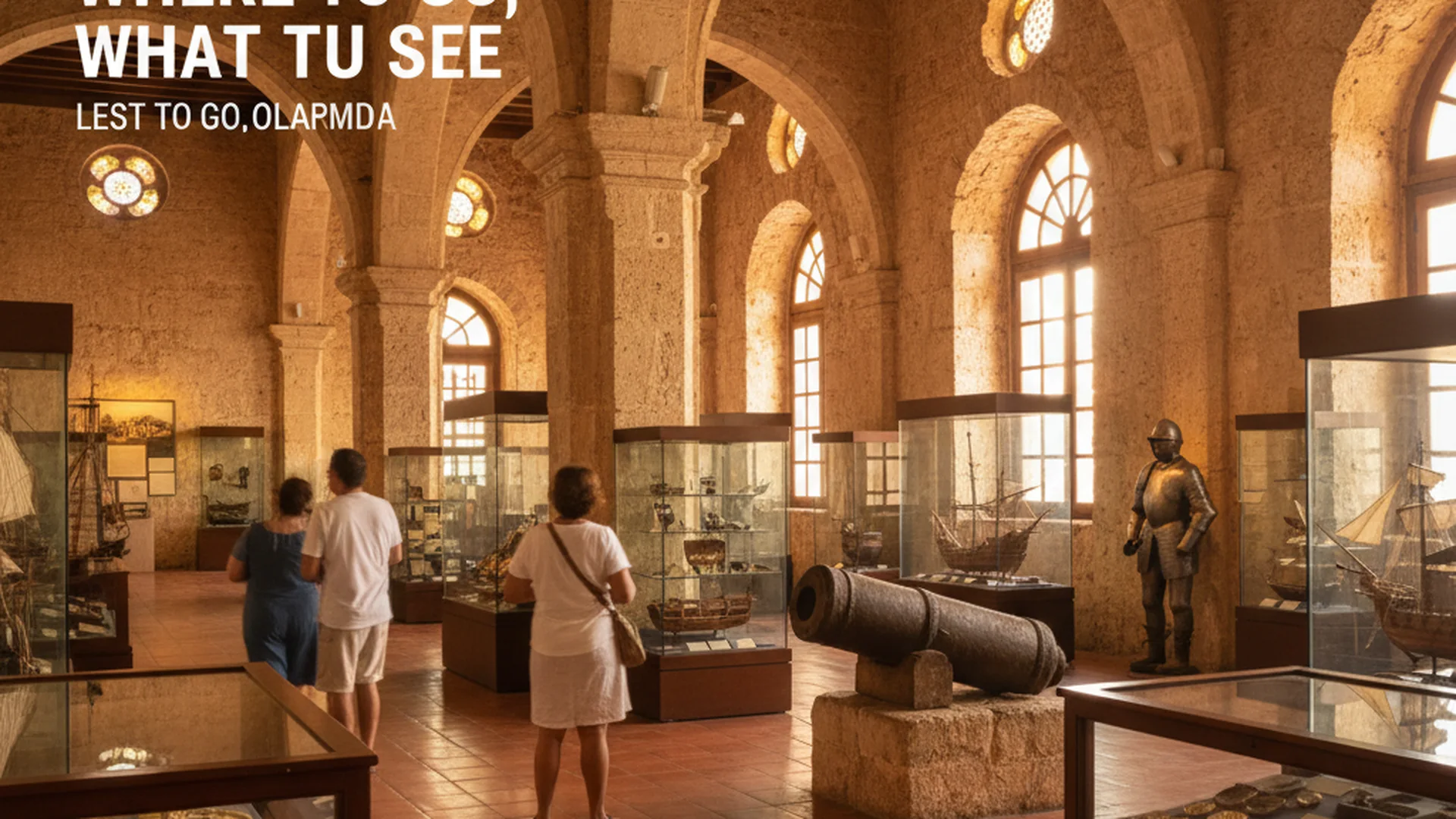
Exhibits: indigenous pre-Columbian maritime history; the colonial pirate attacks (Drake 1586, Baron de Pointis 1697); the 1741 Siege of Cartagena (the star exhibit, with a dedicated Blas de Lezo hall covering the defense that sent British Admiral Vernon's fleet home); the independence wars; contemporary Colombian Navy equipment; interactive submarine and helicopter simulations; ship models and fort maps. Best pick for military or maritime-history interest. Skip if it doesn't engage you.
Iglesia y Convento de San Pedro Claver
Plaza de San Pedro Claver, walled city. A functioning Jesuit church plus attached cloister and museum.
Entry approximately COP 20,000. Open roughly 8 AM to 5:30 PM. Allow one hour. Partial English signage; Spanish is dominant.
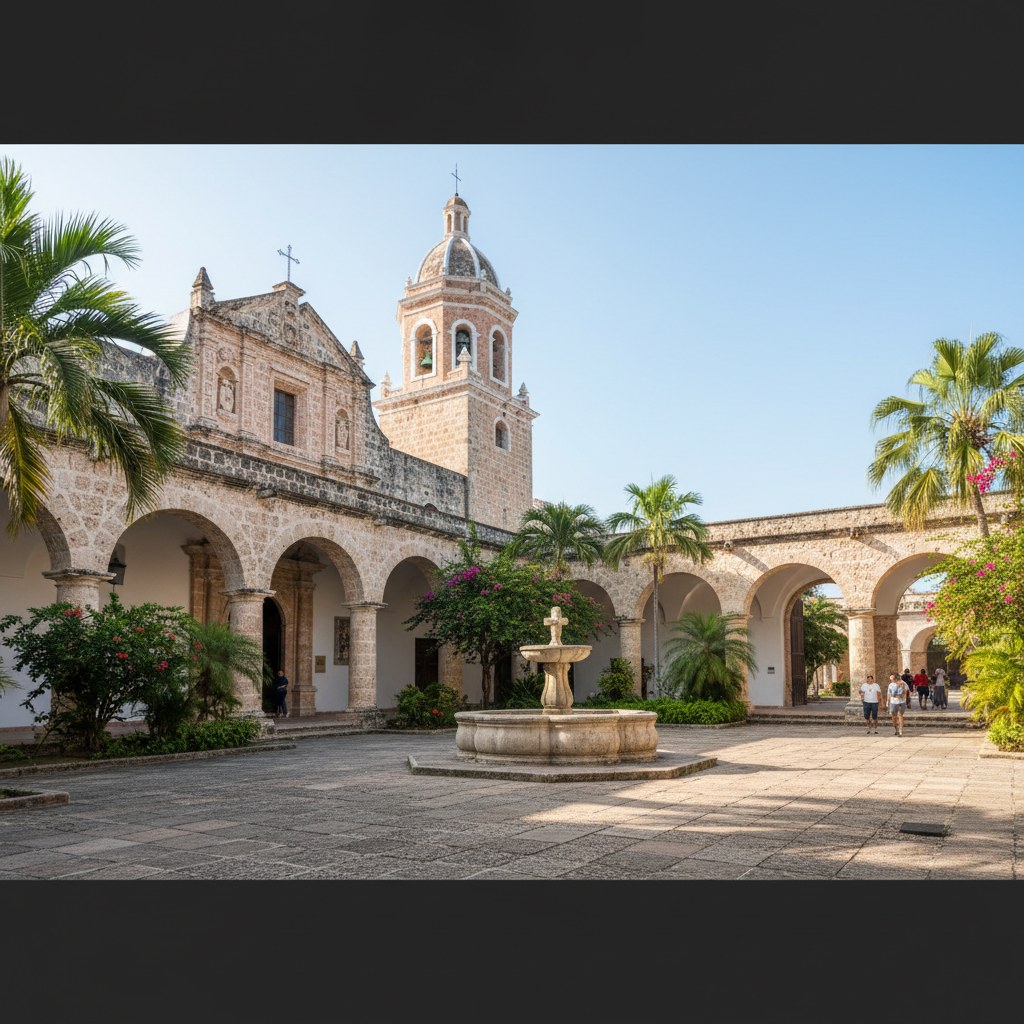
Pedro Claver (1580-1654) was a Catalan Jesuit who spent 40 years ministering to enslaved Africans as they disembarked at the Cartagena port. Canonized 1888 as "the Apostle of the Blacks" and "Slave of the Slaves." His preserved body is in a glass reliquary under the main altar. The cloister is a three-story arcade around a tree-filled courtyard. Exhibits include Claver's preserved cell, pre-Columbian ceramics and archaeological pieces, colonial religious art, an Afro-Caribbean section with Haitian paintings and the Zapata Olivella family donation of African masks. Both Pope John Paul II (1986) and Pope Francis (2017) prayed at his tomb. Essential for anyone engaging with Cartagena's slavery history.
Castillo San Felipe de Barajas (as museum)
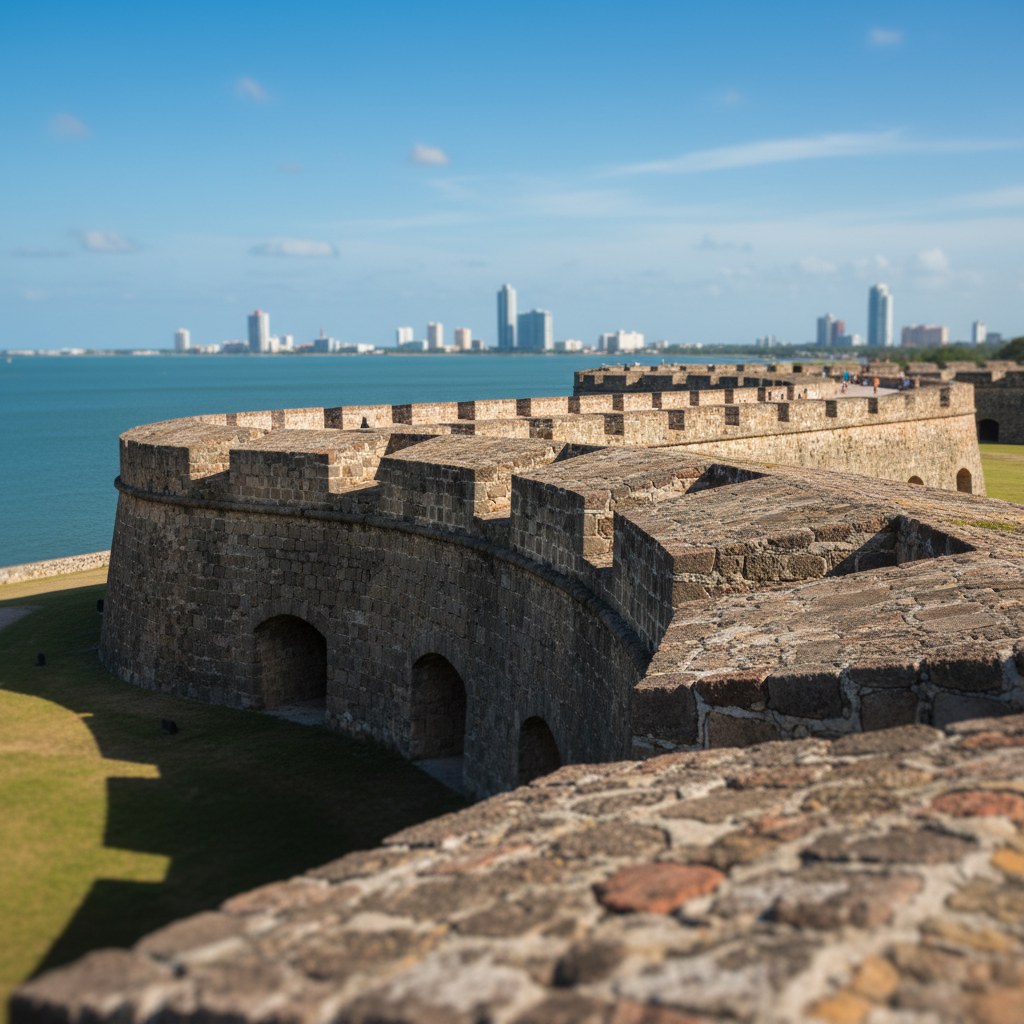
Cerro San Lázaro, just outside the walled city. The largest Spanish fortress in the Americas, begun 1657 and massively expanded by military engineer Antonio de Arévalo between 1762 and 1798. UNESCO World Heritage 1984 as part of the "Port, Fortresses and Group of Monuments, Cartagena" inscription.
Entry approximately COP 30,000 to 50,000 for foreigners (sources disagree; confirm at the gate). Kids under 7 free. Students 20 to 30 percent discount with ID. Free last Sunday of each month. Open daily 8 AM to 6 PM, last entry 5:30 PM. Audio guide rental COP 15,000 and recommended (signage is sparse). Allow 2 to 3 hours for ramparts, tunnels, battery positions, and the panoramic view. Very limited accessibility: steep grades, uneven stone, many stairs. Not wheelchair-friendly. If you'd rather have a guide handle the history and the logistics, you can book a guided tour covering the Castillo, the Walled City, and Popa Convent on Viator.
Photo via Viator
Arrive at 7:30 to 8:00 AM to beat both the heat and the cruise-tour groups. The tunnel system is the feature: roughly 200 meters of interconnected passages with acoustic channels that allowed defenders to hear enemy mining. The site is also where the 1741 siege was won. Second most important museum site in Cartagena after the Palacio de la Inquisición.
Convento de la Popa
Summit of Cerro de la Popa, the 150-meter hill east of the walled city. Founded 1607 by Augustinian Recollects; one of the oldest surviving monasteries in Colombia.
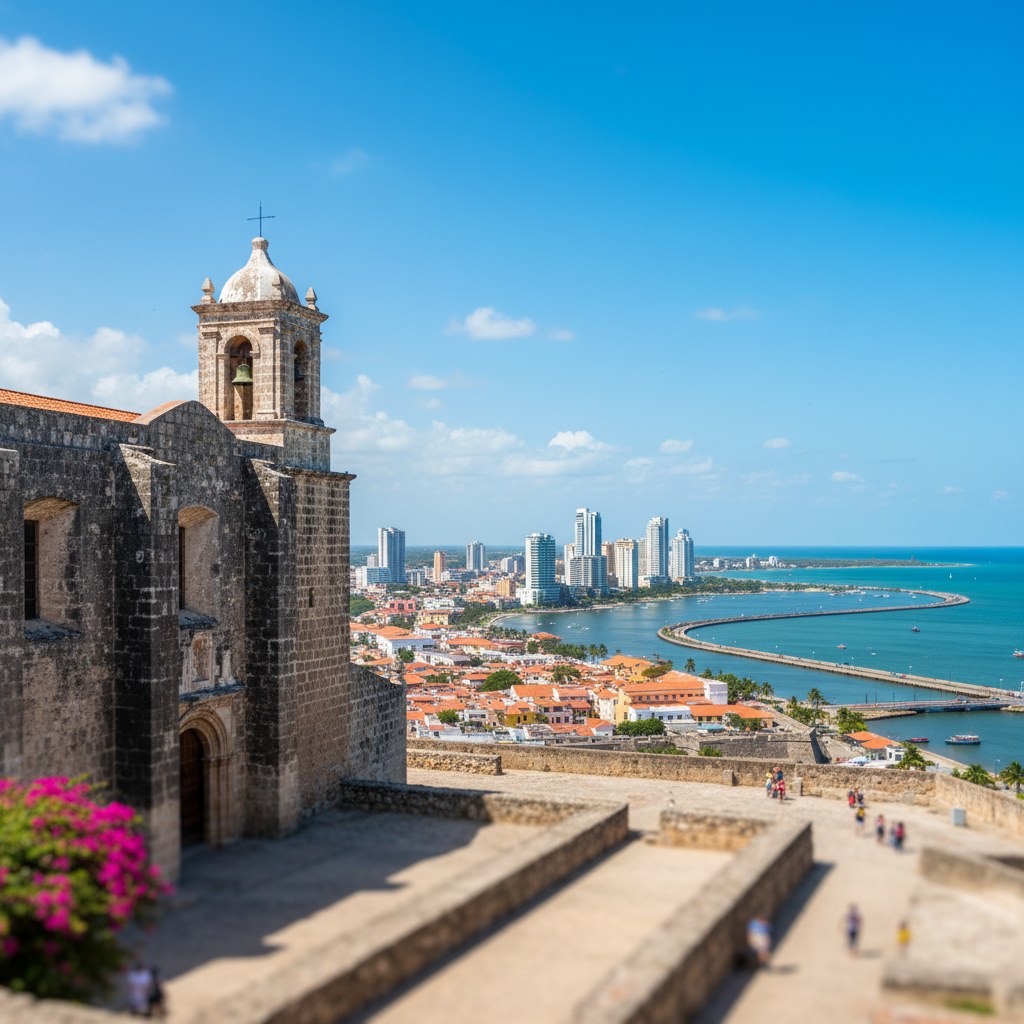
Entry approximately COP 8,000 to 15,000 (variable). Open daily 8:30 AM to 5:30 PM. Allow 30 to 60 minutes. The chapel holds the image of Virgen de la Candelaria, the city's patroness. The rooftop viewpoint is, by consensus, the best panorama of Cartagena Bay and the peninsula.
Getting there: taxi or Uber. Do not walk up; the approach road and surrounding neighborhoods (Pie de la Popa, Loma Fresca) are not safe for tourists on foot. Round-trip taxi with 30-minute wait runs COP 40,000 to 60,000 from the walled city.
Casa Museo Rafael Núñez
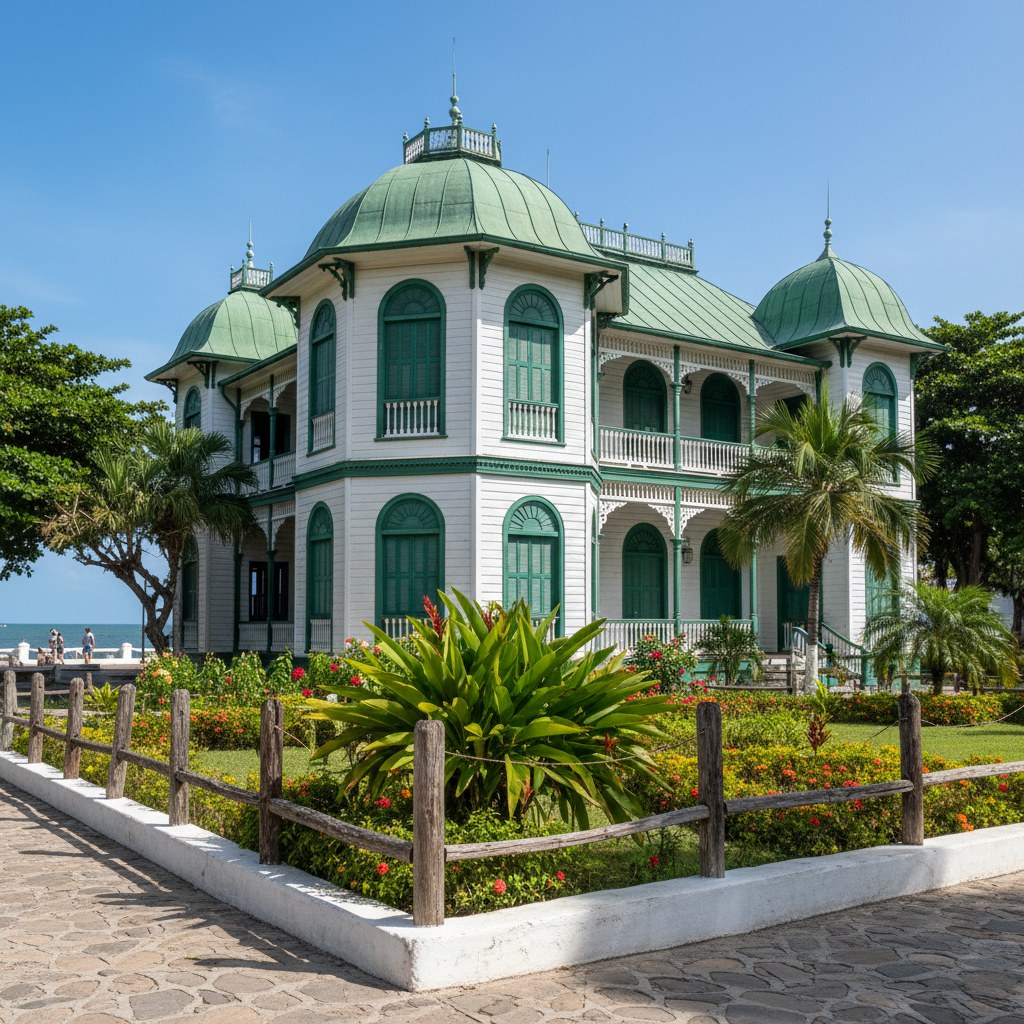
El Cabrero neighborhood, three minutes' walk north of the walled city. White-and-green wooden two-story house, declared National Monument 1950.
Entry is usually free or a minimal fee. Allow 30 minutes. Minimal English signage.
Rafael Núñez (1825-1894) is Cartagena's only native-born Colombian president, served four terms, authored the 1886 Constitution (in effect until 1991), and wrote the lyrics to the Colombian national anthem. His ashes rest in the Ermita del Cabrero across the street. The house itself is a rare example of nineteenth-century wooden colonial residential architecture near the sea. Skippable on a first visit; rewarding for return visitors with history interest.
Other museums worth noting
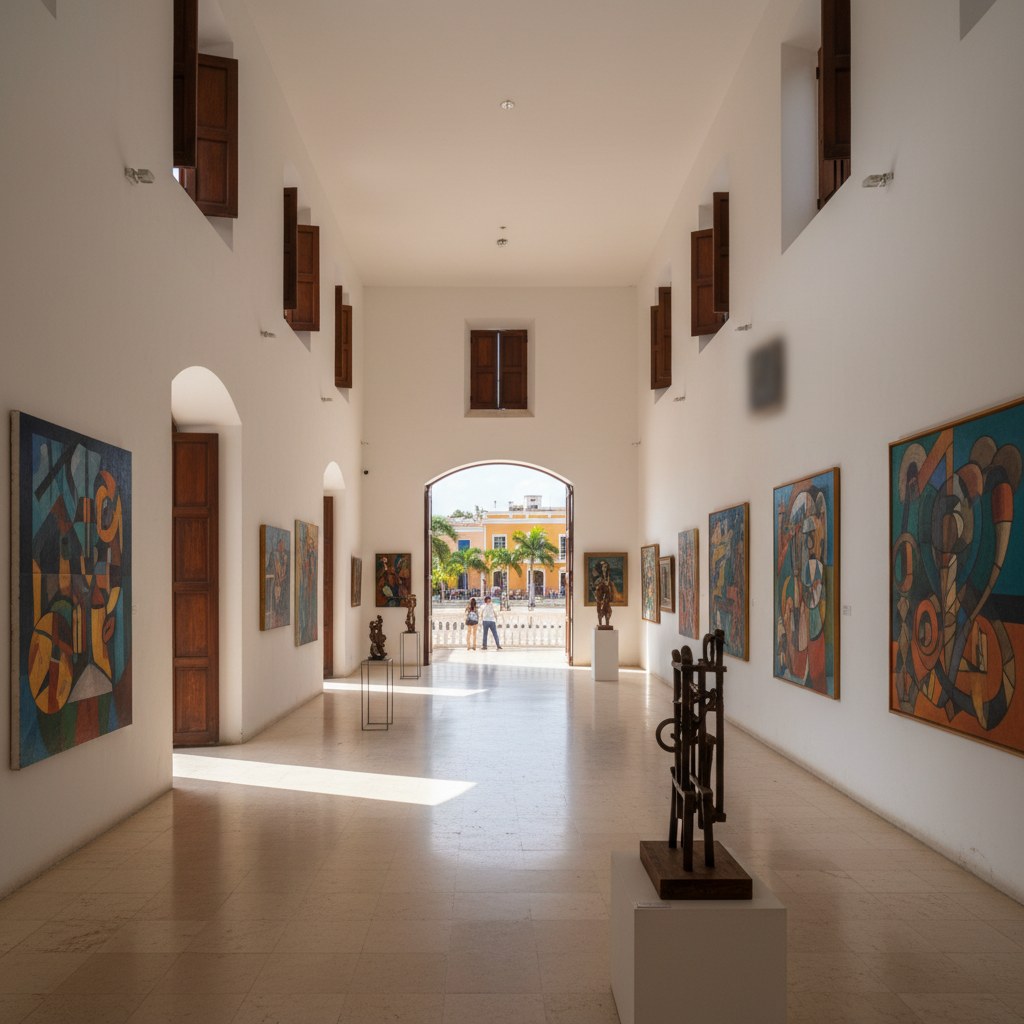
Museo de Arte Moderno de Cartagena (MAMC), Plaza San Pedro Claver. Small modern-art museum with a permanent OAS-donated Latin American painting collection and works by Cartagena natives Alejandro Obregón and Enrique Grau. Hours vary; call +57 5 660 2631 to confirm before visiting. Typical entry COP 10,000 to 15,000. Allow 30 to 45 minutes. For modern-art enthusiasts and rainy-day fallback.
Las Bóvedas, the 1792 to 1798 bomb-proof vaults at the northeast corner of the walled city. Free to enter. Functions as a shop arcade today; the architecture is what's worth seeing.
Portal de los Dulces on Plaza de los Coches. Not a formal museum but a living continuation of the nineteenth-century sweets trade, with palenquera-descended vendors selling traditional Colombian candies since 1921.
Half-day museum itinerary
Culture-heavy walled-city route, about four hours.
9:00 AM:Museo del Oro Zenú on Plaza de Bolívar. Free, 45 minutes. Start here for pre-Columbian grounding.
9:45 AM: Palacio de la Inquisición, across the plaza. 60 to 75 minutes. Colonial through independence.
11:00 AM: Coffee break on Plaza Santo Domingo or Plaza de San Diego.
11:30 AM: Convento de San Pedro Claver, eight minutes' walk. One hour. Slavery, Afro-Cartagena, religious art.
12:30 PM: Museo Naval del Caribe, adjacent. 90 minutes. Pirate attacks, 1741 siege, naval history.
2:00 PM: Lunch in Getsemaní or back to San Diego.
Total cost: roughly COP 65,000 per adult (USD 16 at 4,000:1). The Zenú is free; the other three are the paid stops. Best done Tuesday through Saturday to avoid Sunday and Monday closures (Zenú closed Mondays).
Extend to a full day: taxi to Castillo San Felipe after lunch (2 hours), finish with sunset from the walls.
Prices in COP with USD conversions at approximately 4,000:1. Specific venues, hours, and prices change, verify before booking. Last full review: April 2026.
Specific question while you read? Ask Catalina, the Cartagena Guide concierge.¿Pregunta específica mientras lees? Pregúntale a Catalina, la concierge de Cartagena Guide.Chat with Catalina ›Habla con Catalina ›
Mapa de lugares en esta guía
5 lugares marcados. Haz clic en cualquier marcador para más detalles.
Cartagena tiene cuatro museos que merecen una visita seria, más un puñado de lugares más pequeños que vale la pena si tienes interés específico. La concentración está en Plaza de Bolívar y Plaza de San Pedro Claver en la ciudad amurallada. Acá va el ranking honesto y un itinerario intenso de cultura para golpear los cuatro principales en una mañana.
Datos rápidos de museos (siempre verifica en la puerta)
Palacio de la Inquisición: Lunes a sábado 9 AM a 6 PM, domingo 10 AM a 4 PM. COP 24,000 adultos. Etiquetas en inglés en las exhibiciones principales, el resto en español.
Museo del Oro Zenú: Martes a sábado 9 AM a 5 PM, domingo 10 AM a 3 PM, cerrado lunes. Gratuito. Señalización bilingüe excelente.
Museo Naval del Caribe: Diarios 10 AM a 6 PM. COP 23,000 adultos. Señalización fuerte en inglés, de las mejores en la ciudad.
Iglesia y museo San Pedro Claver: Aproximadamente 8 AM a 5:30 PM. COP 20,000. Señalización parcial en inglés.
Castillo San Felipe: Diarios 8 AM a 6 PM. COP 30,000 a 50,000. Ve a las 8 AM: sombra mínima, se llena de grupos de cruceros a partir de las 10 AM.
Evita el calor: Los cuatro museos de la ciudad amurallada tienen aire acondicionado u sombra. La mañana es ideal. Si llueve o hace mucho calor a mediodía, el Palacio o Museo Zenú son tu salvavidas.
Di esto (en la entrada de cualquier museo)
¿Tienen señalización en inglés? ¿Hay audioguías disponibles?
Do you have signage in English? Are audio guides available?
Palacio de la Inquisición / Museo Histórico de Cartagena
Plaza de Bolívar, ciudad amurallada. El palacio Barroco de 1770 que albergó el Tribunal del Santo Oficio desde 1610 hasta 1811, el primer tribunal de la Inquisición en Sudamérica. Ahora es el museo histórico de la ciudad.
La entrada es aproximadamente COP 24,000 para adultos, COP 20,000 para niños y mayores, gratuito para menores de cinco años. Abierto de lunes a sábado 9 AM a 6 PM, domingos y festivos 10 AM a 4 PM. Dedica 45 a 60 minutos mínimo, 90 minutos para ver la exhibición completa. La señalización en inglés es limitada; bilingüe en etiquetas principales.
El edificio en sí es una de las estructuras civiles coloniales más finas de la costa caribeña. La colección cubre cerámica zenú precolombina, instrumentos de tortura de la era de la Inquisición (removidos en 2015 antes de la visita del Papa Francisco y parcialmente devueltos), armamentos coloniales y pinturas, artefactos de la era de la independencia incluyendo un facsímil del Acta de Independencia de 1811. La jurisdicción de la Inquisición cubría Cartagena, Panamá, Santa Marta, Puerto Rico, Popayán, Venezuela y Santiago de Cuba; aproximadamente 800 juicios en 200 años con relativamente pocas ejecuciones (tres de 1570 a 1700, versus 31 en Lima y 47 en México). El horror era el encarcelamiento, la confiscación y la humillación pública, no cremaciones masivas. El mejor museo individual en Cartagena.
Museo del Oro Zenú
Plaza de Bolívar, directamente frente al Palacio de la Inquisición. Entrada gratuita. Operado por Banco de la República (Banrepcultural), la misma red que el Museo del Oro de Bogotá.
Abierto de martes a sábado 9 AM a 5 PM, domingos 10 AM a 3 PM, cerrado lunes. Dedica 45 minutos. Interpretación bilingüe excelente. Planta baja, sin escalones.
La colección: más de 600 piezas de oro, plata y cerámica enfocadas en la cultura Zenú (pueblo indígena de los bajos ríos Sinú, San Jorge y Cauca, aproximadamente 200 BCE a 1600 CE). La técnica distintiva es la filigrana falsa Zenú, fundición de cera perdida intrincada que imita trabajo en alambre de filigrana. También: vasijas cerámicas y figurillas antropomórficas, instrumentos musicales (ocarinas) y cortometrajes sobre cosmología Zenú e ingeniería hidráulica (construyeron un sistema de canales de 2,000 kilómetros cuadrados visible desde el aire). Parada innegociable, especialmente porque es gratuito y compacto. Combínalo con el Palacio de la Inquisición al otro lado de la plaza.
Museo Naval del Caribe
Calle San Juan de Dios, adyacente a Plaza San Pedro Claver. Ubicado en el antiguo colegio Jesuita del siglo diecisiete.
La entrada es aproximadamente COP 23,000 adultos, COP 10,000 estudiantes y mayores, COP 2,000 niños; dos por uno en miércoles para colombianos nacionales. Abierto diarios 10 AM a 6 PM (extendido a 9 AM durante períodos vacacionales). Dedica 1.5 a 2 horas. Señalización fuerte en inglés, uno de los museos mejor traducidos en la ciudad.
Exhibiciones: historia marítima indígena precolombina; los ataques de piratas coloniales (Drake 1586, Barón de Pointis 1697); el Sitio de Cartagena de 1741 (la exhibición estrella, con un salón dedicado a Blas de Lezo cubriendo la defensa que envió la flota del Almirante Británico Vernon a casa); las guerras de independencia; equipo contemporáneo de la Armada Colombiana; simuladores interactivos de submarino y helicóptero; modelos de barcos y mapas de fuertes. Mejor opción si te interesa historia militar o marítima. Sáltalo si no te atrae.
Iglesia y Convento de San Pedro Claver
Plaza de San Pedro Claver, ciudad amurallada. Una iglesia Jesuita en funcionamiento más claustro anexo y museo.
Entrada aproximadamente COP 20,000. Abierto aproximadamente 8 AM a 5:30 PM. Dedica una hora. Señalización parcial en inglés; el español domina.
Pedro Claver (1580-1654) fue un Jesuita catalán que pasó 40 años sirviendo a africanos esclavizados cuando desembarcaban en el puerto de Cartagena. Canonizado en 1888 como "el Apóstol de los Negros" y "Esclavo de los Esclavos." Su cuerpo preservado está en un relicario de vidrio bajo el altar principal. El claustro es un arcade de tres pisos alrededor de un patio lleno de árboles. Las exhibiciones incluyen la celda preservada de Claver, cerámicas precolombinas y piezas arqueológicas, arte religioso colonial, una sección afrocaribeña con pinturas haitianas y la donación de la familia Zapata Olivella de máscaras africanas. Tanto el Papa Juan Pablo II (1986) como el Papa Francisco (2017) oraron en su tumba. Esencial para cualquiera que se involucre con la historia de esclavitud en Cartagena.
Castillo San Felipe de Barajas (como museo)
Cerro San Lázaro, justo afuera de la ciudad amurallada. La fortaleza española más grande de las Américas, comenzada en 1657 y masivamente expandida por el ingeniero militar Antonio de Arévalo entre 1762 y 1798. Patrimonio de la Humanidad UNESCO 1984 como parte de la inscripción "Puerto, Fortalezas y Grupo de Monumentos, Cartagena."
Entrada aproximadamente COP 30,000 a 50,000 para extranjeros (las fuentes discrepan; confirma en la puerta). Niños menores de 7 años gratis. Estudiantes 20 a 30 por ciento descuento con cédula. Gratuito el último domingo de cada mes. Abierto diarios 8 AM a 6 PM, última entrada 5:30 PM. Alquiler de audioguía COP 15,000 y recomendado (la señalización es escasa). Dedica 2 a 3 horas para terraplenes, túneles, posiciones de batería y la vista panorámica. Accesibilidad muy limitada: pendientes pronunciadas, piedra irregular, muchas escaleras. No es accesible para sillas de ruedas. Si prefieres que un guía maneje la historia y la logística, puedes reservar un tour guiado por el Castillo, la Ciudad Amurallada y el Convento de la Popa en Viator.
Foto vía Viator
Llega a las 7:30 a 8:00 AM para evitar tanto el calor como los grupos de turismo de cruceros. El sistema de túneles es la característica: aproximadamente 200 metros de pasajes interconectados con canales acústicos que permitían a los defensores escuchar la minería enemiga. El sitio es también donde se ganó el sitio de 1741. El segundo lugar de museo más importante en Cartagena después del Palacio de la Inquisición.
Convento de la Popa
Cumbre del Cerro de la Popa, la colina de 150 metros al este de la ciudad amurallada. Fundado en 1607 por Recogidos Agustinianos; uno de los monasterios más antiguos que sobreviven en Colombia.
Entrada aproximadamente COP 8,000 a 15,000 (variable). Abierto diarios 8:30 AM a 5:30 PM. Dedica 30 a 60 minutos. La capilla alberga la imagen de la Virgen de la Candelaria, patrona de la ciudad. El mirador en el techo es, por consenso, el panorama mejor de la Bahía de Cartagena y la península.
Cómo llegar: taxi o Uber. No camines hacia arriba; la vía de acceso y los barrios alrededor (Pie de la Popa, Loma Fresca) no son seguros para turistas a pie. Taxi redondo con 30 minutos de espera cuesta COP 40,000 a 60,000 desde la ciudad amurallada.
Casa Museo Rafael Núñez
Barrio El Cabrero, tres minutos a pie al norte de la ciudad amurallada. Casa de madera blanca y verde de dos pisos, declarada Monumento Nacional en 1950.
La entrada es usualmente gratuita o con una tarifa mínima. Dedica 30 minutos. Señalización mínima en inglés.
Rafael Núñez (1825-1894) es el único presidente colombiano nacido en Cartagena, sirvió cuatro mandatos, fue autor de la Constitución de 1886 (vigente hasta 1991) y escribió la letra del himno nacional colombiano. Sus cenizas descansan en la Ermita del Cabrero al otro lado de la calle. La casa en sí es un raro ejemplo de arquitectura residencial colonial de madera del siglo diecinueve cerca del mar. Saltable en una primera visita; gratificante para visitantes de retorno con interés en historia.
Otros museos que valen la pena mencionar
Museo de Arte Moderno de Cartagena (MAMC), Plaza San Pedro Claver. Pequeño museo de arte moderno con una colección permanente de pintura latinoamericana donada por la OEA y obras de nativos cartageneros Alejandro Obregón y Enrique Grau. Los horarios varían; llama al +57 5 660 2631 para confirmar antes de visitar. Entrada típica COP 10,000 a 15,000. Dedica 30 a 45 minutos. Para entusiastas del arte moderno y plan alternativo si llueve.
Las Bóvedas, las bóvedas a prueba de bombas de 1792 a 1798 en la esquina noreste de la ciudad amurallada. Entrada gratuita. Funciona como galería comercial hoy; la arquitectura es lo que vale la pena ver.
Portal de los Dulces en Plaza de los Coches. No es un museo formal pero una continuación viva del comercio de dulces del siglo diecinueve, con vendedoras descendientes de palenqueras vendiendo dulces colombianos tradicionales desde 1921.
Itinerario de medio día de museos
Ruta intensiva de cultura por la ciudad amurallada, aproximadamente cuatro horas.
9:00 AM:Museo del Oro Zenú en Plaza de Bolívar. Gratuito, 45 minutos. Empieza aquí para entender el período precolombino.
9:45 AM: Palacio de la Inquisición, al otro lado de la plaza. 60 a 75 minutos. Período colonial hasta la independencia.
11:00 AM: Descanso para café en Plaza Santo Domingo o Plaza de San Diego.
11:30 AM: Convento de San Pedro Claver, ocho minutos caminando. Una hora. Esclavitud, Cartagena Afro, arte religioso.
12:30 PM: Museo Naval del Caribe, adyacente. 90 minutos. Ataques de piratas, sitio de 1741, historia naval.
2:00 PM: Almuerzo en Getsemaní o de vuelta a San Diego.
Costo total: aproximadamente COP 65,000 por adulto (USD 16 a 4,000:1). El Zenú es gratuito; los otros tres son los pasos pagados. Mejor hecho martes a sábado para evitar cierres de domingo y lunes (Zenú cerrado lunes).
Extiende a un día completo: taxi al Castillo San Felipe después del almuerzo (2 horas), termina con atardecer desde las murallas.
Precios en COP con conversiones USD a aproximadamente 4,000:1. Lugares específicos, horarios y precios cambian, verifica antes de reservar. Última revisión completa: abril de 2026.
Newsletter
Get the guide in your inbox
One short email each Saturday. New posts, what's on this week, and anything worth knowing about Cartagena. No spam, unsubscribe anytime.