Working Remotely from Cartagena: An Honest Digital Nomad Guide (2026)Trabajar Remoto desde Cartagena: Una Guía Honesta para Nómadas Digitales (2026)
By Mike Chartrand · Updated May 2026
Specific question while you read? Ask Catalina, the Cartagena Guide concierge.¿Pregunta específica mientras lees? Pregúntale a Catalina, la concierge de Cartagena Guide.Chat with Catalina ›Habla con Catalina ›
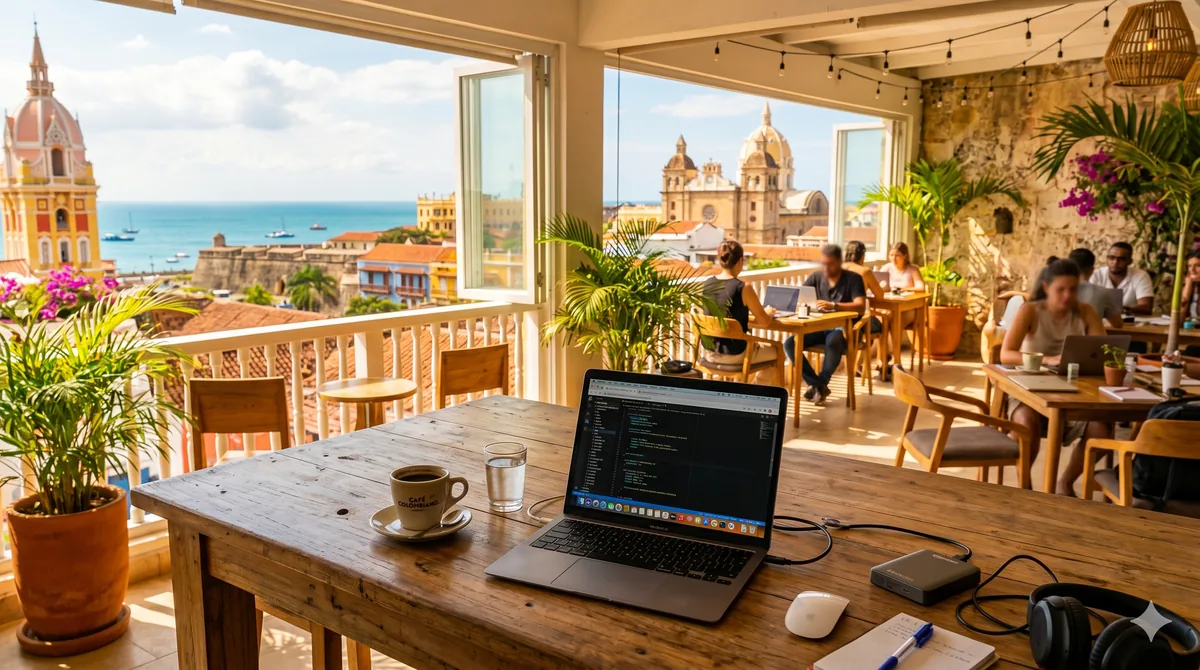
Last updated: May 2026. Let me be honest before you book anything: Cartagena is a beach and tourist city first, a remote-work base second. It is not the established nomad hub that Medellín is, and it never set out to be. What you get instead is a walled colonial city, the Caribbean out the window, a US-friendly time zone, and fiber that is genuinely good in the right buildings. What you also get is heat and humidity that make air conditioning non-negotiable for a working day, tourist-zone pricing, and fewer long-term foreigners to build a circle with. If you go in clear-eyed about that trade, Cartagena can be a great few months at a desk. This guide covers the real logistics: internet, power, the heat, coworking and café work by area, the Digital Nomad visa, taxes, and which zones actually suit a working stay.
Cartagena as a remote-work base, honestly
Cartagena is one of Colombia's most beautiful cities, and that is exactly why it is a complicated place to work from. The walled city, Getsemaní, and the Bocagrande beachfront run on tourism, which means short-term rentals, restaurant prices set for visitors, and a churn of people who are here for four days, not four months. The long-term foreign community exists, but it is smaller and more spread out than in Medellín, and it skews toward retirees and second-home owners rather than laptop workers.
None of that disqualifies it. Plenty of people spend a productive month or two here. But set expectations correctly:
If you want a deep nomad scene, coworking density, daily meetups, an obvious foreigner crowd, that is Medellín, not Cartagena. Cartagena's working-foreigner community is real but thin.
If you want sun, sea, history, and a backdrop for a few focused months, with the discipline to manage the heat and pricing, Cartagena delivers.
The heat is the central constraint. This is not a minor footnote. Working in an un-air-conditioned room here in the afternoon is miserable and your output drops. Plan around it (see below).
This is the section that should drive your decision more than internet speed or visa rules. Cartagena is hot and humid every single day of the year. Daily highs sit around 31 to 33°C (88 to 91°F) with humidity routinely between 75 and 90 percent. There is no cool season. There is a slightly less brutal season and a more brutal one.
For remote work specifically, this means:
Air conditioning is essential, not optional. You need at least one A/C unit in the room you work from, ideally an inverter split unit so it is cheaper to run for long stretches. A laptop in a 33°C room will thermal-throttle, and so will you.
A/C is the largest single line on your utility bill. Running one inverter split for six to ten hours a day typically adds COP $180.000 to COP $400.000 per month (USD $45 to $100 at roughly $4.000 per USD) to electricity, depending on the unit, the estrato of the building, and how cold you keep it. Higher-estrato buildings in Bocagrande and Castillogrande pay surcharged power rates, so the same usage costs more there.
Verify A/C before you sign anything. Listings will say "aire acondicionado" and mean one unit in the master bedroom only. Confirm there is A/C in the room you intend to work from, and that it actually works, before committing to a month or more.
Mornings are your friend. Many people who work well here front-load the day: hard focus from early morning, lighter or break in the worst afternoon heat, back to it later. The US East Coast time zone happens to reward this rhythm.
Salt air is the other quiet factor. Coastal humidity is hard on electronics and on the metal of older buildings. Keep your gear in the conditioned room and do not leave a laptop sweating on a balcony.
Home internet: providers, real speeds, and the building question
The good news is that fiber to the home (FTTH) is widely available in the expat-relevant neighborhoods, and where it is installed it is genuinely good. The catch is that "available in the neighborhood" and "installed and working in this specific apartment" are two different things in Cartagena, and the gap matters more here than in a newer city.
The main providers:
Claro Hogar: the largest network and generally the most reliable on the Coast. Fiber plans from around 200 Mbps up to 1 Gbps, symmetric on the higher tiers. Indicative 2026 retail pricing: 500/500 Mbps around COP $100.000 to $130.000 per month (USD $25 to $33), 1 Gbps around COP $150.000 to $180.000 (USD $38 to $45).
Tigo: strong second option, sometimes cheaper promos. Plans around 600/600 Mbps often land near COP $90.000 to $120.000 per month (USD $23 to $30).
Movistar: present, less common, pricing similar to Tigo.
ETB and others: limited footprint in Cartagena specifically.
Real-world performance: on Claro or Tigo fiber in Bocagrande, Castillogrande, El Laguito, Manga, or Crespo you should see close to advertised speeds nearly all day, low ping to Miami, and minimal packet loss. The usual bottleneck is the basic Wi-Fi router the provider hands you, not the line. If you live on video calls, replace it with a decent mesh (TP-Link Deco, Asus, or similar).
Confirm the building's connection before you commit. This is the single most important internet step in Cartagena. Some older buildings in Centro and parts of Getsemaní, and a few aging towers in Bocagrande, still have only an older connection, or the fiber drop reaches the building but not your specific unit. Ask the landlord or the portero exactly what is installed in the apartment, who the provider is, and the plan speed. If you can, run a speed test on the actual line before you sign. A beautiful walled-city apartment with a weak connection is a bad month of work.
Installation: a new connection takes roughly 3 to 10 business days from signup and requires a cédula or cédula de extranjería. On a tourist stay you will normally use the apartment's existing line (most furnished rentals include it) or your phone as a hotspot rather than installing your own.
Mobile backup and power
Two things will interrupt you in Cartagena: power cuts and the occasional line fault. Both are manageable if you plan for them.
Power. The regional electricity distributor (Afinia on the Caribbean coast) has an uneven reliability record, and outages happen, more often in the rainy season. Most are short, from 30 minutes to a couple of hours, but a power cut also kills your A/C, which in this climate ends the workday fast if it drags on. Premium buildings in Bocagrande, Castillogrande, and El Laguito often have a building generator that covers common areas and sometimes units, ask before leasing if reliability matters to you.
Mobile backup. Keep a prepaid SIM in a spare phone with plenty of data so you can hotspot through any fiber outage. Claro generally has the best coverage on the Coast, with Tigo a close second. For how to buy and set up a SIM, including the registration step foreigners often miss, see our SIM cards and mobile data guide.
Recommended setup for serious remote work:
Hotspot SIM: 50 GB or more on Claro or Tigo, roughly COP $60.000 to $90.000 per month (USD $15 to $23), in a spare phone.
A small UPS on the router, modem, and one monitor: a unit from Home Center or Falabella for around COP $400.000 to $700.000 (USD $100 to $175) buys you 30 to 60 minutes to finish a call and save your work during a cut.
Power and plugs: Colombia runs on 110V / 60Hz, the same as the US, so US plugs fit directly. UK and EU travelers need a cheap adapter.
Coworking and café work by area
Cartagena has coworking and laptop-friendly cafés, but the scene is smaller and more tourist-shaped than in Medellín, and spaces open and close, so rather than name specific venues that may not last, here is how the options break down by area. Check current listings and reviews close to your trip, and our how-to guides section for anything more current.
Getsemaní: the most "creative" neighborhood, walkable, full of cafés, and where you are most likely to find independent spots that tolerate a laptop session. It is also lively and noisy, especially in the evenings, so it suits morning work better than an all-day call schedule.
The Walled City (Centro / Ciudad Amurallada): gorgeous and atmospheric, with plenty of cafés, but priced for tourists and busy. Fine for a couple of focused hours with headphones. Less ideal as a daily office, both for noise and cost.
Bocagrande: the high-rise corridor has the most conventional, air-conditioned chain cafés and business-style options, plus mall and hotel work areas with reliable A/C and Wi-Fi. Less charming, more functional. This is where you go when you just need a cold, quiet room and a strong connection.
Manga: a quieter residential island close to Centro, with a calmer pace and a more local feel. Fewer obvious work cafés, but a good base if you mainly work from home and want occasional café time without the tourist crush.
What to expect on price and comfort. Coworking options in Cartagena are smaller in number and scale than in Medellín, and the tourist economy pushes prices up. Typical 2026 ranges (where spaces operate; verify current availability before your trip):
Day pass: roughly COP 40,000 to 80,000 (about USD 10 to 20), depending on the space and whether it includes prints, coffee, or a dedicated desk. Budget spots in Getsemaní lean toward the lower end; business-oriented spaces in Bocagrande or near hotels push toward the top.
Monthly hot-desk membership: roughly COP 500,000 to 1,100,000 (about USD 125 to 275). A full-time dedicated desk, when available, can run COP 900,000 to 1,500,000 per month (about USD 225 to 375).
A/C and reliable fiber are non-negotiable in Cartagena's heat. Always confirm both before paying. Ask about backup power, too.
For café work, the reliable formula is: chain or hotel café in Bocagrande for A/C and outlets when you have calls, an independent Getsemaní spot for a focused morning when you want atmosphere over a boardroom feel. Latin coffee culture does not always love the four-hour laptop sit, so for a full working day a coworking space or your own apartment beats nursing one cortado while you open Figma.
Say this at a coworking space or laptop-friendly café
"Buenos días. ¿Tienen un pase de día? ¿El aire acondicionado funciona todo el día y el wifi tiene buena velocidad para videollamadas?"
Good morning. Do you have a day pass? Is the air conditioning on all day, and is the Wi-Fi fast enough for video calls?
Best zones for a working stay
Pick the zone before the apartment. For a working stay specifically, weigh A/C, quiet, internet, and walkability over photogenic charm.
Bocagrande / Castillogrande / El Laguito: high-rise, beachfront, the most reliable fiber and the most buildings with generators and good A/C. Higher estrato means higher utility bills (power surcharges on top of A/C use). Functional and convenient rather than charming. The safest bet for an all-day call schedule.
Manga: residential, calmer, more local, close to Centro without being in the tourist churn. A strong pick if you mostly work from home and value quiet and a more normal daily life.
Getsemaní: the most characterful and walkable, best for someone who works mornings and wants nightlife and cafés on the doorstep. The trade-off is noise, expect it, especially on weekends.
Centro (the Walled City): stunning to live in, but the most expensive, the most touristy, and the most likely to have an older building with a weaker connection. Verify internet carefully here.
Crespo: quiet residential strip near the airport and the sea, gaining favor with longer-term foreigners. Calmer and often better value than Bocagrande for a working stay.
Time zone: a real advantage for US and Canada clients
This is where Cartagena (and Colombia generally) genuinely shines. Colombia runs on COT (UTC minus 5) all year, with no daylight-saving shifts. For anyone serving North American clients, that is close to ideal.
Same as US Eastern Time from early November to mid-March, when the US is on standard time.
One hour behind US Eastern from mid-March to early November, when the US is on daylight time. Your 9 am is their 10 am.
Aligned with most of Canada's business hours too, since the major Canadian centers share Eastern and Central time.
Europe is 5 to 6 hours ahead: a 2 pm Cartagena call is a 7 to 8 pm London call, so European clients mean later starts for you.
If your clients are in the US or Canada, you can keep ordinary working hours and overlap with them all day. That, combined with the morning-friendly heat rhythm, is the strongest practical argument for working from here.
Managing US and Canada clients from here
Beyond the time zone, a few practicalities make remote client work smooth:
Getting paid: invoice in USD or CAD and receive into your home bank or a service like Wise, then convert to COP as you need it. Keep clean records, the Colombian tax authority (DIAN) will care once you cross into tax residency (see below).
Calls: with fiber in a good building, two simultaneous video calls plus screen-sharing on a 500/500 Mbps line are no problem. Have the hotspot SIM ready as failover.
Reliability optics: the only thing that makes you look unreliable to a North American client here is a dropped call from a power cut. The UPS plus hotspot combination is what prevents that. It is standard kit on the Coast, not paranoia.
Holidays: Colombia has many public holidays (around 18 a year). Banks and government close, but your work and your ISP support do not. Just keep the Colombian calendar in view when scheduling.
The Digital Nomad visa (V Nómadas Digitales)
If you are staying more than six months, you will want Colombia's Digital Nomad visa, the V Nómadas Digitales. It is the proper category for remote workers and freelancers earning foreign income, and it exists precisely so you do not have to live on back-to-back tourist permits.
Income requirement: you must show foreign income of at least three times the Colombian minimum monthly wage. In 2026 that works out to roughly USD $1.000 to $1.100 per month, documented over recent months.
Work rights: you may work for foreign clients or employers. You cannot take a job with a Colombian employer on this visa, that is a different category.
Duration: up to 2 years.
Application: online through the Cancillería portal, with a typical decision window of a few business days to a few weeks.
Health coverage: you will need to show valid health insurance covering you for your stay in Colombia.
The important caution: holding this visa does not exempt you from tax residency. Spend enough days in Colombia and you become a tax resident regardless of which visa you hold. That is the next section, and it is the part most people overlook.
Tax residency: the 183-day caution
Physical presence in Colombia for more than 183 days in any rolling 365-day period makes you a Colombian tax resident, liable to Colombian tax on your worldwide income. This is separate from your visa and catches a lot of long-stay nomads off guard.
The 183-day count is cumulative across a rolling year, not per calendar year, so day-counting matters.
Colombia has tax treaties with Canada, the UK, Spain, and several other countries, which can reduce double taxation. It does not currently have one with the United States, so US citizens may file in both jurisdictions, partly offset by mechanisms like the Foreign Earned Income Exclusion and foreign tax credits.
If you are going to be close to or over the threshold, talk to a Colombian contador público before year-end. This is genuinely worth the fee.
This is a guide, not tax advice. For the full breakdown of how the rule works and how to plan around it, read our tax residency in Colombia guide.
The downsides, said plainly
So you can decide with eyes open:
The heat and humidity: relentless, every day, A/C-dependent. The biggest single factor working against Cartagena as a desk base.
Tourist pricing: restaurants, short-term rentals, and services in Centro, Getsemaní, and Bocagrande are priced for visitors. You can live more reasonably in Manga or Crespo, but the tourist-zone premium is real.
Fewer long-term nomads: the working-foreigner community is thin compared with Medellín. If a ready-made expat social circle matters to you, this is a genuine gap.
Noise in tourist zones: Getsemaní and parts of Centro are loud, especially at night and on weekends. Great for atmosphere, hard for an all-day call schedule. Noise-cancelling headphones are the best single purchase you will make.
Power reliability on the Coast: improving but imperfect, hence the UPS and hotspot setup.
Setup checklist for a month or more
Choose a zone that fits how you work: Bocagrande or Castillogrande for the most reliable infrastructure and A/C, Manga or Crespo for quiet and value, Getsemaní if you work mornings and want life on the doorstep.
Confirm there is working A/C in the actual room you will work from, not just the bedroom.
Confirm the building's internet: who the provider is, the plan speed, and ideally run a speed test on the line before signing.
Get a backup SIM with 50 GB or more of data on Claro or Tigo, see our SIM cards guide.
Buy a small UPS for the router, modem, and one monitor so a power cut does not kill a call.
If you will be here more than six months, start the V Nómadas Digitales application before your tourist permit runs out.
If you are approaching 183 days in Colombia, talk to a contador público about tax residency, see our tax residency guide.
FAQ
Is Cartagena a good digital nomad base? It is a good place to spend a focused month or two if you want sun, sea, and history and you manage the heat and the pricing. It is not a deep nomad hub like Medellín, and it does not pretend to be. Go for the place, not for a ready-made nomad scene.
Is the internet fast enough for video calls all day? Yes, on fiber in a good building. The bottleneck is usually the provider's basic Wi-Fi router, swap it for a decent mesh. The bigger risk is an older building with a weaker connection, which is why you confirm the line before signing.
Can I really work without air conditioning? Not comfortably, and not productively. A/C in your work room is essential here, and it is your largest utility cost. Budget for it.
Which neighborhood should I work from? Bocagrande or Castillogrande for the most reliable A/C, generators, and fiber, Manga or Crespo for quiet and value, Getsemaní if you work mornings and want cafés and nightlife nearby. See our housing guide.
Do I need the Digital Nomad visa? If you are staying past six months, effectively yes. You must show foreign income of about three times the Colombian minimum wage and valid health insurance. It lasts up to 2 years.
Will I owe Colombian tax? If you spend more than 183 days in any rolling 365-day period in Colombia, you become a tax resident on your worldwide income, regardless of visa. Read the tax residency guide and talk to a contador if you are near the line.
How is the time zone for US and Canada clients? Excellent. Colombia is UTC minus 5 year-round with no daylight saving, so you align closely with US and Canadian Eastern and Central business hours all day.
Practical information, not tax or legal advice. Internet pricing, ISP performance, coworking options, and visa thresholds change quickly, verify at signup and around your travel dates. COP figures use an indicative rate of about COP $4.000 per USD. Last review: May 2026.
Still have questions?¿Todavía tienes preguntas?
Catalina is our concierge. Ask her about visas, neighborhoods, healthcare, prices, anything Cartagena. She answers in chat or WhatsApp, English or Spanish, free.Catalina es nuestra concierge. Pregúntale sobre visas, barrios, salud, precios, cualquier cosa de Cartagena. Responde por chat o WhatsApp, en inglés o español, gratis.
Specific question while you read? Ask Catalina, the Cartagena Guide concierge.¿Pregunta específica mientras lees? Pregúntale a Catalina, la concierge de Cartagena Guide.Chat with Catalina ›Habla con Catalina ›
Última actualización: mayo de 2026. Quiero ser honesto antes de que reserves cualquier cosa: Cartagena es primero una ciudad de playa y turismo, y en segundo lugar una base para trabajo remoto. No es el centro nómada consolidado que es Medellín, ni nunca pretendió serlo. Lo que obtienes en cambio es una ciudad colonial amurallada, el Caribe por la ventana, una zona horaria amigable con EE.UU., y fibra genuinamente buena en los edificios correctos. Lo que también obtienes es calor y humedad que hacen el aire acondicionado innegociable para un día de trabajo, precios para zonas turísticas, y menos extranjeros de largo plazo con los que construir un círculo. Si entras con los ojos abiertos sobre ese intercambio, Cartagena puede ser un excelente par de meses en un escritorio. Esta guía cubre la logística real: internet, electricidad, el calor, trabajo en coworking y cafés por zona, la visa de Nómada Digital, impuestos, y qué zonas realmente funcionan para una estancia laboral.
Cartagena como base para trabajo remoto, sin filtros
Cartagena es una de las ciudades más bonitas de Colombia, y esa es exactamente la razón por la cual es un lugar complicado para trabajar. La ciudad amurallada, Getsemaní, y el frente de playa de Bocagrande funcionan con turismo, lo que significa arriendos de corto plazo, precios en restaurantes pensados para visitantes, y un flujo de personas que están aquí cuatro días, no cuatro meses. La comunidad extranjera de largo plazo existe, pero es más pequeña y está más dispersa que en Medellín, e inclinada hacia jubilados y dueños de casa de descanso más que hacia trabajadores con laptop.
Nada de eso lo descalifica. Muchas personas pasan una o dos semanas productivas aquí. Pero establece las expectativas correctamente:
Si quieres una escena nómada profunda, densidad de coworking, encuentros diarios, una multitud obvia de extranjeros, eso es Medellín, no Cartagena. La comunidad de trabajadores extranjeros de Cartagena es real pero delgada.
Si quieres sol, mar, historia, y un telón de fondo para un par de meses enfocados, con la disciplina de manejar el calor y los precios, Cartagena lo entrega.
El calor es la restricción central. Esto no es una nota al pie menor. Trabajar en una habitación sin aire acondicionado aquí por la tarde es miserable y tu producción baja. Planifica alrededor de ello (mira abajo).
Esta es la sección que debería impulsar tu decisión más que la velocidad de internet o las reglas de visa. Cartagena es calurosa y húmeda todos los días del año. Las máximas diarias rondan entre 31 y 33°C con humedad rutinariamente entre 75 y 90 por ciento. No hay estación fría. Hay una estación ligeramente menos brutal y una más brutal.
Para trabajo remoto específicamente, esto significa:
El aire acondicionado es esencial, no opcional. Necesitas al menos una unidad de A/C en la habitación donde trabajas, idealmente una unidad inverter split para que sea más barato de usar durante largas jornadas. Una laptop en una habitación de 33°C hará thermal-throttle, y tú también.
El A/C es la línea más grande en tu factura de servicios. Usar un inverter split durante seis a diez horas al día típicamente añade COP $180.000 a COP $400.000 por mes (USD $45 a $100 a aproximadamente $4.000 por USD) a la electricidad, dependiendo de la unidad, el estrato del edificio, y qué tan frío lo mantengas. Los edificios de estrato más alto en Bocagrande y Castillogrande pagan tasas recargadas de energía, así que el mismo consumo cuesta más allá.
Verifica el A/C antes de firmar cualquier cosa. Los anuncios dirán "aire acondicionado" y significan una unidad solo en la habitación principal. Confirma que hay A/C en la habitación donde pretendes trabajar, y que realmente funciona, antes de comprometerte a un mes o más.
Las mañanas son tu aliada. Muchas personas que trabajan bien aquí concentran el día: enfoque duro desde temprano en la mañana, más ligero o descanso en el peor calor de la tarde, de vuelta a ello después. La zona horaria de la Costa Este de EE.UU. recompensa este ritmo.
El aire salado es el otro factor silencioso. La humedad costera es dura con la electrónica y con el metal de los edificios más viejos. Mantén tu equipo en la habitación acondicionada y no dejes una laptop sudando en un balcón.
Internet en casa: proveedores, velocidades reales, y la cuestión del edificio
La buena noticia es que fibra a la casa (FTTH) está ampliamente disponible en los barrios relevantes para extranjeros, y donde está instalada es genuinamente buena. La trampa es que "disponible en el barrio" e "instalada y funcionando en este apartamento específico" son dos cosas diferentes en Cartagena, y la brecha importa más aquí que en una ciudad más nueva.
Los proveedores principales:
Claro Hogar: la red más grande y generalmente la más confiable en la Costa. Planes de fibra desde alrededor de 200 Mbps hasta 1 Gbps, simétricos en los niveles más altos. Precios minoristas indicativos de 2026: 500/500 Mbps alrededor de COP $100.000 a $130.000 por mes (USD $25 a $33), 1 Gbps alrededor de COP $150.000 a $180.000 (USD $38 a $45).
Tigo: fuerte segunda opción, a veces promos más baratas. Planes alrededor de 600/600 Mbps frecuentemente llegan cerca de COP $90.000 a $120.000 por mes (USD $23 a $30).
Movistar: presente, menos común, precios similares a Tigo.
ETB y otros: presencia limitada en Cartagena específicamente.
Rendimiento en el mundo real: en fibra de Claro o Tigo en Bocagrande, Castillogrande, El Laguito, Manga, o Crespo deberías ver velocidades cercanas a las anunciadas casi todo el día, ping bajo a Miami, y pérdida de paquetes mínima. El cuello de botella usual es el router Wi-Fi básico que el proveedor te entrega, no la línea. Si vives en videollamadas, reemplázalo con un mesh decente (TP-Link Deco, Asus, o similar).
Confirma la conexión del edificio antes de comprometerte. Este es el paso de internet más importante en Cartagena. Algunos edificios más viejos en Centro y partes de Getsemaní, y algunas torres envejecidas en Bocagrande, todavía tienen solo una conexión más antigua, o la fibra llega al edificio pero no a tu unidad específica. Pregunta al arrendador o al portero exactamente qué está instalado en el apartamento, quién es el proveedor, y la velocidad del plan. Si puedes, corre un test de velocidad en la línea real antes de firmar. Un apartamento hermoso en la ciudad amurallada con una conexión débil es un mes malo de trabajo.
Instalación: una conexión nueva toma aproximadamente 3 a 10 días hábiles desde el registro y requiere una cédula o cédula de extranjería. En una estancia turística normalmente usarás la línea existente del apartamento (la mayoría de arriendos amueblados la incluyen) o tu teléfono como hotspot en lugar de instalar la tuya propia.
Respaldo móvil y electricidad
Dos cosas te interrumpirán en Cartagena: cortes de energía y la ocasional falla de línea. Ambos son manejables si planificas para ellos.
Electricidad. El distribuidor regional de electricidad (Afinia en la costa Caribe) tiene un registro de confiabilidad desigual, y apagones suceden, más a menudo en la estación lluviosa. La mayoría son cortos, de 30 minutos a un par de horas, pero un corte de energía también mata tu A/C, que en este clima termina la jornada laboral rápido si se arrastra. Los edificios premium en Bocagrande, Castillogrande, y El Laguito a menudo tienen un generador de edificio que cubre áreas comunes y a veces unidades, pregunta antes de arrendar si la confiabilidad te importa.
Respaldo móvil. Ten una SIM prepago en un teléfono de repuesto con bastantes datos para hotspot a través de cualquier apagón de fibra. Claro generalmente tiene la mejor cobertura en la Costa, con Tigo un cercano segundo. Para cómo comprar y configurar una SIM, incluyendo el paso de registro que los extranjeros frecuentemente pierden, ve nuestra guía de SIM y datos móviles.
Configuración recomendada para trabajo remoto serio:
SIM hotspot: 50 GB o más en Claro o Tigo, aproximadamente COP $60.000 a $90.000 por mes (USD $15 a $23), en un teléfono de repuesto.
Un UPS pequeño en el router, módem, y un monitor: una unidad de Home Center o Falabella por alrededor de COP $400.000 a $700.000 (USD $100 a $175) te compra 30 a 60 minutos para terminar una llamada y guardar tu trabajo durante un corte.
Electricidad y enchufes: Colombia corre en 110V / 60Hz, lo mismo que EE.UU., así que los enchufes de EE.UU. encajan directamente. Los viajeros del Reino Unido y UE necesitan un adaptador barato.
Coworking y trabajo en cafés por zona
Cartagena tiene coworking y cafés amigables con laptop, pero la escena es más pequeña y más moldeada por turismo que en Medellín, y los espacios abren y cierran, así que en lugar de nombrar lugares específicos que pueden no durar, aquí está cómo se desglosan las opciones por zona. Verifica anuncios y reviews actuales cerca de tu viaje, y nuestra sección guías de cómo hacer para cualquier cosa más actual.
Getsemaní: el barrio más "creativo", caminable, lleno de cafés, y donde es más probable que encuentres lugares independientes que toleran una sesión de laptop. También es animado y ruidoso, especialmente por las noches, así que se presta mejor para trabajo matutino que para un horario de llamadas todo el día.
La Ciudad Amurallada (Centro): hermosa y atmosférica, con bastantes cafés, pero con precios para turistas y concurrida. Bien para un par de horas enfocadas con auriculares. Menos ideal como oficina diaria, tanto por ruido como por costo.
Bocagrande: el corredor de altos edificios tiene las opciones de cafés de cadena más convencionales y con aire acondicionado, más opciones de estilo empresarial, además de áreas de trabajo en centros comerciales y hoteles con A/C confiable y Wi-Fi. Menos encantador, más funcional. Aquí es donde vas cuando simplemente necesitas una habitación fría y tranquila y una conexión fuerte.
Manga: una isla residencial más tranquila cerca de Centro, con un ritmo más calmado y un sentir más local. Menos cafés evidentes para trabajo, pero una buena base si principalmente trabajas desde casa y quieres tiempo ocasional en cafés sin el apretón turístico.
Qué esperar en precio y comodidad. Las opciones de coworking en Cartagena son más pequeñas en número y escala que en Medellín, y la economía turística empuja los precios hacia arriba. Rangos típicos de 2026 (donde los espacios operan; verifica disponibilidad actual antes de tu viaje):
Pase de día: aproximadamente COP 40.000 a 80.000 (alrededor de USD 10 a 20), dependiendo del espacio y si incluye impresiones, café, o un escritorio dedicado. Los lugares presupuesto en Getsemaní inclinan hacia el extremo inferior; los espacios orientados a negocios en Bocagrande o cerca de hoteles empujan hacia el superior.
Membresía de escritorio caliente mensual: aproximadamente COP 500.000 a 1.100.000 (alrededor de USD 125 a 275). Un escritorio dedicado de tiempo completo, cuando disponible, puede costar COP 900.000 a 1.500.000 por mes (alrededor de USD 225 a 375).
A/C y fibra confiable son innegociables en el calor de Cartagena. Siempre confirma ambos antes de pagar. Pregunta también sobre respaldo de energía.
Para trabajo en cafés, la fórmula confiable es: cafés de cadena u hotel en Bocagrande para A/C y outlets cuando tienes llamadas, un lugar independiente en Getsemaní para una mañana enfocada cuando quieres atmósfera sobre una sensación de sala de juntas. La cultura de café latino no siempre ama la sesión de laptop de cuatro horas, así que para un día completo de trabajo un coworking o tu propio apartamento es mejor que cuidar un cortado mientras abres Figma.
Di esto en un coworking o cafés amigables con laptop
"Buenos días. ¿Tienen un pase de día? ¿El aire acondicionado funciona todo el día y el wifi tiene buena velocidad para videollamadas?"
Good morning. Do you have a day pass? Is the air conditioning on all day, and is the Wi-Fi fast enough for video calls?
Mejores zonas para una estancia laboral
Elige la zona antes del apartamento. Para una estancia laboral específicamente, pondera A/C, tranquilidad, internet, y caminabilidad sobre encanto fotogénico.
Bocagrande / Castillogrande / El Laguito: altos edificios, frente de playa, la fibra más confiable y la mayoría de edificios con generadores y buen A/C. Estrato más alto significa facturas de servicios más altas (recargos de energía además del uso de A/C). Funcional y conveniente más que encantador. La apuesta más segura para un horario de llamadas todo el día.
Manga: residencial, más tranquila, más local, cerca de Centro sin estar en el apretón turístico. Una fuerte opción si principalmente trabajas desde casa y valoras la tranquilidad y una vida diaria más normal.
Getsemaní: el más caracterful y caminable, mejor para alguien que trabaja mañanas y quiere vida nocturna y cafés en la puerta. El intercambio es ruido, espéralo, especialmente los fines de semana.
Centro (la Ciudad Amurallada): impresionante para vivir, pero el más caro, el más turístico, y el más probable de tener un edificio viejo con una conexión más débil. Verifica internet cuidadosamente aquí.
Crespo: franja residencial tranquila cerca del aeropuerto y el mar, ganando favor con extranjeros de largo plazo. Más tranquilo y frecuentemente mejor valor que Bocagrande para una estancia laboral.
Zona horaria: una ventaja real para clientes de EE.UU. y Canadá
Aquí es donde Cartagena (y Colombia en general) genuinamente brilla. Colombia corre en COT (UTC menos 5) todo el año, sin cambios de horario de verano. Para alguien sirviendo clientes norteamericanos, eso es casi ideal.
Igual que la Hora Este de EE.UU. de principios de noviembre a mediados de marzo, cuando EE.UU. está en hora estándar.
Una hora atrás de la Hora Este de EE.UU. de mediados de marzo a principios de noviembre, cuando EE.UU. está en hora de verano. Tu 9 am es su 10 am.
Alineado también con la mayoría de horarios comerciales de Canadá, ya que los centros canadienses principales comparten zona horaria Este y Central.
Europa está 5 a 6 horas adelante: una llamada de Cartagena a las 2 pm es una llamada de Londres a las 7 a 8 pm, así que clientes europeos significan comienzos más tardíos para ti.
Si tus clientes están en EE.UU. o Canadá, puedes mantener horarios de trabajo ordinarios y superponerte con ellos todo el día. Eso, combinado con el ritmo amigable con las mañanas de calor, es el argumento práctico más fuerte para trabajar desde aquí.
Manejando clientes de EE.UU. y Canadá desde aquí
Más allá de la zona horaria, algunas prácticas hacen el trabajo de cliente remoto suave:
Recibir pagos: factura en USD o CAD y recibe en tu banco de casa o un servicio como Wise, luego convierte a COP según lo necesites. Mantén registros limpios, la autoridad tributaria colombiana (DIAN) te importará una vez cruces hacia residencia fiscal (ve abajo).
Llamadas: con fibra en un edificio bueno, dos llamadas de video simultáneas más screen-sharing en una línea de 500/500 Mbps no hay problema. Ten la SIM hotspot lista como respaldo.
Óptica de confiabilidad: la única cosa que te hace verse poco confiable ante un cliente norteamericano aquí es una llamada caída por un corte de energía. La combinación de UPS más hotspot es lo que previene eso. Es equipo estándar en la Costa, no paranoia.
Festivos: Colombia tiene muchos festivos públicos (alrededor de 18 al año). Bancos y gobierno cierran, pero tu trabajo y tu soporte de ISP no. Solo mantén el calendario colombiano a la vista cuando programes.
La visa de Nómada Digital (V Nómadas Digitales)
Si te quedas más de seis meses, querrás la visa de Nómada Digital de Colombia, la V Nómadas Digitales. Es la categoría apropiada para trabajadores remotos y freelancers ganando ingresos extranjeros, y existe precisamente para que no tengas que vivir en permisos turísticos consecutivos.
Requisito de ingresos: debes mostrar ingresos extranjeros de al menos tres veces el salario mínimo mensual colombiano. En 2026 eso se resuelve a aproximadamente USD $1.000 a $1.100 por mes, documentado durante meses recientes.
Derechos de trabajo: puedes trabajar para clientes o empleadores extranjeros. No puedes tomar un trabajo con un empleador colombiano en esta visa, esa es una categoría diferente.
Duración: hasta 2 años.
Solicitud: en línea a través del portal de la Cancillería, con una ventana de decisión típica de algunos días a algunas semanas.
Cobertura de salud: necesitarás mostrar seguro de salud válido cubriendo te durante tu estancia en Colombia.
La precaución importante: tener esta visa no te exime de residencia fiscal. Pasa suficientes días en Colombia y te conviertes en residente fiscal sin importar qué visa tengas. Esa es la siguiente sección, y es la parte que la mayoría de personas pasa por alto.
Residencia fiscal: la precaución de 183 días
Presencia física en Colombia por más de 183 días en cualquier período rodante de 365 días te hace un residente fiscal colombiano, responsable del impuesto colombiano en tu ingreso mundial. Esto es separado de tu visa y atrapa a muchos nómadas de estancia larga desprevenidos.
El conteo de 183 días es acumulativo a lo largo de un año rodante, no por año calendario, así que contar días importa.
Colombia tiene tratados tributarios con Canadá, el Reino Unido, España, y varios otros países, que pueden reducir la doble tributación. No tiene actualmente uno con EE.UU., así que ciudadanos estadounidenses pueden presentar en ambas jurisdicciones, parcialmente compensado por mecanismos como la Exclusión de Ingresos Ganados en el Extranjero y créditos de impuestos extranjeros.
Si vas a estar cerca o sobre el umbral, habla con un contador público colombiano antes de fin de año. Esto genuinamente vale la tarifa.
Esto es una guía, no consejo fiscal. Para el desglose completo de cómo funciona la regla y cómo planificar alrededor de ella, lee nuestra guía de residencia fiscal en Colombia.
Los contras, dicho claramente
Para que puedas decidir con los ojos abiertos:
El calor y la humedad: implacables, cada día, dependiente de A/C. El factor individual más grande trabajando en contra de Cartagena como base de escritorio.
Precios turísticos: restaurantes, arriendos de corto plazo, y servicios en Centro, Getsemaní, y Bocagrande tienen precios para visitantes. Puedes vivir más razonablemente en Manga o Crespo, pero la prima de zona turística es real.
Menos nómadas de largo plazo: la comunidad de trabajadores extranjeros es delgada comparada con Medellín. Si un círculo social expatriado listo importa para ti, esta es una brecha genuina.
Ruido en zonas turísticas: Getsemaní y partes de Centro son ruidosas, especialmente por la noche y fines de semana. Excelente para atmósfera, difícil para un horario de llamadas todo el día. Auriculares con cancelación de ruido son la mejor compra única que harás.
Confiabilidad de energía en la Costa: mejorando pero imperfecta, de ahí la configuración de UPS y hotspot.
Checklist de configuración para un mes o más
Elige una zona que se ajuste a cómo trabajas: Bocagrande o Castillogrande para la infraestructura más confiable y A/C, Manga o Crespo para tranquilidad y valor, Getsemaní si trabajas mañanas y quieres vida en la puerta.
Confirma que hay A/C funcionando en la habitación real donde trabajarás, no solo la dormitorio.
Confirma el internet del edificio: quién es el proveedor, la velocidad del plan, e idealmente corre un test de velocidad en la línea antes de firmar.
Consigue una SIM de respaldo con 50 GB o más de datos en Claro o Tigo, ve nuestra guía de SIM.
Compra un UPS pequeño para el router, módem, y un monitor para que un corte de energía no mate una llamada.
Si estarás aquí más de seis meses, comienza la solicitud de V Nómadas Digitales antes de que tu permiso turístico expire.
Si te aproximas a 183 días en Colombia, habla con un contador público sobre residencia fiscal, ve nuestra guía de residencia fiscal.
Preguntas frecuentes
¿Es Cartagena una buena base para nómada digital? Es un buen lugar para pasar un mes o dos enfocado si quieres sol, mar, e historia y manejas el calor y los precios. No es un centro nómada profundo como Medellín, y no pretende serlo. Ve por el lugar, no por una escena nómada lista.
¿Es el internet lo suficientemente rápido para videollamadas todo el día? Sí, en fibra en un edificio bueno. El cuello de botella es usualmente el router Wi-Fi básico del proveedor, cámbialo por un mesh decente. El riesgo mayor es un edificio viejo con una conexión más débil, por eso confirmas la línea antes de firmar.
¿Puedo realmente trabajar sin aire acondicionado? No cómodamente, y no productivamente. A/C en tu habitación de trabajo es esencial aquí, y es tu costo de servicio más grande. Presupuesta para ello.
¿Qué barrio debería trabajar desde? Bocagrande o Castillogrande para la mayoría A/C confiable, generadores, y fibra, Manga o Crespo para tranquilidad y valor, Getsemaní si trabajas mañanas y quieres cafés y vida nocturna cercana. Ve nuestra guía de vivienda.
¿Necesito la visa de Nómada Digital? Si te quedas pasados seis meses, efectivamente sí. Debes mostrar ingresos extranjeros de aproximadamente tres veces el salario mínimo colombiano y seguro de salud válido. Dura hasta 2 años.
¿Debo impuesto colombiano? Si pasas más de 183 días en cualquier período rodante de 365 días en Colombia, te conviertes en residente fiscal en tu ingreso mundial, sin importar la visa. Lee la guía de residencia fiscal y habla con un contador si estás cerca de la línea.
¿Cómo es la zona horaria para clientes de EE.UU. y Canadá? Excelente. Colombia es UTC menos 5 todo el año sin horario de verano, así que te alineas cercanamente con los horarios comerciales Este y Central de EE.UU. y Canadá todo el día.
Información práctica, no consejo fiscal ni legal. Precios de internet, rendimiento de ISP, opciones de coworking, y umbrales de visa cambian rápidamente, verifica al registrarte y alrededor de tus fechas de viaje. Las cifras de COP usan una tasa indicativa de aproximadamente COP $4.000 por USD. Última revisión: mayo de 2026.
Still have questions?¿Todavía tienes preguntas?
Catalina is our concierge. Ask her about visas, neighborhoods, healthcare, prices, anything Cartagena. She answers in chat or WhatsApp, English or Spanish, free.Catalina es nuestra concierge. Pregúntale sobre visas, barrios, salud, precios, cualquier cosa de Cartagena. Responde por chat o WhatsApp, en inglés o español, gratis.