Best Beaches in and Around CartagenaMejores playas en y alrededor de Cartagena
Don't judge Cartagena by its city beaches. The postcard version starts with a boat ride.
Mike Chartrand
April 2026 · 10 min read
Specific question while you read? Ask Catalina, the Cartagena Guide concierge.¿Pregunta específica mientras lees? Pregúntale a Catalina, la concierge de Cartagena Guide.Chat with Catalina ›Habla con Catalina ›
Map of locations in this guide
5 locations marked. Click any marker for details.
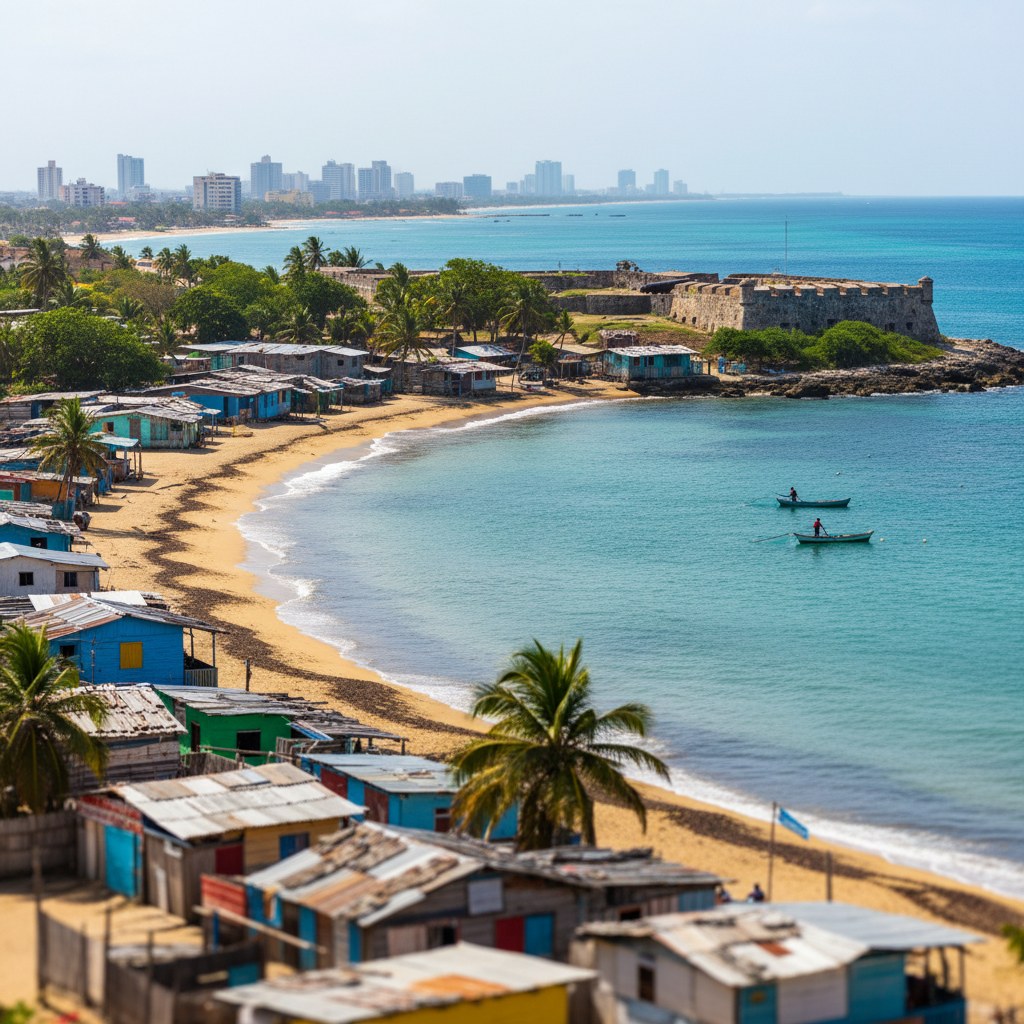
Cartagena has a beach problem. Or rather: the city has beaches, and they aren't the Caribbean-postcard beaches most visitors expect. The Magdalena River plume carries sediment west along the coast, so the sand in front of Bocagrande is gray-brown, not white, and the water is often choppy and murky. The postcard Cartagena beach starts with a boat ride to the Rosario Islands or a bridge crossing to Baru. Here's the honest ranking of every beach option within day-trip range of the city.
Beach practicalities at a glance
Getting there: Bocagrande and Castillogrande are walkable or a short Uber from the Walled City. La Boquilla is 20 minutes north by Uber (COP 15,000 to 22,000). Muelle de la Bodeguita is the main pier for Playa Blanca, Rosario Islands, and Tierrabomba boats.
Playa Blanca day trip vs overnight: Day-tour boats depart ~8:30 AM (COP 80,000 to 120,000 per person round trip, including Isla Barú landing fee ~COP 15,000). Overnight on the beach gives you sunrise and sunset without the midday crowd. Book a reputable beach-club day pass to have vendor pressure managed.
Cash, small bills: Bring COP 5,000 and COP 10,000 bills. Most beach-chair rentals, ceviche carts, coconut vendors, and boat touts are cash only. ATMs are sparse outside Bocagrande.
Vendor haggling reality: First quoted prices are tourist prices. Politely negotiating down 20 to 30 percent is normal. Firmness from the start (before they start unpacking their basket) is the most effective approach. Making eye contact prolongs the pitch.
Sun and heat: Cartagena's UV index regularly hits 11 to 12 (extreme). SPF 50 minimum, reapply after every swim. The midday heat (11 AM to 3 PM) on open sand is serious. Plan beach time for early morning or late afternoon.
Say this to negotiate a beach service price
"¿Cuánto cuesta? ¿Me puede hacer un mejor precio?"
"How much does it cost? Can you give me a better price?"
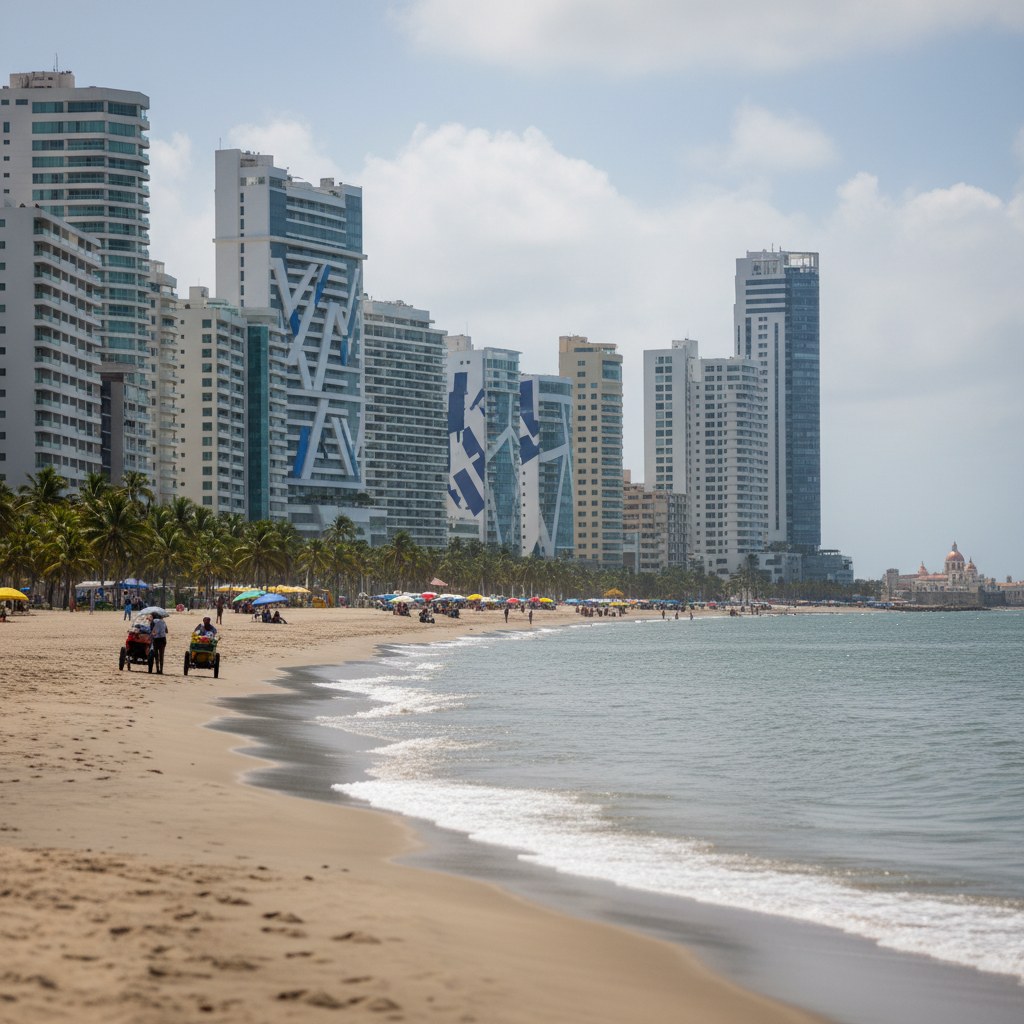
Bocagrande is the three-kilometer urban beach directly in front of the hotel and condo strip. The sand is gray-brown. The water is choppy, often murky, and safe to swim but not scenic. The vendor pressure is the worst in Cartagena: a steady procession of massage, hair-braiding, oyster, jewelry, sunglasses, and photo vendors, with inflated "gringo prices." A firm "no, gracias" works if you say it the first time and don't make eye contact.
Beach chair and umbrella rental runs COP 20,000 to 30,000 a day. Official beach hours are 8 AM to 6 PM and are more strictly enforced since 2024 for safety reasons. Don't linger after dark.
Best for: convenience. If your hotel is in Bocagrande and you want sand in two minutes, this is it. For anything else, keep reading.
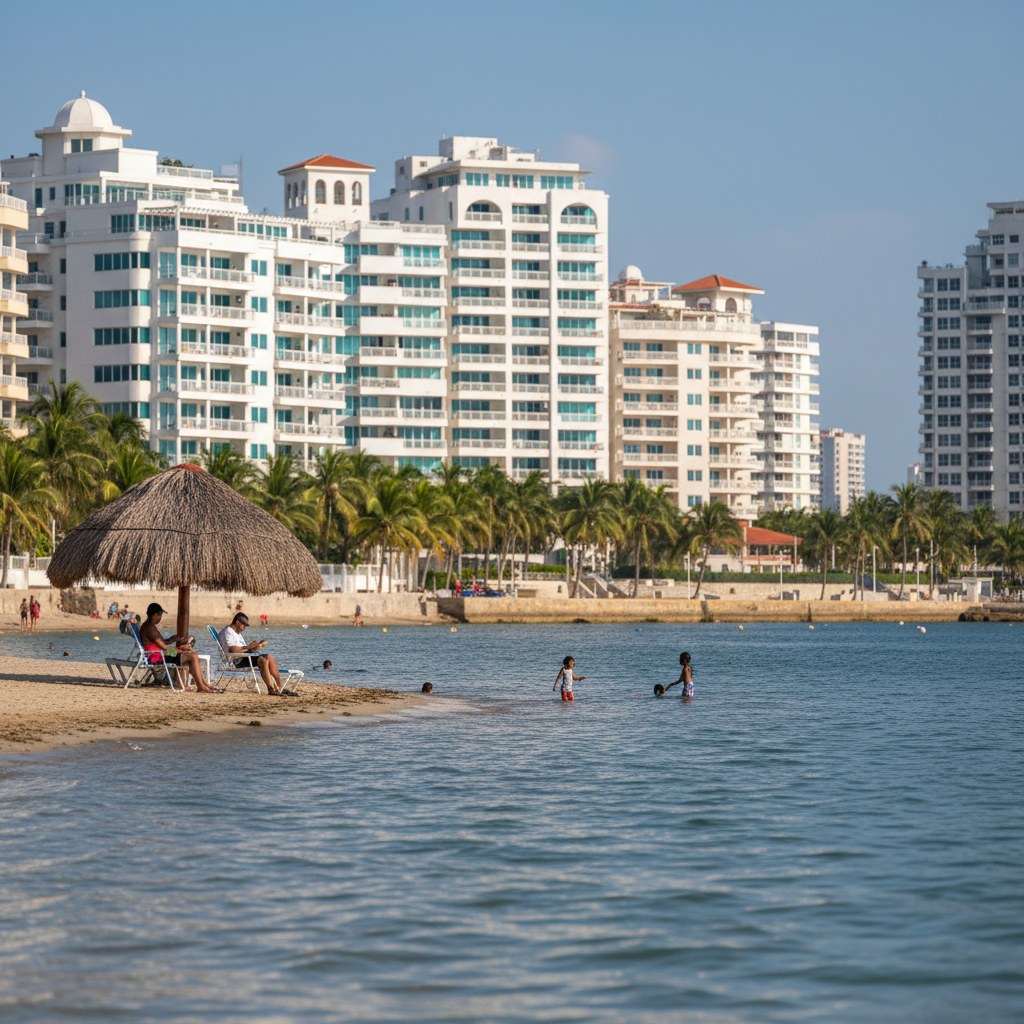
Castillogrande occupies the southern tip of the Bocagrande peninsula. Cleaner, wider, calmer than Bocagrande, and much less vendor hassle. The Escuela Naval sits at the tip, which keeps the area residential and lightly patrolled. Locals come here for family weekends.
The water is inside the bay rather than open Caribbean, which means less chop and a gentler swim but also less scenery. The sand is still gray. For travelers staying in Bocagrande who want a calmer in-town beach day, Castillogrande is the answer. Walking distance from southern Bocagrande; a 10-minute Uber from the Walled City.
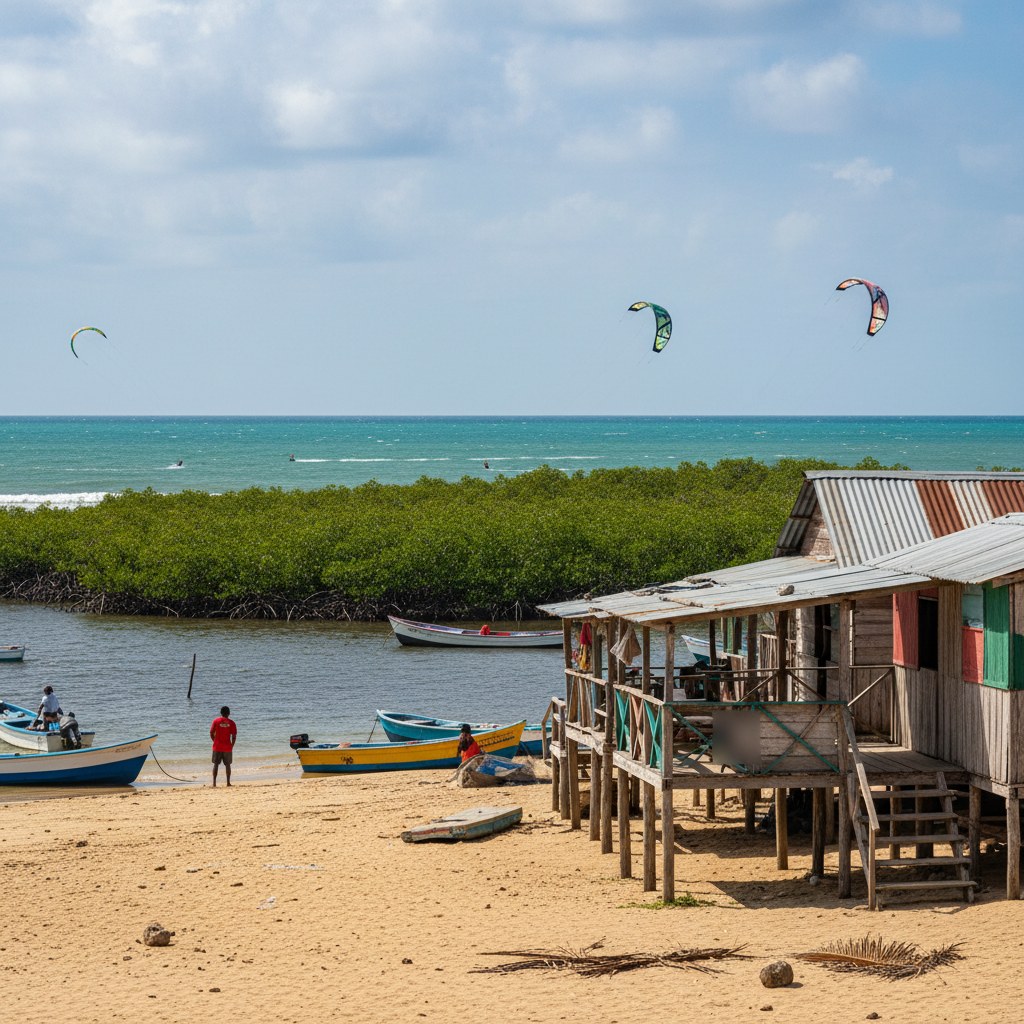
La Boquilla is a twenty-minute drive north of the Walled City, an Afro-Colombian fishing village with a longer, emptier beach than anything in the city. It's the Colombian Caribbean kitesurfing hub (December to March is prime season), and the jumping-off point for mangrove canoe tours through the Cienaga de la Virgen. Seafood shacks along the sand serve grilled whole fish with patacones and coconut rice for COP 40,000 to 70,000 a head.
The pushback: some of the beach-shack restaurants have opaque pricing and will overcharge tourists who don't ask for a menu first. Get the price in writing before ordering. The beach itself is local rather than resort, which is exactly why thoughtful visitors prefer it to Bocagrande.
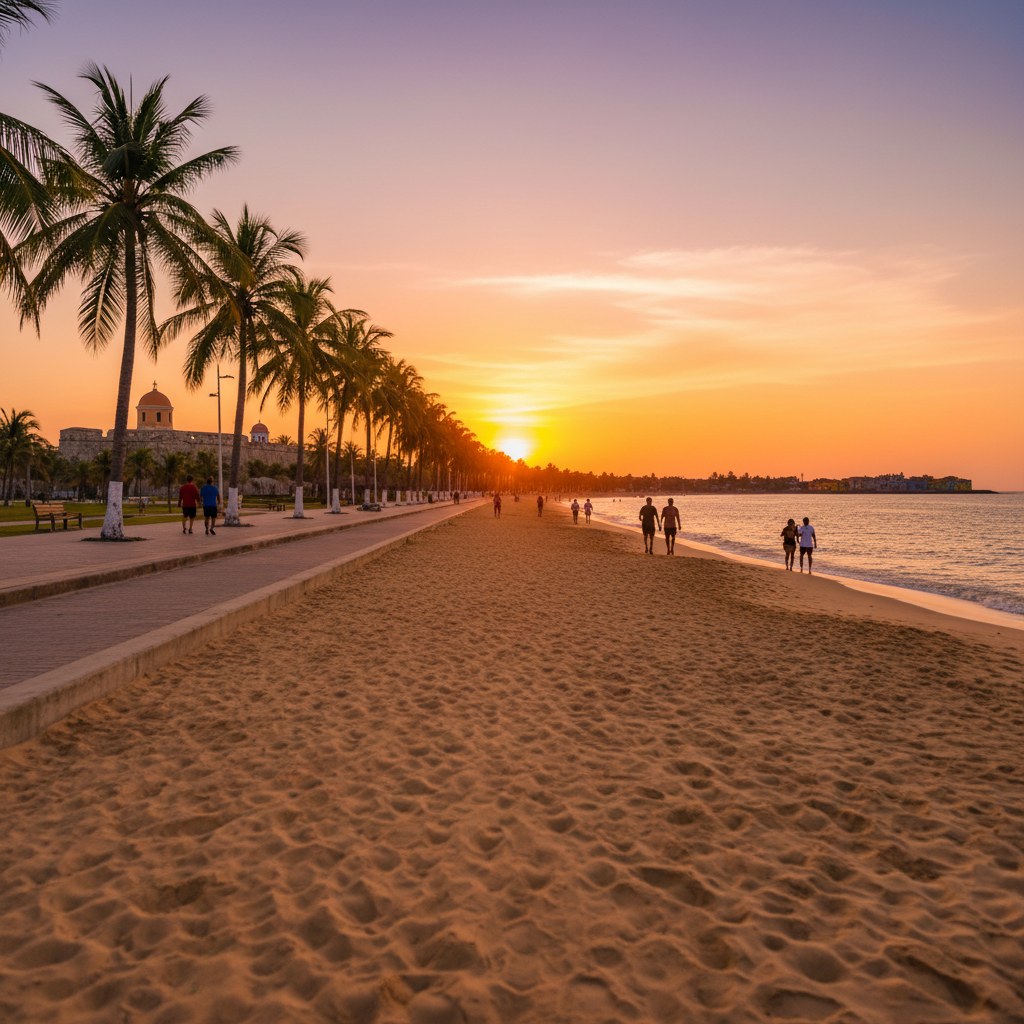
Marbella is the two-kilometer beach between Las Bovedas (the northern tip of the Walled City) and La Boquilla. Palm-lined promenade, jogger-friendly, local families on weekends. Gray sand, unremarkable water, almost no tourists. This is not a swim destination; it's a sunset-walk beach. Good if you want a quiet stroll from the Walled City without getting in a car.
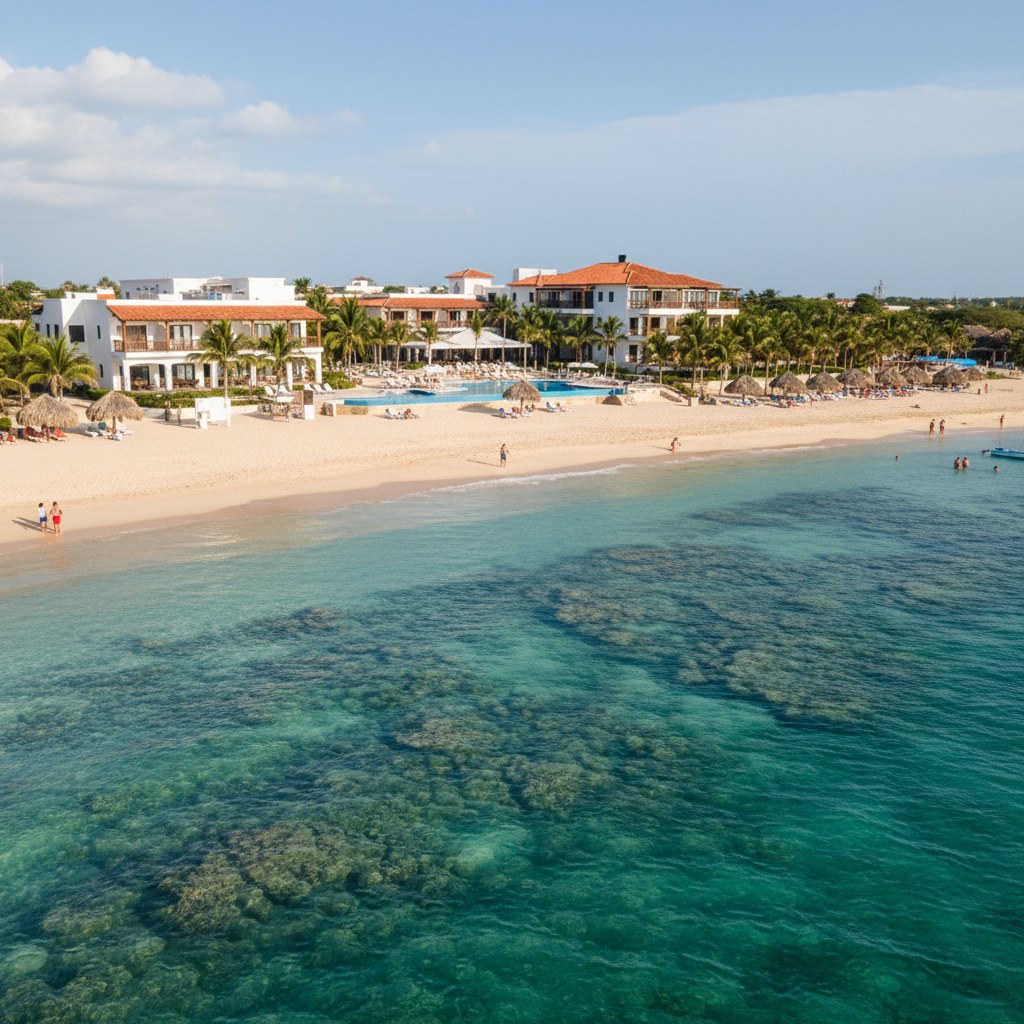
Past La Boquilla, about thirty minutes from the Walled City. Quieter than anywhere in the city. Some resort development (Estelar Playa Manzanillo is the all-inclusive anchor). Water clarity is noticeably better here than in Bocagrande, since you're farther from the Magdalena plume. Best for families willing to Uber out from the city for a day, or for resort guests. Limited public-beach infrastructure for walk-up day visitors.
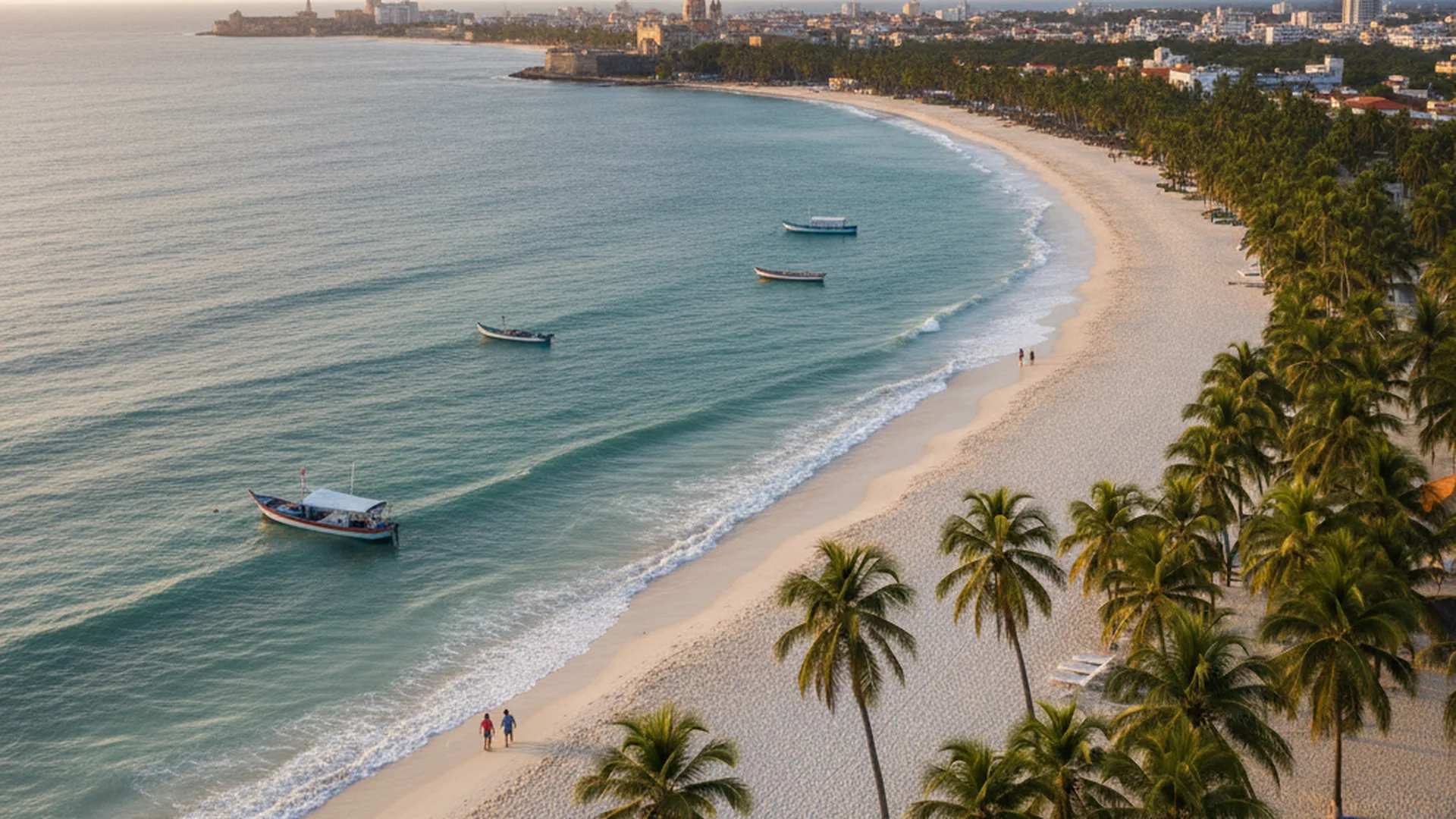
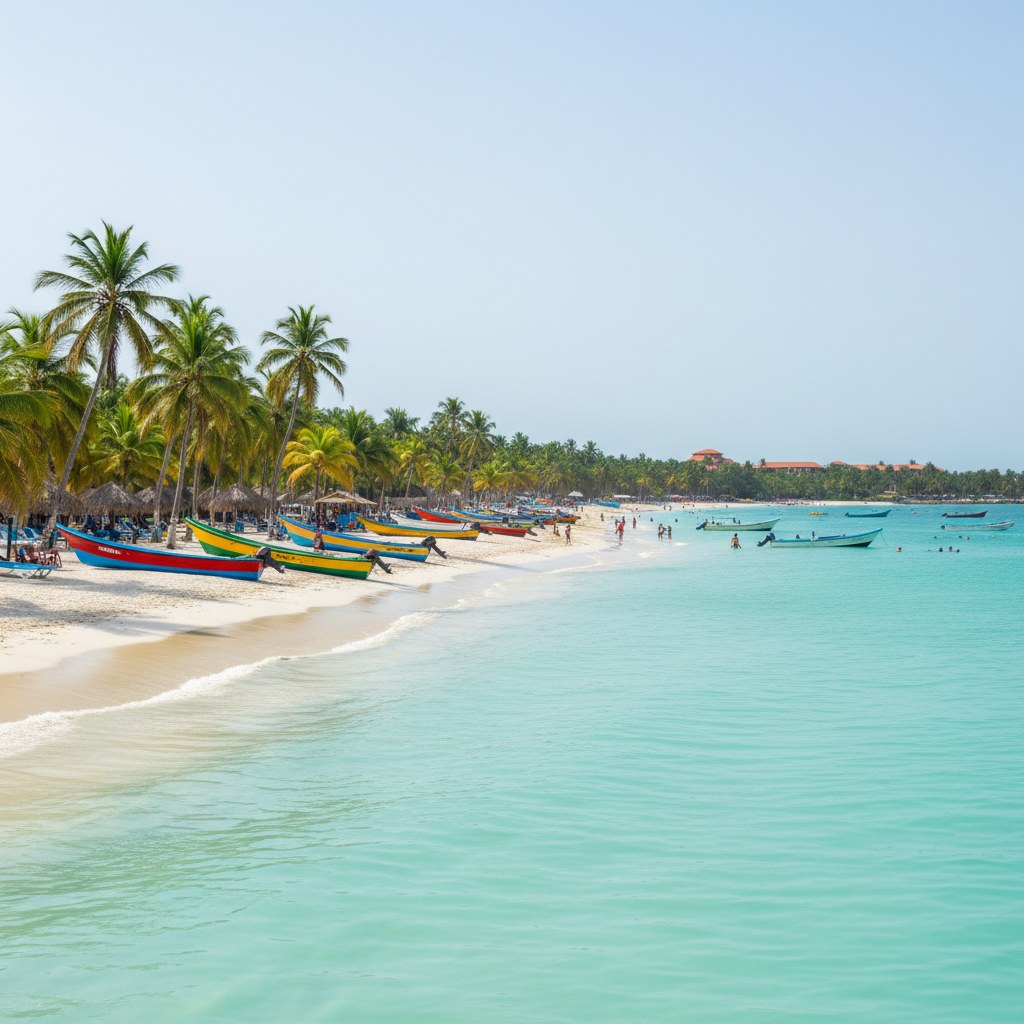
The famous one. Postcard white sand, turquoise water, on the Baru peninsula about an hour south. This is the beach that everyone photographs, and it is both as beautiful as the photos suggest and as crowded as every honest traveler warns.
From 7 to 9 AM and after 5 PM, Playa Blanca delivers on its reputation. From 10 AM to 4 PM, it's a day-tripper zoo with relentless vendor pressure: massages, oysters, ceviche, jewelry, braids, photos. The oyster scam is common, where a vendor "gifts" an oyster and then bills the full rate for the whole bucket; decline politely from the start.
The move is to overnight. Small hostels and eco-cabins on Playa Blanca itself (Hostal Playa Blanca, Wiwa, Gente de Mar) cost COP 80,000 to 300,000 a night and let you own the beach at dawn and dusk. If you're doing a day trip, book a private beach club (Nena Beach Club, Mambo Beach Club) so the vendor pressure is managed on your behalf. The Baru community access fee of about COP 15,000 is collected at the island entrance.
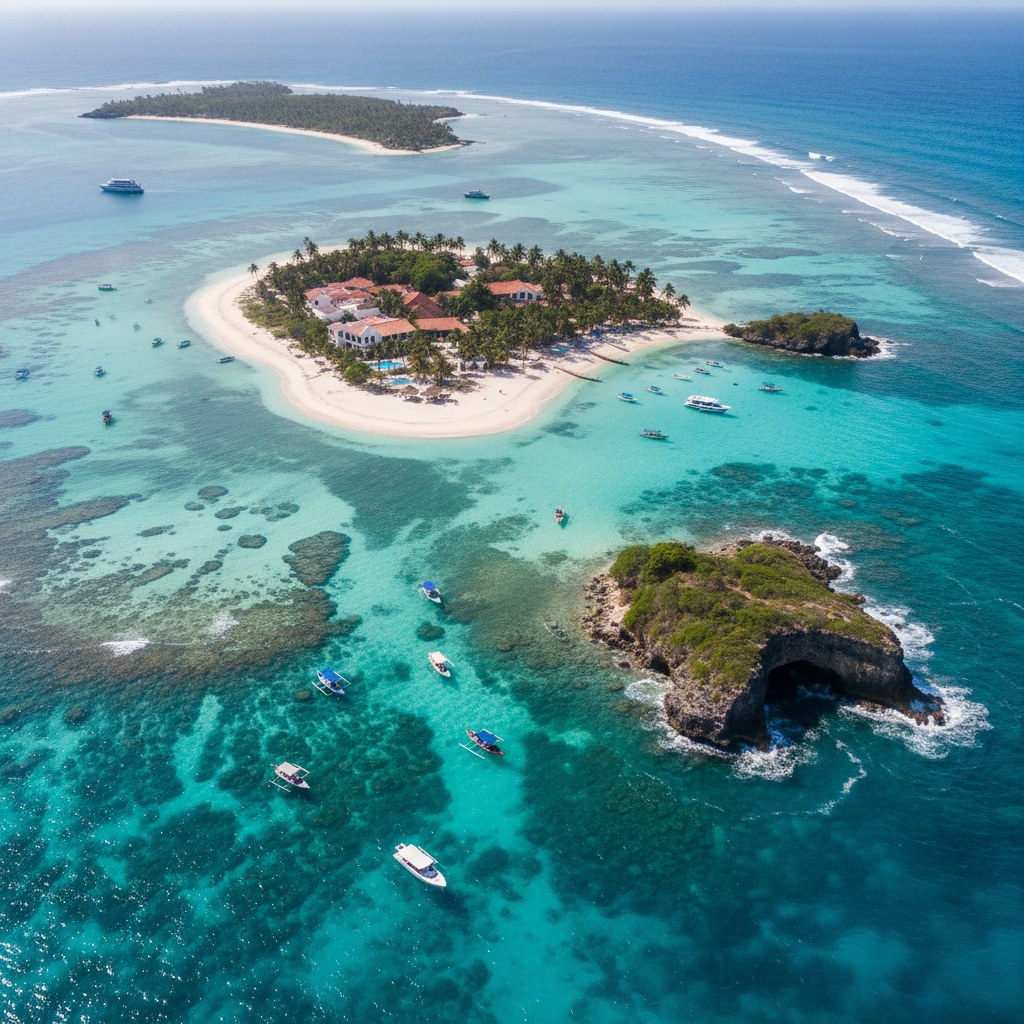
The real Cartagena-adjacent Caribbean. Playa Bonita on Isla Grande is the best accessible white-sand beach in the archipelago. Isla del Pirata has the clearest water and is the standard snorkel stop. Isla Bela operates on a private resort day-pass model for crowd-free beach time. Water clarity here is substantially better than any mainland option.
To get there: boat from Muelle de la Bodeguita. Day tours are COP 90,000 to 180,000 per person (see the day trips guide for the full breakdown). Hotel day passes at specific islands run COP 180,000 to 250,000 including lunch (see our guide to where to stay on the Rosario Islands). Overnighting at a hotel on Isla Grande for a night or two is the move.
Tierrabomba is the closest island, fifteen to twenty-five minutes by boat from Muelle de la Bodeguita. Afro-Caribbean fishing villages, gray-white mixed sand, less perfect than the Rosarios but half the travel time. Historic Bocachica fort sits on the south end.
Punta Arena is the main beach area, with traditional palapa-shack seafood lunches. Several boutique beach clubs (Blue Apple Beach, Fenix Beach) offer day passes here. Ferries run COP 20,000 to 40,000 roundtrip from the city; private boat charter is COP 200,000 or more. Best for travelers who want Rosario-quality beach time without the Rosario-length boat ride.
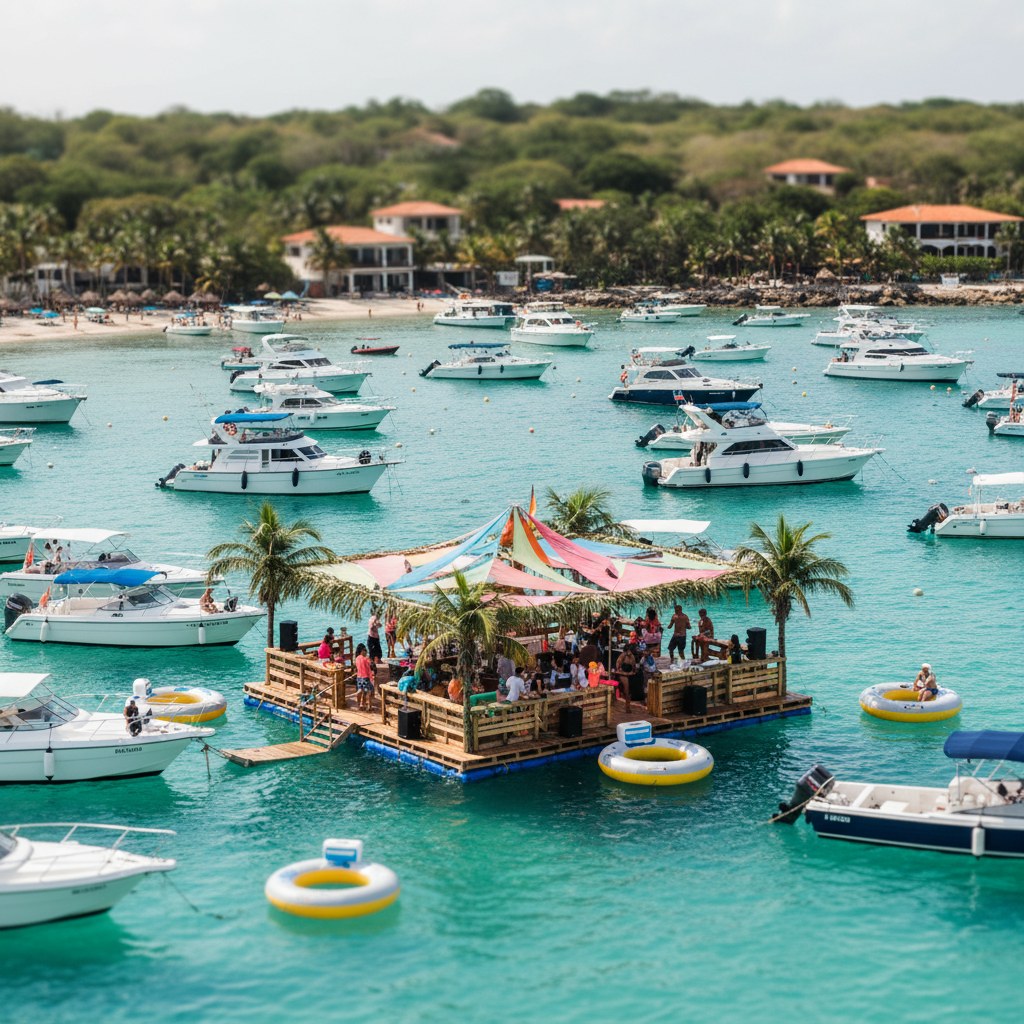
Not a classic beach. Cholon is the bay on the southern tip of Baru where Cartagena's wealthier locals anchor their boats on weekends for the floating-bar scene. Vendors in canoes sell ceviche, fried fish, cocktails, oysters. Music, bottle service, swim-up drinks. The water is clean; the experience is extroverted. Best for party-oriented travelers and groups; not a family beach.
Beach etiquette and safety
Some practical rules that apply everywhere:
Agree prices before accepting services. Massage, oysters, beach chair, umbrella, cocktail, boat ride, photo, braid. The price is always negotiable, often aggressively so. Written price or a photo of a price card on your phone is the defense.
The oyster scam. A vendor "gifts" you one oyster, then bills you for the whole bucket. Refuse politely from the start. This applies on Playa Blanca and Bocagrande most frequently.
"No, gracias" firmly, without eye contact. Vendors read hesitation as invitation. Curtness is normal here, not rude.
Don't leave bags unattended. Pickpocketing and grab-and-run thefts happen on every Cartagena beach. Don't flash phones, watches, or jewelry. Use a small dry bag for valuables and keep it on you.
Jet ski disputes. If you rent a jet ski, verify the condition before taking it out and photograph any pre-existing damage. Disputes about damage charges are common.
Sargassum. Cartagena is largely spared the seaweed that hits Mexico's Caribbean and the DR. West-facing beaches (Baru, most Rosario islands) are sheltered by the archipelago and rarely see dense sargassum. East-facing shores (La Boquilla, Manzanillo) get occasional washups in May to September, but nothing approaching Tulum volumes.
Seasons for the beach
December through April is dry season, best beach weather, and peak trade winds. Kitesurfers love it at La Boquilla; boat trips to the Rosarios get choppier in the afternoon. Prices are highest and crowds are thickest through March.
May through November is rainy season. Afternoon thunderstorms are typical but usually 30 to 90 minutes then clear. Water is warmer, fewer tourists, lower prices. September is the cheapest and quietest month. Hurricane risk is minor (Cartagena sits below the main Caribbean hurricane track) but tropical-storm impacts do happen August through October.
How to choose
For a single beach day from a Bocagrande hotel, pick Castillogrande. For something more local and authentic, take an Uber to La Boquilla. For the white-sand postcard, go to Playa Blanca (overnight if you can, day trip with a private club if you can't). For the best water clarity within a day-trip range, go to the Rosario Islands (hotel day pass or overnight on Isla Grande). For a party day, Bahia de Cholon.
If beach quality is a priority for your trip, strongly consider building in an overnight on either Baru or the Rosarios. Day trips from the city give you the Caribbean for six hours; an overnight gives you the Caribbean at sunrise. That's a different trip.
Prices in COP with USD conversions at approximately 4,000:1. Beach club, transport, and chair-rental prices move with season. Last full review: April 2026.
Specific question while you read? Ask Catalina, the Cartagena Guide concierge.¿Pregunta específica mientras lees? Pregúntale a Catalina, la concierge de Cartagena Guide.Chat with Catalina ›Habla con Catalina ›
Mapa de lugares en esta guía
5 lugares marcados. Haz clic en cualquier marcador para ver los detalles.
Cartagena tiene un problema con sus playas. O mejor dicho: la ciudad tiene playas, pero no son las playas caribeñas de postal que la mayoría de los visitantes espera. El penacho del río Magdalena arrastra sedimentos hacia el oeste por la costa, así que la arena frente a Bocagrande es gris pardusca, no blanca, y el agua suele estar picada y turbia. La Cartagena de postal empieza con un viaje en lancha a las Islas del Rosario o cruzando el puente hacia Barú. Aquí va el ranking honesto de todas las opciones de playa en radio de excursión de un día desde la ciudad.
Lo esencial de las playas de un vistazo
Cómo llegar: Bocagrande y Castillogrande están a pie o en un Uber cortito desde la Ciudad Amurallada. La Boquilla queda a 20 minutos al norte en Uber (COP 15.000 a 22.000). Muelle de la Bodeguita es el embarcadero principal para las lanchas a Playa Blanca, las Islas del Rosario y Tierrabomba.
Excursión de un día a Playa Blanca vs. quedarse a dormir: Las lanchas de tour salen hacia las 8:30 AM (COP 80.000 a 120.000 por persona ida y vuelta, incluida la tarifa de desembarco en Isla Barú, aprox. COP 15.000). Quedarse a dormir en la playa te da el amanecer y el atardecer sin el gentío del mediodía. Reserva un pase de día en un beach club reconocido para que ellos se encarguen de la presión de los vendedores.
Efectivo en billetes pequeños: Lleva billetes de COP 5.000 y COP 10.000. La mayoría de los alquileres de sillas, puestos de ceviche, vendedores de cocos y lancheros solo reciben efectivo. Los cajeros escasean fuera de Bocagrande.
La realidad del regateo con vendedores: El primer precio que te dan es precio de turista. Negociar a la baja entre un 20 y un 30 por ciento es lo normal. Ser firme desde el principio, antes de que empiecen a desempacar su canasta, es lo más efectivo. Si los miras a los ojos, el discurso se alarga.
Sol y calor: El índice UV en Cartagena llega regularmente a 11 o 12 (extremo). Mínimo SPF 50 y reaplica después de cada baño. El calor del mediodía (11 AM a 3 PM) sobre arena abierta es serio. Planea ir a la playa temprano en la mañana o a última hora de la tarde.
Di esto para negociar el precio de un servicio en la playa
"¿Cuánto cuesta? ¿Me puede hacer un mejor precio?"
"How much does it cost? Can you give me a better price?"
Bocagrande es la playa urbana de tres kilómetros directamente frente a la hilera de hoteles y condominios. La arena es gris pardusca. El agua está picada, a menudo turbia; se puede nadar sin riesgo, pero no es nada bonita. La presión de los vendedores es la peor de Cartagena: un desfile constante de masajes, trenzas, ostiones, joyas, gafas y fotógrafos, todos con precios inflados para el turista. Un "no, gracias" firme funciona si lo dices la primera vez y no haces contacto visual.
El alquiler de silla y sombrilla cuesta entre COP 20.000 y COP 30.000 al día. El horario oficial de playa es de 8 AM a 6 PM y se ha vuelto más estricto desde 2024 por razones de seguridad. No te quedes después de que oscurezca.
Ideal para: la comodidad. Si tu hotel está en Bocagrande y quieres arena en dos minutos, esta es tu opción. Para cualquier otra cosa, sigue leyendo.
Castillogrande ocupa la punta sur de la península de Bocagrande. Más limpia, más ancha y más calmada que Bocagrande, y con mucho menos acoso de vendedores. La Escuela Naval queda en la punta, lo que mantiene la zona residencial y con cierta vigilancia discreta. Los locales vienen aquí los fines de semana en familia.
El agua está dentro de la bahía y no da al Caribe abierto, lo que significa menos oleaje y una natación más tranquila, aunque también menos panorama. La arena sigue siendo gris. Para los viajeros hospedados en Bocagrande que quieren un día de playa más relajado sin salir de la ciudad, Castillogrande es la respuesta. Se puede llegar caminando desde el sur de Bocagrande; en Uber desde la Ciudad Amurallada son unos 10 minutos.
La Boquilla queda a veinte minutos en carro al norte de la Ciudad Amurallada: un pueblo pesquero afrocolombiano con una playa más larga y despejada que cualquiera dentro de la ciudad. Es el epicentro del kitesurf en el Caribe colombiano (diciembre a marzo es la temporada pico), y el punto de partida para los recorridos en canoa por los manglares de la Ciénaga de la Virgen. Los ranchos de mariscos sobre la arena sirven pescado entero a la brasa con patacones y arroz con coco por entre COP 40.000 y COP 70.000 por persona.
El pero: algunos de los ranchos tienen precios poco claros y cobran de más al turista que no pide la carta primero. Exige el precio por escrito antes de ordenar. La playa en sí es local, no de resort, y eso es exactamente por qué los viajeros con criterio la prefieren a Bocagrande.
Marbella es la playa de dos kilómetros entre Las Bóvedas (la punta norte de la Ciudad Amurallada) y La Boquilla. Malecón bordeado de palmas, ideal para trotar, con familias locales los fines de semana. Arena gris, agua sin mayor atractivo, casi sin turistas. No es un destino para bañarse; es una playa para caminar al atardecer. Buena opción si quieres un paseo tranquilo desde la Ciudad Amurallada sin subirte a un carro.
Pasando La Boquilla, a unos treinta minutos de la Ciudad Amurallada. Más tranquilo que cualquier punto dentro de la ciudad. Algo de desarrollo hotelero (Estelar Playa Manzanillo es el todo incluido de referencia). La claridad del agua es notablemente mejor que en Bocagrande, pues estás más lejos del penacho del Magdalena. Ideal para familias dispuestas a tomar un Uber desde la ciudad para pasar el día, o para los huéspedes del resort. Infraestructura pública de playa limitada para visitantes esporádicos.
La famosa. Arena blanca de postal, agua turquesa, en la península de Barú a cerca de una hora al sur. Es la playa que todos fotografían, y es tan bonita como sugieren las fotos y tan concurrida como todo viajero honesto advierte.
De 7 a 9 AM y después de las 5 PM, Playa Blanca cumple con su fama. De 10 AM a 4 PM es un zoológico de excursionistas con presión de vendedores implacable: masajes, ostiones, ceviche, joyas, trenzas, fotos. La estafa del ostión es común: el vendedor te "regala" uno y luego te cobra la tarifa completa por todo el balde. Recházalo con amabilidad desde el primer momento.
Lo que hay que hacer es quedarse a dormir. Los pequeños hostales y cabañas eco en la misma Playa Blanca (Hostal Playa Blanca, Wiwa, Gente de Mar) cuestan entre COP 80.000 y COP 300.000 la noche y te dejan disfrutar la playa al amanecer y al atardecer sin nadie. Si vas de excursión de un día, reserva un beach club privado (Nena Beach Club, Mambo Beach Club) para que ellos manejen la presión de los vendedores por ti. La tarifa de acceso comunitario de Barú, de aproximadamente COP 15.000, se cobra en la entrada a la isla.
El Caribe de verdad, el que queda cerca de Cartagena. Playa Bonita en Isla Grande es la mejor playa de arena blanca accesible del archipiélago. Isla del Pirata tiene el agua más clara y es la parada estándar para el snorkel. Isla Bela funciona con un modelo de pase de día en resort privado para una experiencia de playa sin aglomeraciones. La claridad del agua aquí es notablemente superior a cualquier opción en tierra firme.
Para llegar: lancha desde el Muelle de la Bodeguita. Los tours de un día cuestan entre COP 90.000 y COP 180.000 por persona (consulta la guía de excursiones de un día para el desglose completo). Los pases de día en hoteles de islas específicas van de COP 180.000 a COP 250.000 incluyendo el almuerzo (consulta nuestra guía sobre dónde hospedarse en las Islas del Rosario). Lo ideal es pasar una o dos noches en un hotel en Isla Grande.
Tierrabomba es la isla más cercana, a quince o veinticinco minutos en lancha desde el Muelle de la Bodeguita. Pueblos pesqueros afrocaribeños, arena mixta gris y blanca, menos perfecta que las Islas del Rosario pero con la mitad del tiempo de viaje. El histórico fuerte de Bocachica está en el extremo sur.
Punta Arena es la zona de playa principal, con almuerzos de mariscos en ranchos de palapa tradicionales. Varios beach clubs boutique (Blue Apple Beach, Fenix Beach) ofrecen pases de día aquí. Los ferries cuestan entre COP 20.000 y COP 40.000 ida y vuelta desde la ciudad; el alquiler de lancha privada sale en COP 200.000 o más. Ideal para viajeros que quieren la experiencia de playa de las Islas del Rosario sin el trayecto en lancha.
No es una playa clásica. Cholon es la bahía en la punta sur de Barú donde los locales con más plata anclan sus botes los fines de semana para la movida de bares flotantes. Vendedores en canoa venden ceviche, pescado frito, cocteles y ostiones. Música, servicio de botellas, tragos desde el agua. El agua está limpia; la experiencia es extrovertida. Ideal para viajeros de rumba y grupos; no es playa familiar.
Etiqueta y seguridad en la playa
Algunas reglas prácticas que aplican en todas partes:
Acuerda el precio antes de aceptar cualquier servicio. Masaje, ostiones, silla de playa, sombrilla, cóctel, paseo en lancha, foto, trenza. El precio siempre es negociable, a veces de manera bastante agresiva. Tener el precio escrito o una foto de la carta de precios en tu celular es la mejor defensa.
La estafa del ostión. Un vendedor te "regala" un ostión y luego te cobra por todo el balde. Recházalo con amabilidad desde el principio. Sucede con más frecuencia en Playa Blanca y en Bocagrande.
"No, gracias" firme, sin contacto visual. Los vendedores leen la duda como una invitación. Ser directo es lo normal aquí, no es mala educación.
No dejes tus bolsos desatendidos. El raponazo y el robo al descuido ocurren en todas las playas de Cartagena. No exhibas el celular, el reloj ni las joyas. Usa una pequeña bolsa impermeable para los objetos de valor y tenla siempre contigo.
Disputas con motos acuáticas. Si alquilas una moto acuática, verifica su estado antes de salir y fotografía cualquier daño previo. Los cobros por daños son un conflicto habitual.
Sargazo. Cartagena se libra en gran medida del sargazo que azota el Caribe mexicano y la República Dominicana. Las playas con orientación al oeste (Barú, la mayoría de las Islas del Rosario) están protegidas por el archipiélago y rara vez acumulan sargazo denso. Las orillas orientadas al este (La Boquilla, Manzanillo) reciben llegadas ocasionales entre mayo y septiembre, pero nada parecido a los volúmenes de Tulum.
Temporadas para ir a la playa
De diciembre a abril es la temporada seca, el mejor clima de playa, y cuando soplan con fuerza los vientos alisios. Los kitesurfistas la aman en La Boquilla; los paseos en lancha a las Islas del Rosario se ponen más movidos en la tarde. Los precios son los más altos y el turismo es el más intenso hasta marzo.
De mayo a noviembre es temporada de lluvias. Las tormentas eléctricas de la tarde son típicas, pero normalmente duran entre 30 y 90 minutos y luego escampa. El agua está más cálida, hay menos turistas y los precios bajan. Septiembre es el mes más económico y tranquilo. El riesgo de huracán es bajo (Cartagena queda por debajo de la trayectoria principal de huracanes del Caribe), pero los impactos de tormentas tropicales sí ocurren entre agosto y octubre.
Cómo elegir
Para un único día de playa desde un hotel en Bocagrande, elige Castillogrande. Para algo más local y auténtico, toma un Uber a La Boquilla. Para la postal de arena blanca, ve a Playa Blanca (a dormir si puedes, en excursión de un día con un club privado si no puedes). Para la mejor claridad del agua en radio de un día, ve a las Islas del Rosario (pase de día en hotel o noche en Isla Grande). Para un día de rumba, Bahia de Cholon.
Si la calidad de la playa es una prioridad en tu viaje, considera seriamente pasar al menos una noche en Barú o en las Islas del Rosario. Una excursión de un día desde la ciudad te da el Caribe por seis horas; quedarte a dormir te da el Caribe al amanecer. Ese ya es otro viaje.
Precios en COP con conversiones a USD a aproximadamente 4.000:1. Los precios de beach clubs, transporte y alquiler de sillas varían según la temporada. Última revisión completa: abril de 2026.
Newsletter
Get the guide in your inbox
One short email each Saturday. New posts, what's on this week, and anything worth knowing about Cartagena. No spam, unsubscribe anytime.