Adventure Sports in Cartagena: Kitesurfing, Diving, and More
Deportes de Aventura en Cartagena: Kitesurf, Buceo y Mucho Más
La Boquilla for kite, Rosario for scuba, Bocagrande for the touristy stuff. Here's the honest operator list, seasonal notes, and the insurance exclusions to read before you book.
Mike Chartrand
April 2026 · 12 min read
Specific question while you read? Ask Catalina, the Cartagena Guide concierge.¿Pregunta específica mientras lees? Pregúntale a Catalina, la concierge de Cartagena Guide.Chat with Catalina ›Habla con Catalina ›
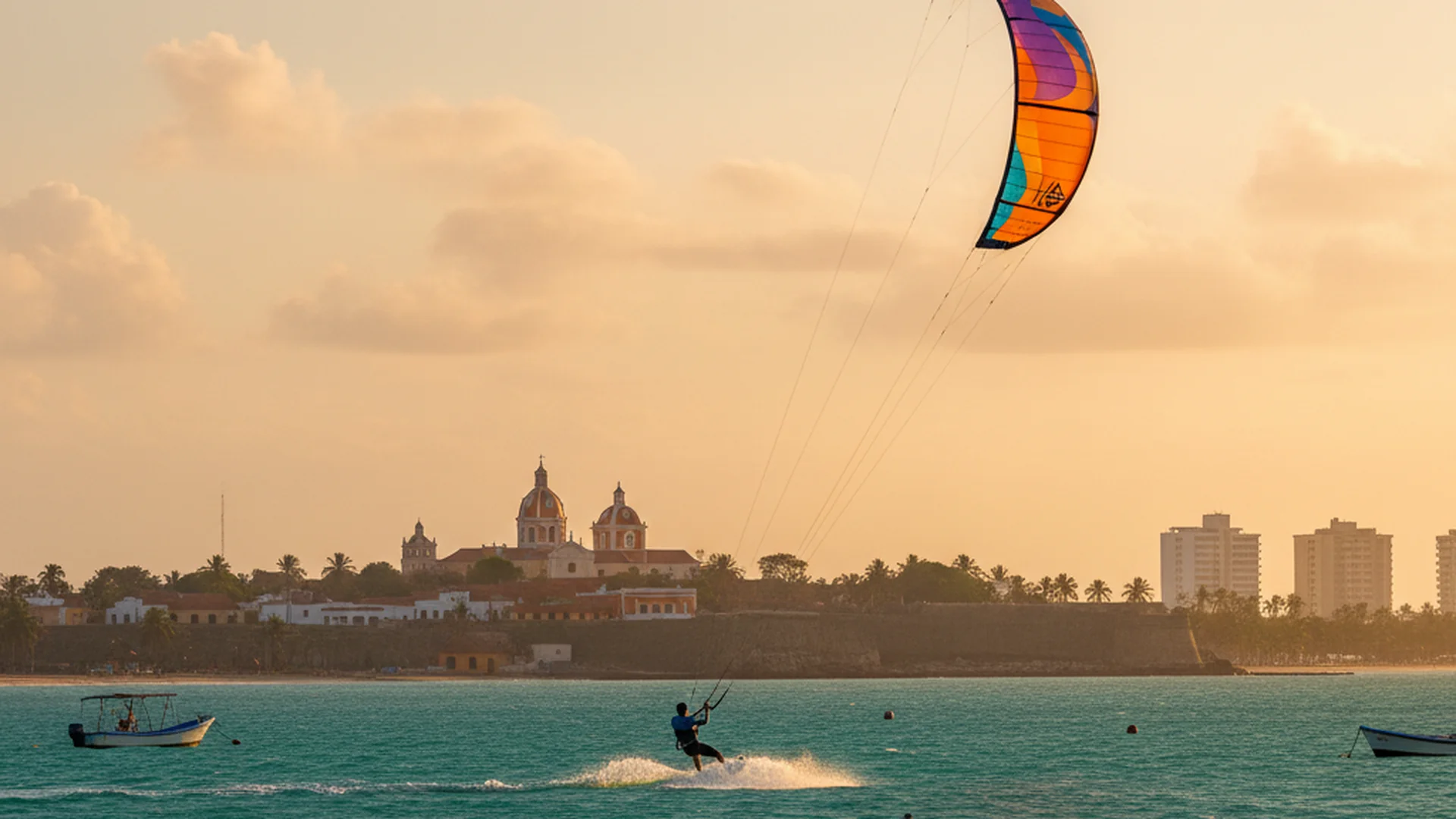
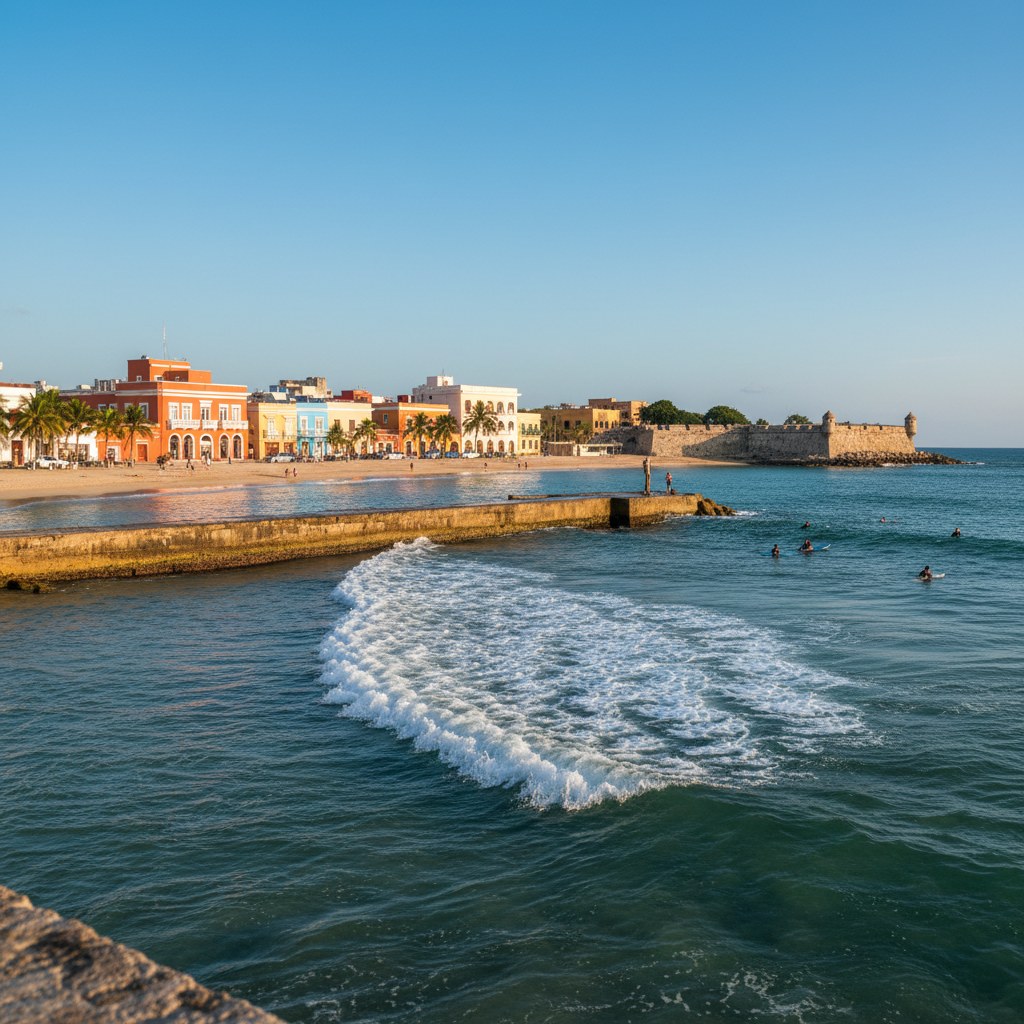
Adventure sports in Cartagena cluster at two places: La Boquilla for kitesurfing and mangrove canoeing, and the Rosario Islands for scuba diving and snorkeling. Bocagrande has touristy parasailing and jet skis. Surfing is not a Cartagena sport. Here's the honest operator list, seasonal notes, and the insurance fine print that most travel policies hide in the exclusions section.
Before you book: key practical notes
Book operators ahead: Kitesurfing schools, dive shops, and cooking-class providers fill up during peak season (December to April). Contact by WhatsApp 1 to 3 days in advance. Walk-up on weekdays is possible but risky on weekends.
Ask about what's included: At reputable kite schools, the price includes the kite, board, harness, helmet, radio, and a lifeguard-support boat. Dive shops should include weights, BCD, wetsuit, and tank. If they don't mention these, ask explicitly before paying.
Insurance check: Most standard travel policies exclude adventure sports. Confirm your policy covers the activity before you go. Kitesurfing, scuba, and parasailing are the most commonly excluded. See the Insurance section below.
Season matters: Kitesurfing is only reliable December to April. Scuba visibility peaks February to April. Mangrove canoe and paddleboarding are year-round. Off-season kite lessons are a gamble on wind.
COP price range at a glance: Kite lesson (1 hr) COP 200,000 to 280,000. Scuba Discover (1 day) COP 350,000 to 450,000. Mangrove canoe tour COP 90,000 to 390,000. Parasailing COP 120,000 to 180,000. Horseback riding (1 to 2 hrs) COP 160,000 to 320,000.
Kitesurfing at La Boquilla (and Manzanillo)
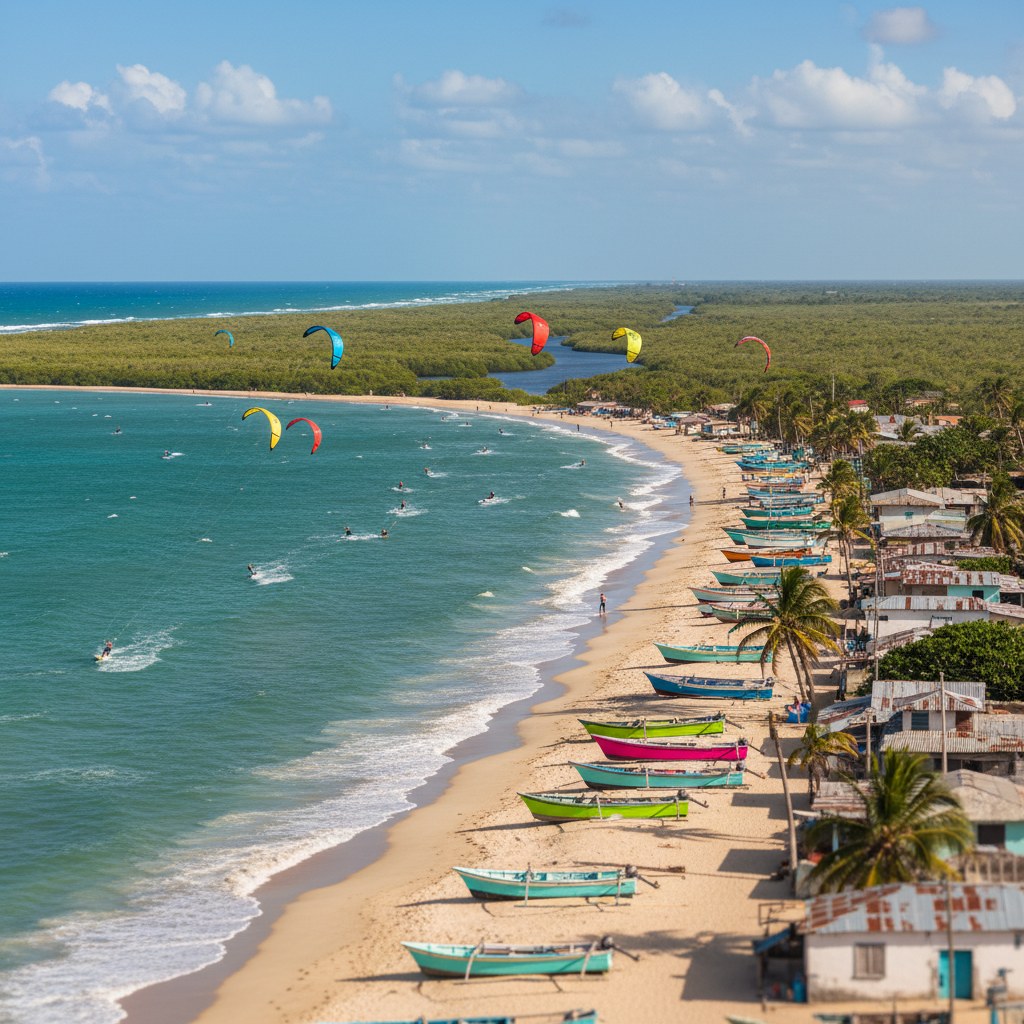
La Boquilla is the Colombian Caribbean's kitesurfing hub, 20 minutes north of the walled city. Manzanillo del Mar is 25 minutes north and gets stronger wind; some schools teach there.
Season: December through April is prime. Reliable easterly trade winds at 15 to 25 knots with bursts to 28. Side-shore direction, the safest configuration for beginners. The wind extends into June for experienced riders. From May to October it's unreliable and often dies completely. If kitesurfing is the reason you're in Cartagena, come between mid-December and mid-April.
Schools:
Pure Kitesurf Colombia teaches at Manzanillo del Mar. IKO-qualified multilingual instructors (English, German, Spanish, Swiss-German). CORE equipment. Free shuttle from Cartagena.
Nomad Kitesurf Colombia operates in La Boquilla, over ten years in business. Felipe is the instructor most often named as the IKO-certified teacher in La Boquilla proper. COP 170,000 per hour private; COP 120,000 per hour group. IKO transfer credits available.
En Colombia Kitesurf (La Boquilla): kite plus windsurf plus paddleboard plus surf. Also runs multi-day kite-safari trips along the Colombian coast.
Nativo Kite (La Boquilla) is well-regarded on kiteforum discussions.
Pricing: intro 1-hour lesson COP 200,000 to 280,000 (USD 50 to 70). Full beginner course of 9 to 15 hours over 3 to 5 days runs COP 1.2 to 1.8 million (USD 300 to 450). Kite, board, harness, helmet, radio and lifeguard-support boat included at the better operators.
Honest caveat: La Boquilla is quiet at night. Not much nightlife, not recommended for evening wandering. Stay in Cartagena, commute out.
Say this
Hola, quisiera hacer una clase de kite mañana. ¿Tienen cupo disponible? ¿Qué está incluido en el precio?
Hi, I'd like to take a kite lesson tomorrow. Do you have availability? What's included in the price?
Scuba diving at Rosario Islands and Baru
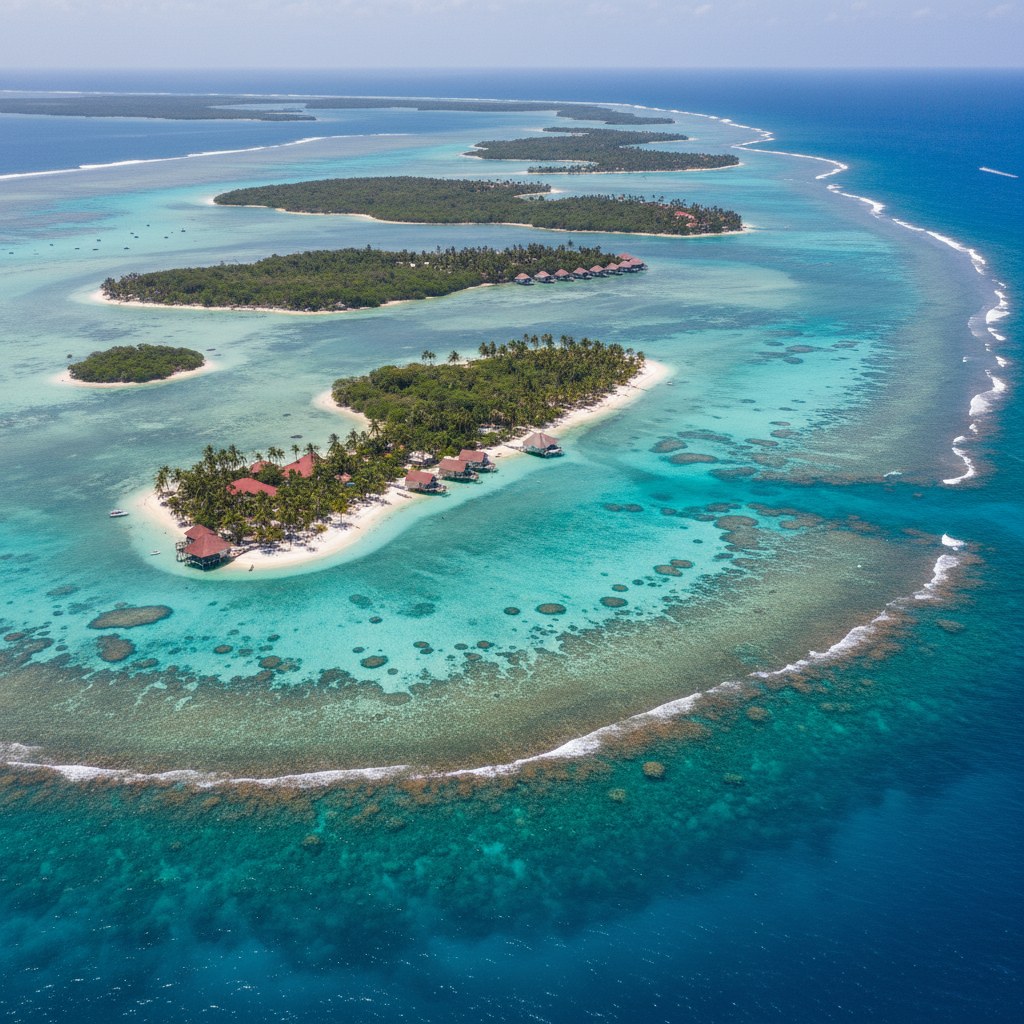
Reef condition is mixed. Recent visitor reports note bleached or damaged coral at the high-traffic stops, and minimal fish density at some snorkel sites. Healthier reef exists around Isla del Pirata and remote spots visited by specialist operators (farther from the city plume).
Operators:
Diving Planet: PADI 5-Star Dive Center, 30-plus years in Cartagena, runs the Dive to Heal program. Boats roughly 1 hour from the city to the reef.
Buzos de Baru: PADI Resort, 15-plus years, year-round reef access from Baru.
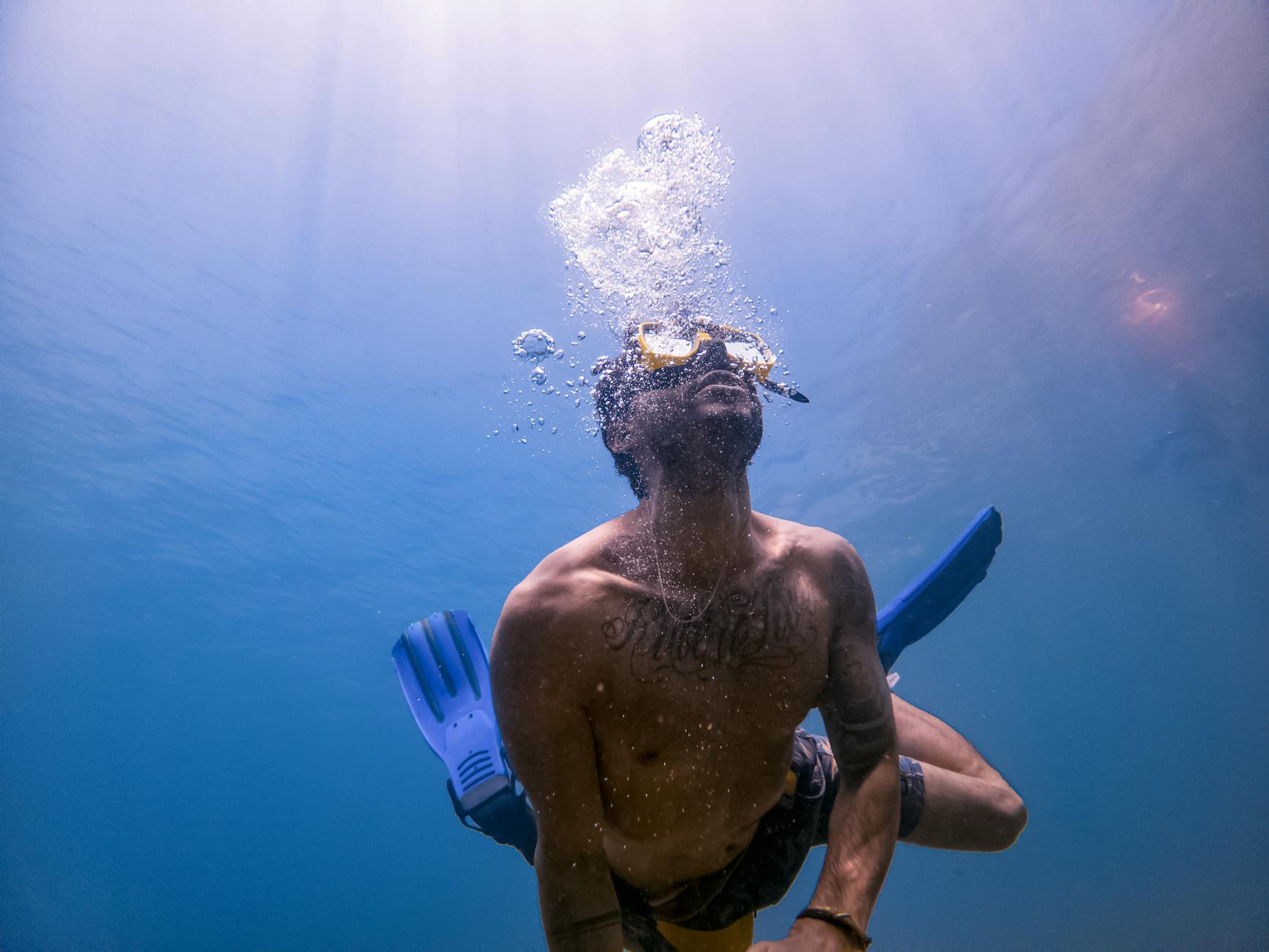
Pricing: Discover Scuba (no experience, one day) COP 350,000 to 450,000 (USD 90 to 115). Two-tank certified dive COP 400,000 to 600,000. PADI Open Water certification over 4 days runs COP 1.4 to 1.8 million (USD 350 to 450). Minimum age 10 for Open Water. 10 percent discount for leaving from Cartagena rather than Rosario Islands.
Best visibility: February through April. May through November sees plankton blooms that reduce visibility but boost fish activity.
Paddleboarding
Three main locations: Castillogrande beach (calm urban water), La Boquilla (Colombia SUP and similar shops), and Cienaga de la Virgen (the lagoon north of the city, the best pick for mangrove paddling and birdwatching). One-hour rental from COP 100,000; instructional hour COP 75,000. Half-day lagoon tours with birdwatching COP 80,000 to 150,000. Accessible for kids 8 and up with supervision. Go early before the trade winds stiffen.
La Boquilla mangrove canoe tour
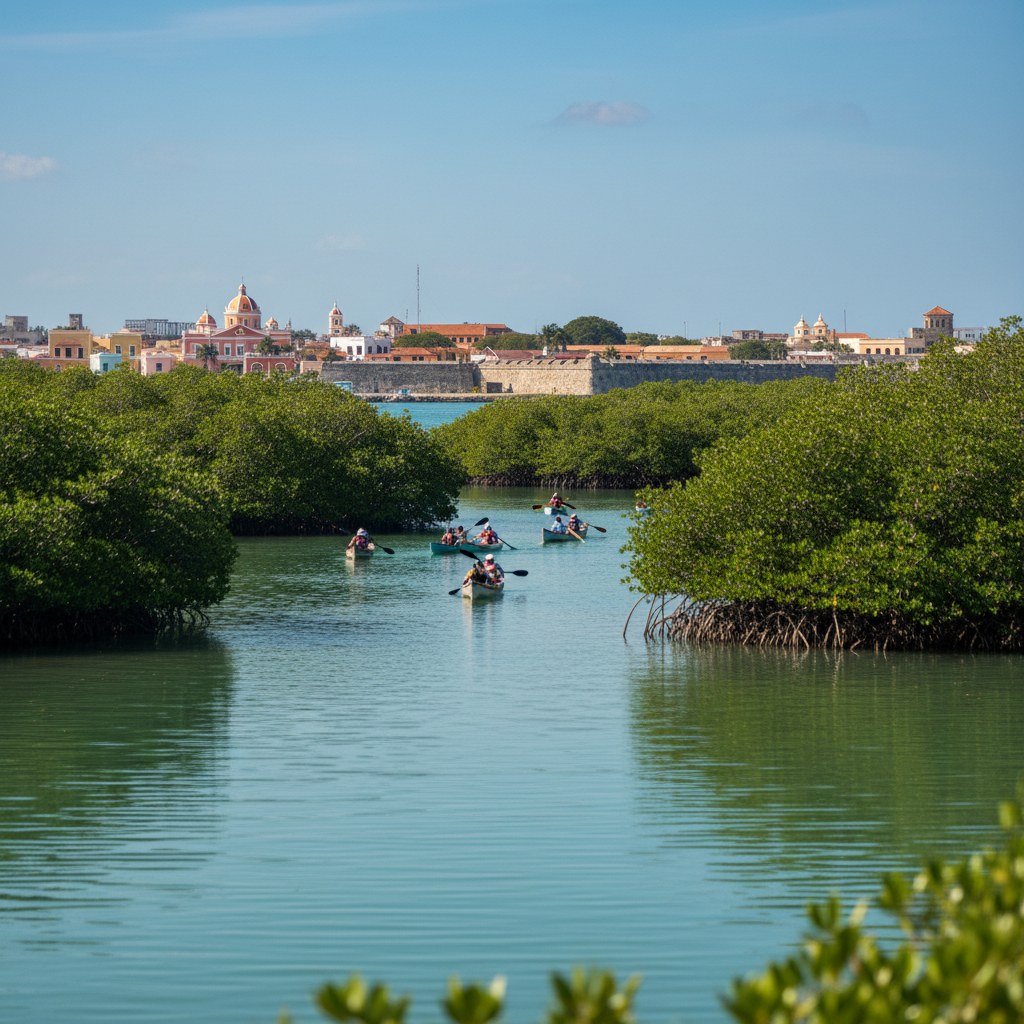
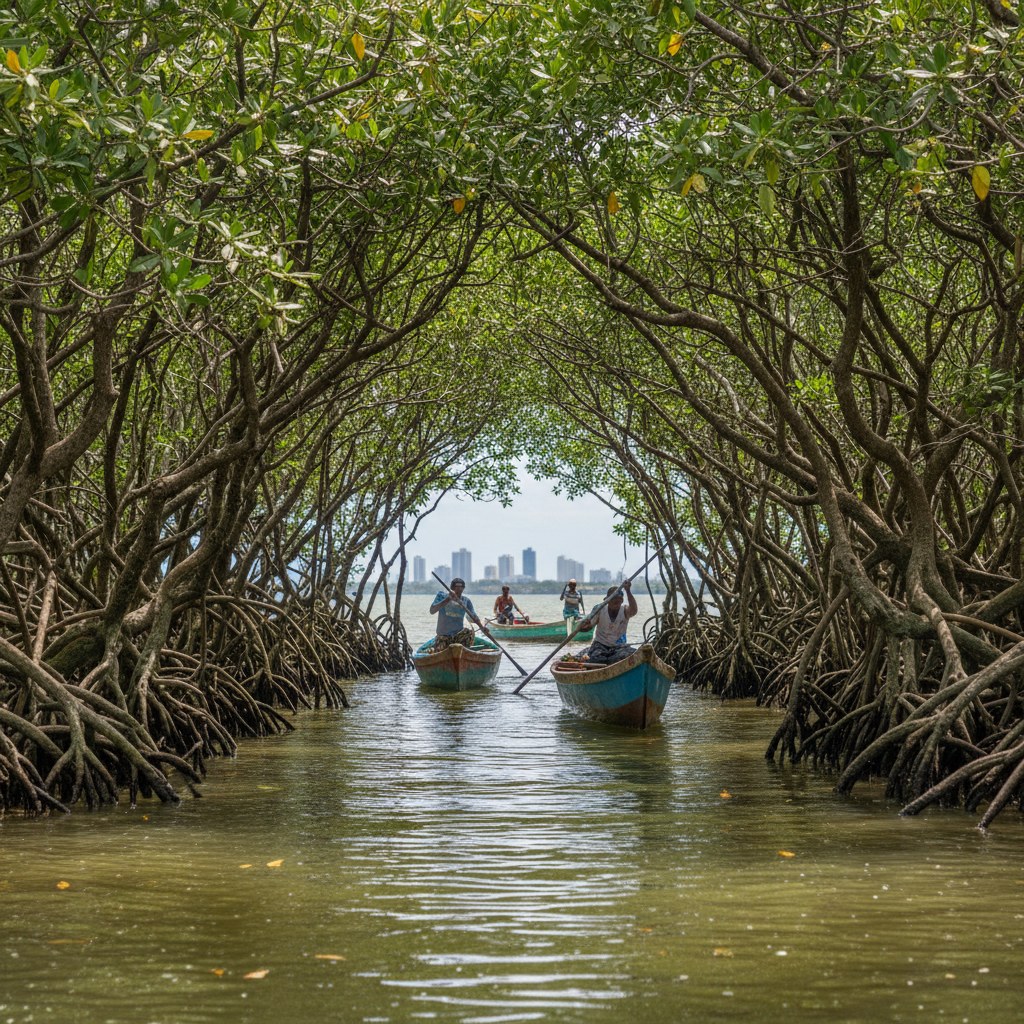
Community-run, paddled by Afro-Colombian fishing families through the Cienaga de Juan Polo mangrove tunnels. Three hours typical. Early-morning (5:30 to 9 AM) tours are cheapest at COP 90,000 and see the most birds. Standard packages with hotel pickup run COP 180,000 to 250,000 for groups of 3 to 6; premium with drum performance and bilingual guide COP 350,000 to 390,000 for two. Low-impact, authentic, high-yield. See the family guide for the kid angle.
Parasailing and jet ski (Bocagrande)
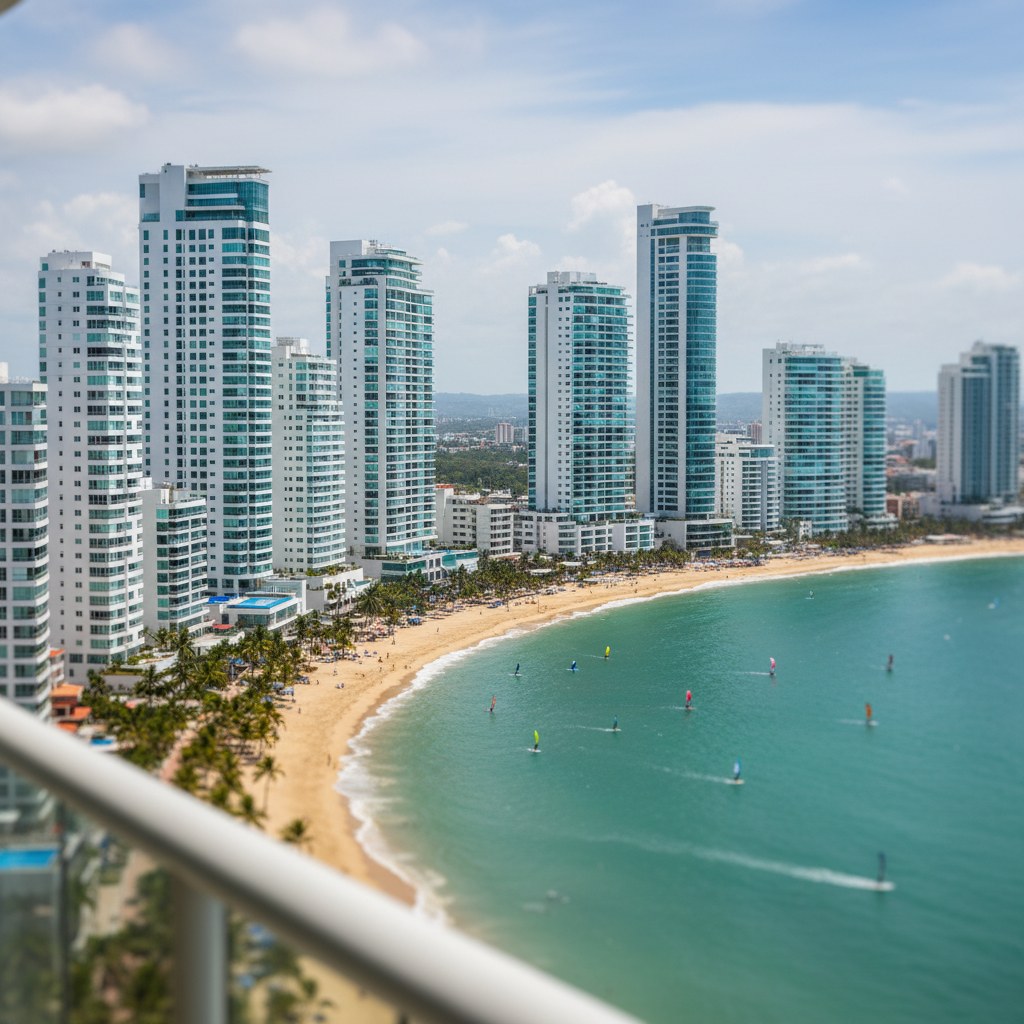
Parasailing: COP 120,000 to 180,000 (USD 30 to 45) for 10 to 15 minutes. Walk-up on Bocagrande or Castillogrande beach. Negotiable. Verify harness and tow-rope before going up; not all beach operators are uniformly insured.
Jet ski: COP 199,500 for 30 minutes or COP 345,800 for 60 minutes from Carrera Primera near Hotel Cartagena Plaza in Bocagrande. Operators move between beaches based on sea conditions. Photograph the jet ski before taking it out; damage-charge disputes are common.
Ziplining
Adventure Park Cartagena: 15 km from the walled city. Transport from the San Pedro church meeting point one hour before the tour. 3 hours total, 5 ziplines, finishes with a traditional tiki-hut beachside lunch. Family-friendly. Ages 8 and up, 34 to 113 kilograms (75 to 250 pounds). Double-cable safety, pre-flight briefings. Pricing varies, COP 240,000 to 400,000 typical (USD 60 to 100).
Snorkeling at Rosario
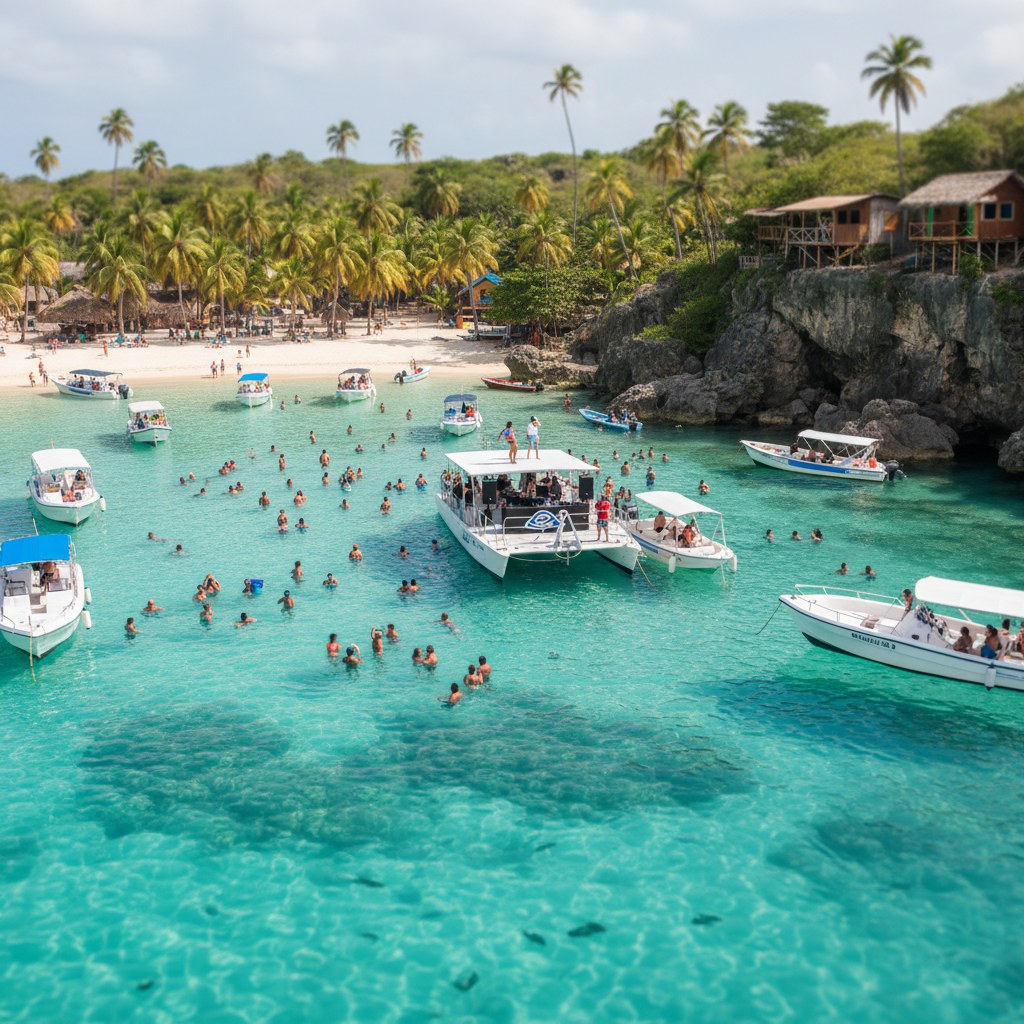
Most day-trip boats include 30 to 60 minute snorkel stops at Isla del Pirata, Isla Grande, or Cholon. Specialist snorkel-focused day tours run on Viator from COP 140,000 (USD 35) for a full-day group tour; curated small-group trips COP 400,000 and up.
Reef visibility is best at remote islands; the high-traffic stops are bleached and thin. If underwater quality matters, book a specialist small-group operator, not a cattle-boat pasadia.
Surfing (skip) and windsurfing
Surfing: not a Cartagena sport. The Caribbean coast is wave-poor year round, typical wave height under one meter. Modest windswell November to March from east trade winds, still mostly small and mushy. Notable breaks: Cartagena Jetty (tiny, beginner-friendly), Marbella, Castillogrande. For a real surf trip, go to Palomino, Taganga, or Santa Marta on the Caribbean; or the Pacific coast (Nuqui, Bahia Solano) for genuine surf.
Windsurfing: same location and season as kite. En Colombia Kitesurf offers both. Less popular than kite; equipment and instructors are sparse.
Sailing and horseback riding
Sailing: no major formal sailing school. Sailing in Cartagena is charter-based (private catamaran or monohull out of Club Nautico). Some operators run short crewed half-day introductions; book direct at Club Nautico or through Juan Ballena for a custom sailing experience. For a real sailing course, Santa Marta or the San Blas base are the options.
Horseback riding:Horses Cartagena Tours runs beach rides on Paso Colombian horses, plus ecotourism trips in Baru and Rosarios. Paso horses are gentle; beginners are fine. Kids from about age 6. Beach rides at La Boquilla or Baru run COP 160,000 to 320,000 per person (USD 40 to 80) for 1 to 2 hours.
What to bring
Reef-safe sunscreen for reef dives and snorkels (oxybenzone products increasingly banned or discouraged). Rash guard; the Caribbean sun plus salt is brutal on shoulders and back after two hours. Water shoes for the rocky Rosario beaches. Motion-sickness pills for boat days; the Rosario crossing can be 45 rough minutes each way. Dry bag for phones, wallet, and passport copy. Hat and polarized sunglasses with a strap. Own mask and snorkel if you have them (rental quality varies).
Insurance (the fine print that matters)
Most standard travel insurance excludes adventure sports by default. Kitesurfing, scuba beyond certain depths, paddleboarding more than a certain distance from shore, ziplining, parasailing, and jet skis typically land in the "excluded activities" clause.
Policies that explicitly cover the Cartagena adventure stack include World Nomads (explicit activity list, kitesurfing and recreational scuba covered with the right plan), Ripcord (Redpoint Travel Protection) for evacuation plus search-and-rescue with a high per-person maximum, Travel Guard Adventure, and Faye. For scuba specifically, DAN (Divers Alert Network) insurance is cheap per-dive or per-trip specialist scuba coverage that pairs with a general travel policy.
Check depth limits. Many policies cap at 18 or 30 meters; beyond that is excluded. Emergency evacuation from Colombia can run COP 1 billion or more (USD 250,000); don't skip this. For the full breakdown, see the Colombia travel insurance guide.
Health and weather cancellations
Dengue is endemic on the Caribbean coast including Cartagena and La Boquilla; seasonal risk higher May through November. Aedes aegypti bites day and night. DEET (20 to 30 percent) or picaridin spray, mosquito coils at outdoor beach restaurants, long sleeves at dusk. Chikungunya and Zika circulate too; same mosquito, same prevention.
Sunburn is the number one adventure-sport injury in Cartagena. Apply every 90 minutes, not every four hours. Hydration matters more than most travelers realize; heat stroke risk during long dive surface intervals in 35-degree heat is real. Tetanus shot up to date (coral cuts, rust).
Weather cancellations happen. Lightning storms during May to November rainy season will cancel kite and boat days; assume 1 in 5 days in shoulder season gets scrubbed. High swell during trade-wind peaks (February) can cancel boat crossings. No-wind days from May to October will cancel kitesurfing without warning. Standard operator policy is full refund or reschedule; confirm before paying. Beach-based parasail and jet-ski operators are less formal than PADI dive shops. If you have a cold or sinus issue, do not dive; descent barotrauma is the most common beginner injury in Cartagena.
Prices in COP with USD conversions at approximately 4,000:1. Specific venues, hours, and prices change, verify before booking. Last full review: April 2026.
Specific question while you read? Ask Catalina, the Cartagena Guide concierge.¿Pregunta específica mientras lees? Pregúntale a Catalina, la concierge de Cartagena Guide.Chat with Catalina ›Habla con Catalina ›
Los deportes de aventura en Cartagena se concentran en dos lugares: La Boquilla para kitesurfing y canotaje en manglares, y las Islas del Rosario para buceo y snorkel. Bocagrande tiene parasailing y jet skis turísticos. El surfing no es un deporte de Cartagena. Acá está la lista honesta de operadores, notas de temporada y la letra pequeña de seguros que la mayoría de pólizas de viaje esconde en la sección de exclusiones.
Antes de reservar: notas prácticas clave
Reserva operadores con anticipación: Las escuelas de kitesurfing, buceo y clases de cocina se llenan en temporada alta (diciembre a abril). Contacta por WhatsApp 1 a 3 días antes. Llegar sin reserva entre semana es posible, pero arriesgado los fines de semana.
Pregunta qué está incluido: En las escuelas de kite reputadas, el precio incluye la cometa, tabla, arnés, casco, radio y lancha de apoyo con salvavidas. Los buceos deben incluir lastre, BCD, neopreno y cilindro. Si no lo mencionan, pregunta explícitamente antes de pagar.
Verifica tu seguro: La mayoría de pólizas estándar excluyen deportes de aventura. Confirma que tu póliza cubre la actividad antes de ir. Kitesurfing, buceo y parasailing son los más comúnmente excluidos. Ver la sección de Seguros abajo.
La temporada importa: Kitesurfing es confiable solo diciembre a abril. Visibilidad en buceo pico febrero a abril. Canotaje en manglar y paddleboarding todo el año. Lecciones de kite fuera de temporada dependen del viento.
Rango de precios COP de un vistazo: Lección de kite (1 hora) COP 200.000 a 280.000. Buceo Discover (1 día) COP 350.000 a 450.000. Tour canoa manglar COP 90.000 a 390.000. Parasailing COP 120.000 a 180.000. Paseo a caballo (1 a 2 horas) COP 160.000 a 320.000.
Kitesurfing en La Boquilla (y Manzanillo)
La Boquilla es el epicentro del kitesurfing del Caribe colombiano, 20 minutos al norte de la ciudad amurallada. Manzanillo del Mar está 25 minutos al norte y tiene vientos más fuertes; algunas escuelas enseñan allá.
Temporada: Diciembre a abril es óptimo. Vientos alisios del este confiables de 15 a 25 nudos con rachas hasta 28. Dirección side-shore, la configuración más segura para principiantes. El viento se extiende hasta junio para riders experimentados. De mayo a octubre es impredecible y a menudo desaparece. Si el kitesurfing es la razón de tu viaje a Cartagena, ven entre mediados de diciembre y mediados de abril.
Escuelas:
Pure Kitesurf Colombia enseña en Manzanillo del Mar. Instructores IKO-certificados multilingües (inglés, alemán, español, alemán suizo). Equipo CORE. Transporte gratis desde Cartagena.
Nomad Kitesurf Colombia opera en La Boquilla, más de diez años en el negocio. Felipe es el instructor más mencionado, certificado IKO en La Boquilla. COP 170.000 por hora privada; COP 120.000 por hora grupo. Créditos IKO transfer disponibles.
En Colombia Kitesurf (La Boquilla): kite más windsurf más paddleboard más surf. También organiza viajes multi-día de kite-safari por la costa colombiana.
Nativo Kite (La Boquilla) está bien valorado en discusiones de kiteforum.
Precios: Lección intro de 1 hora COP 200.000 a 280.000 (USD 50 a 70). Curso completo para principiantes de 9 a 15 horas en 3 a 5 días cuesta COP 1,2 a 1,8 millones (USD 300 a 450). Cometa, tabla, arnés, casco, radio y lancha de apoyo incluidos en los mejores operadores.
Advertencia honesta: La Boquilla está tranquila por la noche. No mucha vida nocturna, no recomendado para andar por la tarde-noche. Quédate en Cartagena, viaja de ida y vuelta.
Dilo así
Hola, quisiera hacer una clase de kite mañana. ¿Tienen cupo disponible? ¿Qué está incluido en el precio?
Hi, I'd like to take a kite lesson tomorrow. Do you have availability? What's included in the price?
Buceo en Islas del Rosario y Baru
El estado del arrecife es mixto. Reportes de visitantes recientes notan coral blanqueado o dañado en los puntos de alto tráfico, y densidad mínima de peces en algunos sitios de snorkel. Arrecife más saludable existe alrededor de Isla del Pirata y lugares remotos visitados por operadores especializados (más lejos de la pluma de la ciudad).
Operadores:
Diving Planet: Centro de buceo PADI 5-Estrellas, más de 30 años en Cartagena, opera el programa Dive to Heal. Lanchas aproximadamente 1 hora desde la ciudad hasta el arrecife.
Buzos de Baru: Resort PADI, más de 15 años, acceso al arrecife todo el año desde Baru.
Precios: Discover Scuba (sin experiencia, un día) COP 350.000 a 450.000 (USD 90 a 115). Buceo certificado de dos tanques COP 400.000 a 600.000. Certificación PADI Open Water en 4 días corre COP 1,4 a 1,8 millones (USD 350 a 450). Edad mínima 10 para Open Water. Descuento 10 por ciento saliendo de Cartagena en lugar de Islas del Rosario.
Mejor visibilidad: Febrero a abril. Mayo a noviembre tiene floraciones de plancton que reducen visibilidad pero potencian actividad de peces.
Paddleboarding
Tres ubicaciones principales: Playa Castillogrande (agua urbana tranquila), La Boquilla (Colombia SUP y tiendas similares), y Ciénaga de la Virgen (la laguna al norte de la ciudad, la mejor opción para paddling en manglares y observación de aves). Renta de una hora desde COP 100.000; hora instructiva COP 75.000. Tours laguna medio día con observación de aves COP 80.000 a 150.000. Accesible para niños de 8 en adelante con supervisión. Ve temprano antes de que se endurezcan los vientos alisios.
Tour canoa manglar La Boquilla
Dirigido por la comunidad, remado por familias de pescadores Afrocolombianos a través de los túneles de manglar de Ciénaga de Juan Polo. Tres horas típico. Tours madrugadora (5:30 a 9 AM) son los más baratos COP 90.000 y ven más aves. Paquetes estándar con recogida de hotel corren COP 180.000 a 250.000 para grupos de 3 a 6; premium con show de tambor y guía bilingüe COP 350.000 a 390.000 para dos. Bajo impacto, auténtico, alto rendimiento. Ver la guía familiar para el ángulo de niños.
Parasailing y jet ski (Bocagrande)
Parasailing: COP 120.000 a 180.000 (USD 30 a 45) por 10 a 15 minutos. Sin reserva en Bocagrande o Playa Castillogrande. Negociable. Verifica arnés y cuerda de remolque antes de subir; no todos los operadores de playa están uniformemente asegurados.
Jet ski: COP 199.500 por 30 minutos o COP 345.800 por 60 minutos desde Carrera Primera cerca del Hotel Cartagena Plaza en Bocagrande. Operadores se mueven entre playas según las condiciones del mar. Fotografía el jet ski antes de sacarlo; las disputas por cargos de daño son comunes.
Tirolesa
Adventure Park Cartagena: 15 km de la ciudad amurallada. Transporte desde el punto de encuentro en la iglesia de San Pedro una hora antes del tour. 3 horas total, 5 tirolesas, termina con almuerzo tradicional tipo tiki en la playa. Familiar. Edades 8 en adelante, 34 a 113 kilogramos (75 a 250 libras). Seguridad de doble cable, briefings previos al vuelo. Precios varían, COP 240.000 a 400.000 típico (USD 60 a 100).
Snorkel en Rosario
La mayoría de lanchas de día incluyen 30 a 60 minutos de paradas de snorkel en Isla del Pirata, Isla Grande, o Cholon. Tours especializados enfocados en snorkel corren en Viator desde COP 140.000 (USD 35) para un tour grupal de día completo; viajes pequeños curados COP 400.000 en adelante.
La visibilidad del arrecife es mejor en islas remotas; los puntos de alto tráfico están blanqueados y delgados. Si la calidad bajo agua importa, reserva un operador especializado de grupo pequeño, no un pasadia tipo ganado.
Surfing (sáltalo) y windsurf
Surfing: No es un deporte de Cartagena. La costa caribeña es pobre en olas todo el año, altura de ola típica bajo un metro. Pequeña hinchazón de windsurf noviembre a marzo de vientos alisios del este, aún mayormente pequeña y blanda. Quiebres notables: Muelle Cartagena (diminuta, amigable para principiantes), Marbella, Castillogrande. Para un viaje de surf real, ve a Palomino, Taganga, o Santa Marta en el Caribe; o la costa Pacífica (Nuquí, Bahía Solano) para surf genuino.
Windsurf: Misma ubicación y temporada que kite. En Colombia Kitesurf ofrece ambos. Menos popular que kite; equipo e instructores son escasos.
Vela y paseo a caballo
Vela: No hay escuela formal de vela importante. La vela en Cartagena es basada en charter (catamarán privado o monocasco desde Club Náutico). Algunos operadores corren introducciones cortas medio día con tripulación; reserva directo en Club Náutico o a través de Juan Ballena para una experiencia de vela personalizada. Para un curso de vela real, Santa Marta o la base San Blas son las opciones.
Paseo a caballo:Horses Cartagena Tours corre paseos en playa en caballos Paso Colombiano, más viajes de ecoturismo en Baru y Rosarios. Los caballos Paso son dóciles; principiantes están bien. Niños desde aproximadamente 6 años. Paseos de playa en La Boquilla o Baru corren COP 160.000 a 320.000 por persona (USD 40 a 80) por 1 a 2 horas.
Qué llevar
Protector solar seguro para arrecifes para buceos y snorkel de arrecife (productos con oxibenzona cada vez más prohibidos o desalentados). Rash guard; el sol caribeño más sal es brutal en hombros y espalda después de dos horas. Zapatos de agua para las playas rocosas de Rosario. Pastillas para el mareo para días de lancha; el cruce a Rosario puede ser 45 minutos ásperos en cada dirección. Bolsa seca para teléfonos, billetera y copia de pasaporte. Gorro y gafas de sol polarizadas con correa. Máscara y esnórquel propios si los tienes (calidad de renta varía).
Seguros (la letra pequeña que importa)
La mayoría de seguros de viaje estándar excluye deportes de aventura por defecto. Kitesurfing, buceo más allá de ciertas profundidades, paddleboarding más de cierta distancia de la costa, tirolesa, parasailing y jet skis típicamente caen en la cláusula de "actividades excluidas".
Pólizas que explícitamente cubren la pila de aventura de Cartagena incluyen World Nomads (lista de actividades explícita, kitesurfing y buceo recreativo cubiertos con el plan correcto), Ripcord (Redpoint Travel Protection) para evacuación más búsqueda y rescate con máximo alto por persona, Travel Guard Adventure, y Faye. Para buceo específicamente, DAN (Divers Alert Network) seguros es cobertura especializada de buceo barata por buceo o por viaje que se empareja con una póliza de viaje general.
Verifica límites de profundidad. Muchas pólizas limitan a 18 o 30 metros; más allá es excluido. Evacuación de emergencia desde Colombia puede correr COP 1.000 millones o más (USD 250.000); no lo saltes. Para el desglose completo, ver la guía de seguros de viaje Colombia.
Salud y cancelaciones por clima
Dengue es endémico en la costa caribeña incluyendo Cartagena y La Boquilla; riesgo estacional más alto mayo a noviembre. Mosquito Aedes aegypti pica día y noche. Spray DEET (20 a 30 por ciento) o picaridin, espirales anti-mosquito en restaurantes de playa al aire libre, mangas largas al atardecer. Chikungunya y Zika circulan también; mismo mosquito, misma prevención.
Quemadura de sol es la lesión número uno de deportes de aventura en Cartagena. Aplica cada 90 minutos, no cada cuatro horas. La hidratación importa más de lo que la mayoría de viajeros piensa; riesgo de insolación durante intervalos de superficie de buceo largo en calor de 35 grados es real. Vacuna de tétanos al día (cortes de coral, óxido).
Cancelaciones por clima suceden. Tormentas con rayos durante temporada lluviosa mayo a noviembre cancelarán días de kite y lancha; asume 1 en 5 días en temporada de transición se raspa. Hinchazón alta durante picos de vientos alisios (febrero) puede cancelar cruces en lancha. Días sin viento de mayo a octubre cancelarán kitesurfing sin aviso. Política estándar de operador es reembolso completo o reagendamiento; confirma antes de pagar. Operadores de parasail y jet ski basados en playa son menos formales que tiendas de buceo PADI. Si tienes resfriado o problema de senos, no buces; barotrauma de descenso es la lesión de principiante más común en Cartagena.
Precios en COP con conversiones USD aproximadamente 4.000:1. Lugares específicos, horarios y precios cambian, verifica antes de reservar. Última revisión completa: abril 2026.
Newsletter
Get the guide in your inbox
One short email each Saturday. New posts, what's on this week, and anything worth knowing about Cartagena. No spam, unsubscribe anytime.