Two hills define the Cartagena skyline, and both are worth your morning. The Castillo de San Felipe de Barajas is the largest fortress the Spanish ever built in the Americas, the stone reason the city survived siege after siege. The Convento de la Popa sits on the highest point in Cartagena and hands you the single best view of the whole peninsula. They are a ten minute taxi apart, and together they tell you why this city looks and feels the way it does.
This guide covers the history that makes them more than photo stops, what to see at each, what it costs, and how to chain them into one efficient half day.
- Go early. The Castillo opens around 8:00 AM. The first hour is cooler and beats the cruise-ship groups. By late morning the stone radiates heat and there is almost no shade.
- Bring: water, a hat, sunscreen, and a phone flashlight for the Castillo tunnels. Cash for entry, in case card readers are down.
- La Popa is taxi-only. Do not walk up. The neighborhoods on the lower slopes are not safe on foot for visitors. Hire a taxi for the round trip.
- Entry, roughly: Castillo around COP 35,000 (USD 9) for foreigners; Convento de la Popa around COP 15,000 (USD 4). Verify current prices on arrival.
"¿Me lleva al Castillo de San Felipe, me espera, y luego subimos a La Popa? ¿Cuánto por las dos paradas?"
"Can you take me to Castillo San Felipe, wait, then drive up to La Popa? How much for both stops?"
The Castillo de San Felipe de Barajas
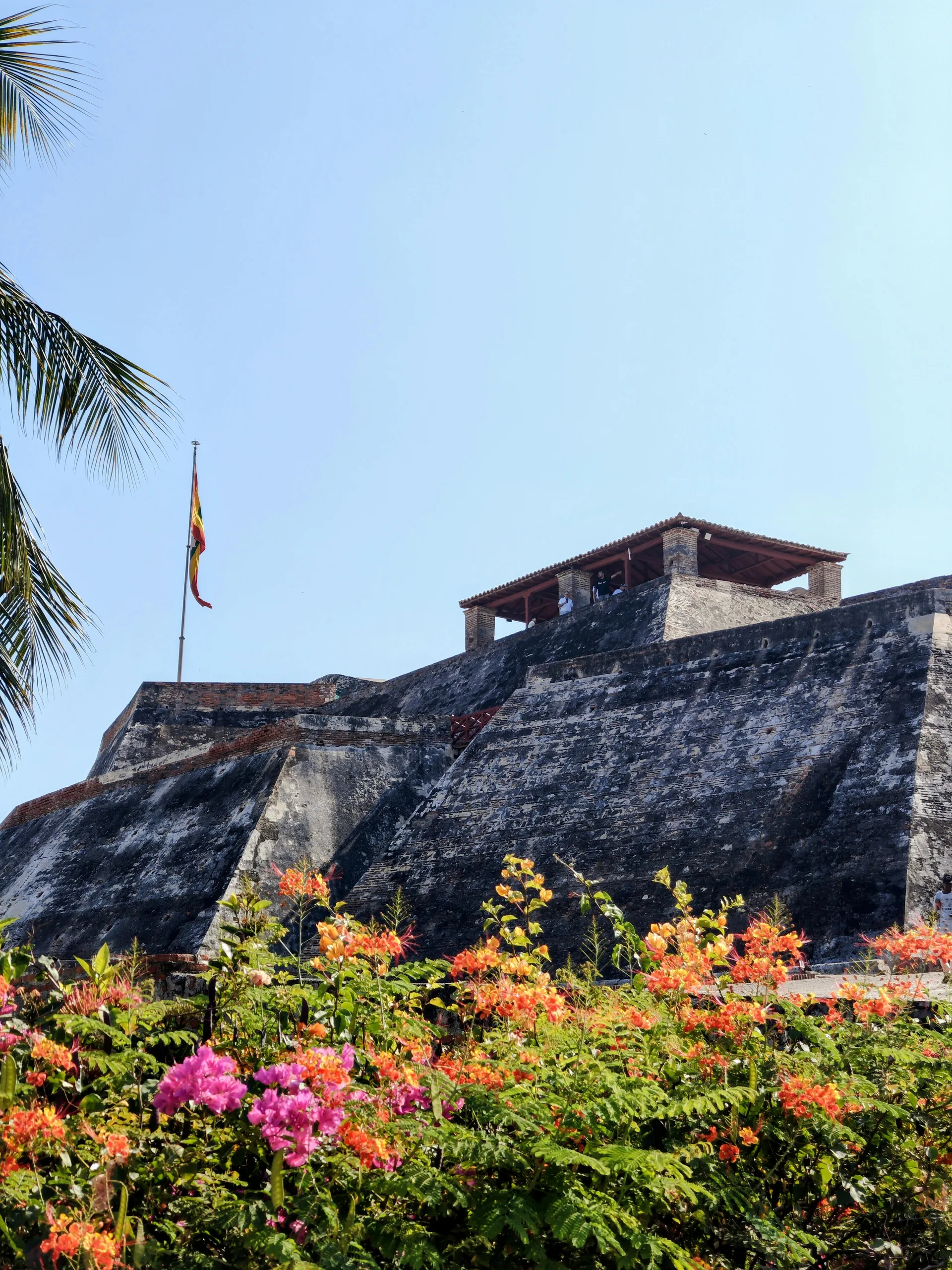
The Castillo rises off Cerro San Lázaro, just outside the walled city, a sloped mountain of stone batteries, ramps, and tunnels. It is the masterpiece of Spanish military engineering in the New World and the most-visited monument in Cartagena. You climb a long ramp system rather than stairs (designed so cannon could be hauled up), and the bastions open onto wide views back over the old town and the bay.
A fortress built to never fall
The first fort on the hill was finished in 1657, a compact triangular hornwork designed by the Dutch engineer Richard Carr, with a cistern, a powder store, and a garrison of barely two dozen men. It was modest, and it was not enough. Cartagena was the gateway through which silver and gold left the continent, which made it one of the most attacked cities in the Americas.
So from 1762 the crown rebuilt it on a different scale, under the engineer Antonio de Arévalo, until the whole hill was wrapped in interlocking batteries. Underneath runs a web of tunnels, narrow and acoustically built so that footsteps carry, letting defenders hear an enemy in the dark and move powder and men unseen. The result was the largest fortress Spain ever raised in the Americas. In 1984 UNESCO inscribed it, with the historic center and the city's walls, as a World Heritage Site.
The 1741 siege and Blas de Lezo
The fort's defining moment came in 1741, when a vast British fleet under Admiral Edward Vernon, one of the largest amphibious forces assembled before the twentieth century, arrived to take Cartagena. The defense was led by the Spanish admiral Blas de Lezo, known as Mediohombre (half a man) for the eye, arm, and leg he had lost in earlier battles. Outnumbered and outgunned, the defenders held. After weeks of assault the British withdrew, beaten by the walls, the fort, disease, and de Lezo's stubbornness. Vernon had been so sure of victory that commemorative medals were struck in advance; they became one of history's great premature celebrations.
That siege is why Cartagena kept its Spanish character and why the fort looms so large in local memory. For the fuller story of the city and the pirates, sieges, and silver that shaped it, see the history of Cartagena.
Visiting the Castillo today
Allow about 60 to 90 minutes. Go right at opening. Walk the ramps to the upper batteries for the views, then explore the tunnels (a phone light helps; some passages are low and dark). Audio guides and human guides are available at the entrance; agree the price first if you take a guide. There is little shade, so the early slot really does matter from May through November when the midday heat index climbs past 38 C (100 F).
If you would rather have the fort folded into a guided half day with a driver and context, the editorial roundup of Cartagena tours worth booking lists the city tours that include San Felipe.
Convento de la Popa: the highest hill
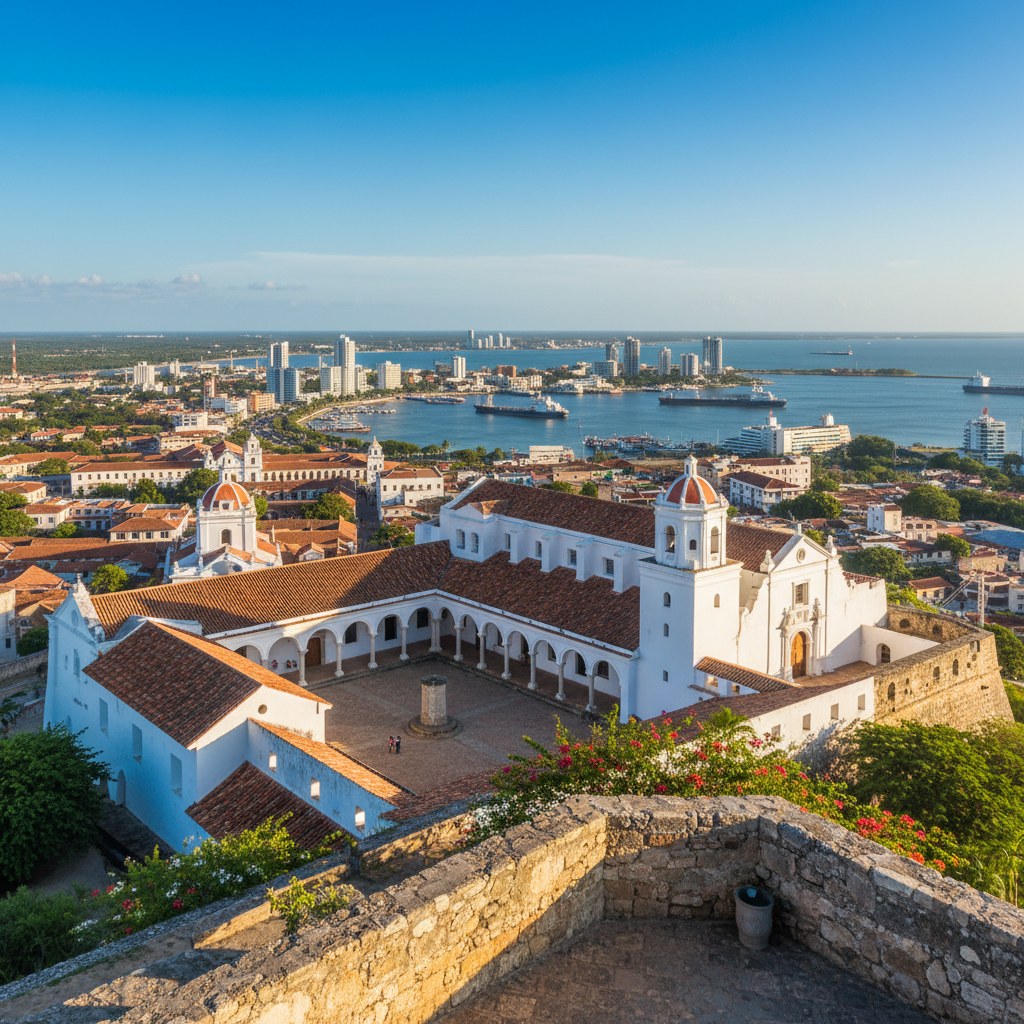
At about 150 meters, the Cerro de la Popa is the highest point in the city, and the convent on top gives you the best panorama in Cartagena: the old town, Bocagrande's towers, the bay, and the Caribbean all in one sweep. The monastery was founded in 1607 by Augustinian friars and originally named the Convento de Santa Cruz. It is dedicated to Nuestra Señora de la Candelaria, the patroness of the city, and every February her feast draws a pilgrimage up the hill.
Local legend says the founding friars cast a goat idol that islanders worshipped off the cliff, a story still told to explain the hill's name and its conversion. After independence the Augustinians were forced out and the building served for a time as a barracks; they returned in 1961, and today you can visit the flower-filled cloister courtyard and a small religious museum. Entry is modest, around COP 15,000. Again: take a taxi up and have it wait, or arrange a round trip.
Doing both in one morning
The efficient play is a single private taxi for roughly COP 80,000 to 100,000 for about three hours: Castillo San Felipe at opening, then up to La Popa for the view, then back to the walled city. Agree the route and price before you set off. Do it in the morning, both for the cooler air and because the light over the bay from La Popa is best earlier in the day.
Related guides on this site
Things to do in Cartagena - the full hub, with both of these in context.
The history of Cartagena - pirates, the 1741 siege, and why the walls exist.
Self-guided walking tour of the Walled City - the natural pairing for an afternoon.
Best Cartagena tours worth booking - guided options that include San Felipe.
All prices in COP with USD conversions at approximately 4,000:1 - confirm the current rate when you travel. Entry fees and hours change, so verify on arrival. Last review: May 2026.