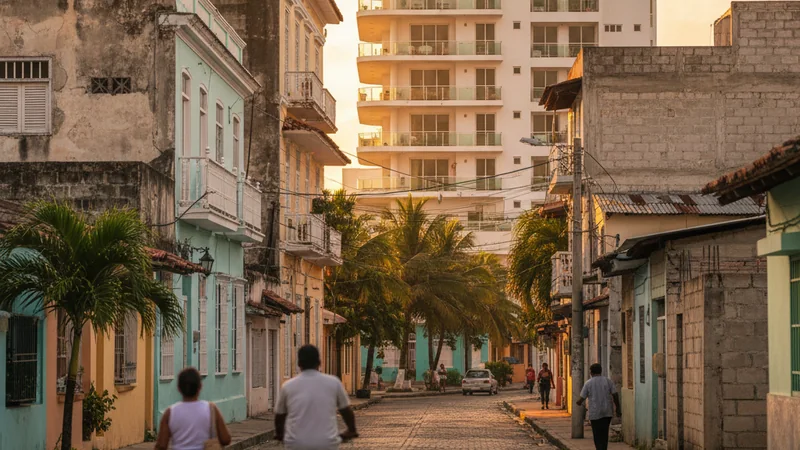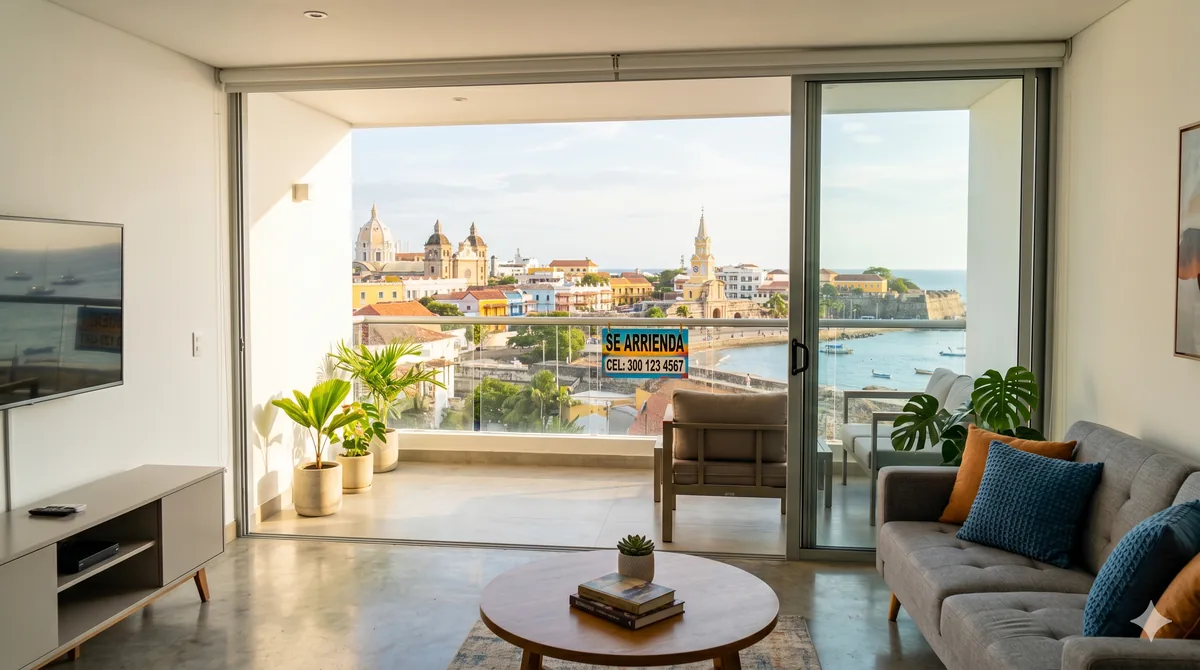

Renting in Cartagena is not like renting in the U.S., Canada, or Europe, and the differences are exactly the ones that catch foreigners out. Colombian residential leases come with structural guarantees (a fiador or an insured alternative), a standard 1-year minimum term, inflation-linked annual increases tied to IPC, an administración fee on top of rent, and a specific legal framework (Ley 820 de 2003) that tilts toward tenant protection. Add Cartagena's own wrinkles: a market split hard between tourist short-term and residential long-term, an A/C electricity bill that dwarfs anything inland, and a few low-lying barrios that flood in heavy rain. This guide covers how the market actually works in 2026, what rent costs by neighborhood, the guarantee options for foreigners without a Colombian guarantor, the clauses to check before signing, and what to inspect before you hand over a peso. Figures use a reference rate of COP 4,000 per USD 1.
The short-stay vs long-stay split
Cartagena has two rental markets that barely overlap, and the split is sharper here than in most Colombian cities because tourism dominates the center.
Short-stay (less than 3 to 6 months): Airbnb, furnished-apartment agencies, aparthotels, and the dense short-term inventory in the Walled City, Getsemaní, and Bocagrande. Usually furnished, all-inclusive bill structure, quoted in peso or USD per night or per month. Flexibility and zero bureaucracy, but 2 to 3 times the per-month cost of a long-term lease for the same unit quality, and prices spike hard in December and during high season.
Long-stay (contrato de arrendamiento, 1 year minimum): A formal lease under Ley 820. Usually unfurnished, longer commitment, much lower monthly cost. This is what we cover in this guide.
The short-term furnished market is the right answer for your first 1 to 3 months. It gives you time to learn neighborhoods, feel the heat in each one, confirm your stay, and find a good unfurnished unit. Commit to a 1-year lease only after you have been in Cartagena long enough to know where you want to be. A unit that looks perfect in a January listing photo can be unbearable in the September humidity, or dead quiet in low season and a nonstop party street in December.
What rent actually costs in 2026
Cartagena rent bands (unfurnished, not including admin or utilities) for a typical 2-bedroom apartment in 2026. Cartagena runs pricier than most Caribbean-coast cities because tourism props up the desirable zones:
- Bocagrande: COP 3,200,000 to 6,000,000 (USD 800 to 1,500). High-rise, A/C standard, central, tourist-heavy and noisy on the avenues. The classic expat corridor, and you pay for it.
- Castillogrande: COP 3,800,000 to 7,500,000 (USD 950 to 1,875). The quieter, more residential waterfront peninsula. Estrato 6, larger units, premium prices.
- El Laguito: COP 3,000,000 to 6,500,000 (USD 750 to 1,625). Tip of the Bocagrande peninsula, high-rise residential mixed with hotels.
- Manga: COP 2,200,000 to 4,200,000 (USD 550 to 1,050). Historic residential island, central, large old homes and newer mid-rise. The best value-to-location ratio in the city for many foreigners.
- Crespo: COP 2,000,000 to 3,800,000 (USD 500 to 950). Quiet strip near the airport and the sea, residential, gaining favor with expats who want calm over flash.
- Getsemaní and the Walled City (Centro): COP 3,500,000 to 8,000,000+ (USD 875 to 2,000+) for the limited long-term residential stock. Charming and central, but expensive, noisy, and mostly geared to short-term tourist rental.
- Marbella, El Cabrero, Pie de la Popa: COP 1,800,000 to 3,200,000 (USD 450 to 800). Mid-rise residential closer to estrato 3 to 4, cheaper, more local.
- Further out (Ternera, Zaragocilla, the inland barrios): COP 1,200,000 to 2,400,000 (USD 300 to 600). Cheapest, most local, longer commutes and farther from the sea breeze.
For furnished long-term leases, expect a 25 to 50% premium over unfurnished rates, higher in the tourist zones where owners can fall back on Airbnb. Studios and 1-bedrooms run about 60 to 70% of a 2-bedroom at the same quality level. 3-bedroom waterfront units in Castillogrande or El Laguito at the top end can comfortably exceed COP 9,000,000 (USD 2,250).
Neighborhoods cross-reference: see the neighborhoods guide and the estrato guide for which area fits what you are looking for, and what the utility tier costs in each.
"¿La administración está incluida en el canon o se paga aparte? ¿Qué estrato es el apartamento? ¿Piden codeudor o póliza de arrendamiento? ¿Cuánto fue el último recibo de luz?"
"Is the administración included in the rent or paid separately? What estrato is the apartment? Do you require a co-signer or a rental insurance policy? What was the last electricity bill?"
What's included and what isn't
- Canon de arrendamiento (rent): The base monthly rent.
- Administración (building fee): Separate from rent, paid monthly to the building for common-area maintenance, doorman/portero, elevator, pool, gym, and security. In Cartagena's amenity-heavy towers (pools and 24-hour security are common in Bocagrande and Castillogrande) this runs higher than inland: typically COP 350,000 to 1,200,000 depending on amenities and tower size. Not optional, not negotiable. Always ask the exact figure before signing.
- Public utilities: Water (Acuacar), gas (Surtigas), electricity (Afinia), internet, TV, all separate and paid by the tenant. The electricity bill is the one to watch. Cartagena heat means near-constant A/C, and combined utilities for a 2-bedroom occupied by two people run roughly COP 500,000 to 1,000,000+ per month depending on how hard you run the air conditioning.
- Predial (property tax): Owner's obligation, not the tenant's.
- Parking: Most towers include one parking spot; additional spots may be extra or unavailable. In the Walled City and Getsemaní, parking is scarce and often not included at all.
Total monthly housing cost is rent + administración + utilities. A quoted rent of COP 3,000,000 in Bocagrande usually lands around COP 4,000,000 to 4,800,000 all-in once admin and a heavy A/C bill are added.
The guarantee problem, and how foreigners solve it
Under Colombian law, landlords can require a guarantee on the lease. The traditional form is a fiador (sometimes called codeudor): a Colombian citizen with a steady income, often someone who owns property free of mortgage (fiador con finca raíz) or has stable formal employment (fiador asalariado). The fiador co-signs and is on the hook if you default. If you have a long-time friend or Colombian family member willing to serve, this is the cheapest path. This is the single biggest hurdle for foreigners renting long-term in Cartagena.
Most foreigners do not have a fiador. The alternatives:
Seguro de arrendamiento (rental insurance / póliza)
An insurance or surety company (Seguros Bolívar, Sura, Mapfre, Mundial, and others) issues a póliza covering the landlord if you default. The tenant pays the premium, usually 4 to 7% of the annual rent, paid upfront or bundled into the first months. The company underwrites you: it will want income proof, bank statements, references, and usually a copy of your visa. This is the most common solution for foreigners with visa status and verifiable income, and in Cartagena it is what most inmobiliarias will steer you toward.
"Como extranjero no tengo codeudor colombiano. ¿Aceptan póliza de arrendamiento en vez de fiador? ¿Con qué aseguradora trabajan?"
"As a foreigner I don't have a Colombian co-signer. Do you accept a rental insurance policy instead of a fiador? Which insurance company do you work with?"
Inmobiliaria-managed lease with underwriting
Many mid-tier rentals are managed through inmobiliarias (local rental agencies). They underwrite the tenant themselves (income verification, sometimes a deposit in lieu of a póliza). Estudio de crédito fees of COP 80,000 to 200,000 are typical. Stick to established agencies with a physical office and verifiable reviews; the tourist-heavy market here attracts more informal middlemen than inland cities do.
Cash deposit (depósito)
This is where Cartagena foreigners get the most confused. Under Ley 820, a landlord cannot legally demand a cash deposit on a residential lease, the law restricts deposits precisely to stop owners holding tenants' cash. In practice, most owners use a póliza instead. Some owners of higher-end or direct-with-owner units will still informally ask a foreigner for 1 to 3 months upfront in lieu of a fiador or póliza. For high-trust situations (direct owner, good references) this can work, but understand it is not what the law contemplates, and getting cash back at move-out depends entirely on the owner's goodwill. For most market units, expect the póliza route.
Expat-focused and bilingual agents
A handful of agents specialize in foreigner rentals and can walk you through the póliza process; they typically charge a fee (often the landlord's, sometimes a split). Worth using for your first lease if your Spanish is shaky, since the Cartagena market has a lot of short-term operators and the long-term residential inventory takes digging to surface.
The 1-year term and the IPC increase
Standard residential leases run for a minimum of 12 months and auto-renew for successive 12-month periods unless either party gives notice (usually 3 months before renewal). Rent can be adjusted once per year at renewal; the legal cap on residential-lease increases is the annual IPC (inflation index, published by DANE) for the prior year. Recent IPC figures: 9.28% (2023), 5.20% (2024), and 5.10% for 2025, confirmed by DANE in January 2026. For 2026 renewals, expect rent increases in the 4 to 6% range.
Landlords cannot raise rent mid-term. They cannot raise above IPC. Contracts that specify a fixed higher increase are unenforceable for the portion above IPC. In a tourist market, some owners try to tie residential rent to seasonal demand; that is not legal for a contrato de arrendamiento.
Breaking the lease early
The tenant can break a lease early without cause by giving 3 months' written notice and paying a penalty equal to 3 months' rent (the indemnización). After the first year, you can terminate with 3 months' notice without the indemnización.
The landlord can only terminate for specific just causes (non-payment, property damage, unauthorized subletting, use outside the agreed purpose) or by giving notice in line with the law and a documented just cause (owner needs the property for personal or family use, demolition, significant renovation). Arbitrary eviction is not legal, no matter how much more an owner could make putting the unit on Airbnb.
Inspection before signing
Request a full walkthrough before signing. Cartagena's heat and humidity make the inspection more important here than in cooler cities. Check and document:
- Air conditioners power on and actually cool, in every room. Test each one and let it run. In Cartagena a dead or undersized A/C is a deal-breaker, not a minor fix.
- All appliances run (stove burners, oven, fridge, washer, often not included in unfurnished units)
- Water pressure in every shower and sink; many buildings rely on rooftop tanks and pumps
- No mold or musty smell, especially in bathrooms, closets, and around A/C units. Humidity-driven mold is the most common hidden problem here.
- No water staining on ceilings or walls (a red flag for leaks or, in lower areas, past flooding)
- All lights work; outlets carry power (test with a phone charger)
- Windows and doors seal properly, locks work, all keys present. Sea-air corrosion is hard on hardware near the water.
- Internet/cable wiring present; ask which providers service the building
- Parking spot number and storage locker (cuarto útil) if included
- Any furniture included is listed in an inventory (for furnished rentals)
Take dated photos and video of every room before moving in. Attach them to the lease as an anexo. This is your protection against damage claims at move-out.
"¿Puedo encender todos los aires acondicionados para verificar que enfríen bien? ¿Hay algún problema de humedad o de goteras que deba saber? ¿Cuándo fue el último mantenimiento del aire?"
"Can I turn on all the A/C units to check they cool properly? Is there any humidity or leak issue I should know about? When was the last A/C maintenance done?"
The contract, clauses to check
- Parties: Confirm the landlord (arrendador) on the contract matches the owner on the certificate of tradition and liberty (certificado de tradición y libertad) from the Oficina de Instrumentos Públicos. If a third party signs as administrator, verify power of attorney. Cartagena has many absentee owners who rent through intermediaries, so verify ownership carefully.
- Term: Start and end dates, renewal mechanism.
- Canon and admin: Confirm both in writing. Never pay admin in cash without a recibo.
- Adjustment clause: Should reference IPC. Any clause specifying a higher fixed increase, or one tied to season or USD, is unenforceable above IPC.
- Included utilities: Rare in long-term leases; if any are included, get them specified and capped. Be especially wary of vague A/C-electricity arrangements.
- Garantía: Specifies the guarantee (fiador, póliza, deposit). Make sure it matches what you actually provided, and that any cash you handed over is documented.
- Maintenance obligations: Tenant is responsible for normal wear; landlord for structural and major-systems repairs. Pin down who maintains and repairs the A/C units specifically, this is the most common dispute in Cartagena leases.
- Pets: If you have one, get it in writing. Many buildings have pet restrictions in their reglamento interno; confirm with the administración before signing.
- Subletting: Usually prohibited without written consent. Short-term sublet (Airbnb-style) is almost always prohibited in traditional residential leases and is grounds for termination, and many Cartagena buildings now ban it outright in the reglamento.
- Notification address: An address where the landlord can serve legal notices. Foreigners should provide a secondary email.
Signed leases should be on paper with both parties' signatures. The lease can be registered with the inmobiliaria or notarized for added enforceability. Not all leases are notarized, most are not, but unnotarized leases are still enforceable under Ley 820.
Cédula vs passport for the lease
You can technically sign a lease on a passport number if the landlord accepts it, and many direct-with-owner short leases do. But almost every inmobiliaria and every póliza provider will want a Cédula de Extranjería (CE), the foreigner ID card you get once you hold a visa. Without a CE, your realistic options are short-term furnished, direct-with-owner arrangements, or an owner willing to take a larger upfront payment. Once you have a CE and a verifiable income, the long-term market opens up and the póliza underwriting gets dramatically easier. If you are still on a tourist stamp, plan to rent short-term until your visa and CE are sorted. See the Cartagena visas guide for the sequence.
Where to find listings
- Fincaraíz.com.co, the biggest national listings site, broad inventory in Cartagena
- Metrocuadrado, major alternative, often higher-end and waterfront stock
- Ciencuadras, Bancolombia-backed, good filtering
- Local inmobiliarias with a real Cartagena office and verifiable reviews, the residential long-term inventory is often held by agencies rather than posted publicly
- Facebook groups: "Arriendos Cartagena", "Expats in Cartagena", "Cartagena Apartamentos". Useful for direct-with-owner units, but verify everything.
- Word of mouth, which works better here than online for the best long-term units, ask your building portero, your Spanish teacher, anyone settled in the city
- Marketplace classifieds appear too; verify listings and ownership before sending any money
Red flags and scams
The tourist market makes Cartagena a magnet for rental scams, so the bar for caution is higher here.
- Listings significantly below market rate for the building and area, usually bait
- Owner "abroad" asking for a wire to secure the unit before viewing, always a scam, and especially common in the Walled City and Bocagrande
- Refusal to show the certificado de tradición y libertad proving ownership, walk away
- Pressure to sign same-day, skip the inventory, or pay months in advance
- A "long-term" price that quietly converts to nightly tourist pricing, or rent quoted in USD that shifts with the season
- Verbal promises not reflected in the written contract (pet allowance, included appliances, working A/C). If it is not in the contract, it does not exist.
- "Key fee" or "handover fee" not listed as administración or póliza, likely informal, possibly fraudulent
- Unwillingness to allow an independent inspection of the unit before signing
- Building admin fee not in writing, a common source of post-move-in surprise in amenity-heavy towers
Flooding, heat, and the local realities
Three Cartagena-specific facts to weigh before you sign anywhere:
- Heat and the electricity bill. Cartagena is hot and humid year-round. A/C is not a luxury here, and Afinia electricity is among the priciest practical line items in your budget. A higher-floor unit with cross-breeze and good insulation costs less to keep cool than a sun-baked low floor. Factor the bill, not just the rent.
- Flooding in heavy rain. Some low-lying barrios and a few streets near the water flood during the rainy-season downpours (roughly May, and again September through November). Ask locals and the portero whether the street and the ground floor flood. Ground-floor units in low areas carry real risk.
- Tourist saturation and noise. The Walled City and Getsemaní are charming and central but loud, especially on weekends and through December. If you want quiet, Castillogrande, Crespo, and the residential side of Manga are calmer than Bocagrande's avenues or the Centro.
Moving in and moving out
At move-in, request the acta de entrega, a handover document listing the condition of every room, appliance, key count, A/C unit status, and utility meter readings. This is your move-out baseline. Take your own dated photos and video the same day.
When you move out, you will do a reverse walkthrough and sign an acta de restitución. Normal wear and tear is not a deduction; specific damage, unapproved alterations, and outstanding bills are. Settle all utilities before handing over keys (paz y salvo) and request a written acknowledgment that nothing is owed. Where a cash deposit exists, push to have its return window written into the contract, and document everything, because cash deposits are the weakest link for foreigners here.
FAQ
Can I rent as a tourist without a visa?
Short-term furnished (Airbnb, aparthotel, furnished-apartment agencies), yes, any passport works. Long-term lease, most póliza providers require a visa (V, M, or R) to underwrite you. Without a visa you will usually be limited to short-term or direct-with-owner arrangements, or landlords willing to accept a larger upfront payment.
Do I need a cédula de extranjería to sign a lease?
Not strictly required if the landlord accepts a passport number, but most inmobiliarias and all póliza providers will require a Cédula de Extranjería. Once you have a CE, the process gets dramatically easier.
Furnished or unfurnished?
If you are staying under 6 months, furnished short-term. For a 1-year lease, unfurnished is usually much better value. Colombian-style apartments come nearly empty (often no fridge, sometimes no stove, sometimes no light fixtures), so buying basics locally costs a fraction of the furnished premium. Budget COP 8,000,000 to 18,000,000 (USD 2,000 to 4,500) for furniture, appliances, and a couple of good A/C units if you are starting from zero, the air conditioning is the line item that matters most in this climate.
Is rent negotiable?
Rent itself is moderately negotiable in low season and on long-listed units, 5 to 10% is reasonable. Owners are stiffer in the tourist zones because they can fall back on short-term rates. Admin fee is not negotiable, it is set by the building's junta. More flexible: included appliances, a month of free rent for a longer term, split upfront payments.
What happens if I need to leave early?
Before 12 months: 3 months' written notice and a 3 months' rent penalty. After 12 months: 3 months' notice with no penalty. If your visa situation changes (denial, revocation), some leases have a foreign-resident exit clause; negotiate this into the contract upfront if you can.
How bad is the electricity bill, really?
It is the biggest surprise for most newcomers. Running A/C across a 2-bedroom in Cartagena heat can put the Afinia bill alone into the hundreds of thousands of pesos per month, more than the rest of your utilities combined. A higher estrato adds a surcharge on top. Choose a unit that holds cool, and budget honestly.
Should I use an agent?
More useful in Cartagena than in many cities, because the best long-term residential units are held by agencies and word of mouth rather than posted publicly, and the póliza paperwork is fiddly. An agent is worth it if (a) your Spanish is shaky, (b) you need help with póliza paperwork, or (c) you want pre-filtered options away from the scam-prone tourist listings. Most tenant-side help is paid by the landlord; any agent charging you an upfront fee before showing a unit is not standard.
Further reading
- Cartagena neighborhoods, where to live
- Understanding the estrato system
- Visas for Colombia from Cartagena
- Banking and money in Cartagena
- Travel insurance for Cartagena
This guide is informational and reflects 2026 market conditions and current Colombian rental law (Ley 820 de 2003 and related regulations). Rents and admin fees are market-dependent and change; the USD figures use a reference rate of COP 4,000 per USD 1. Consult a Colombian attorney before signing any lease with unusual terms, especially for leases exceeding 1 year or with purchase options.
Still have questions?¿Todavía tienes preguntas?
Catalina is our concierge. Ask her about visas, neighborhoods, healthcare, prices, anything Cartagena. She answers in chat or WhatsApp, English or Spanish, free.Catalina es nuestra concierge. Pregúntale sobre visas, barrios, salud, precios, cualquier cosa de Cartagena. Responde por chat o WhatsApp, en inglés o español, gratis.
Chat with Catalina ›Habla con Catalina ›