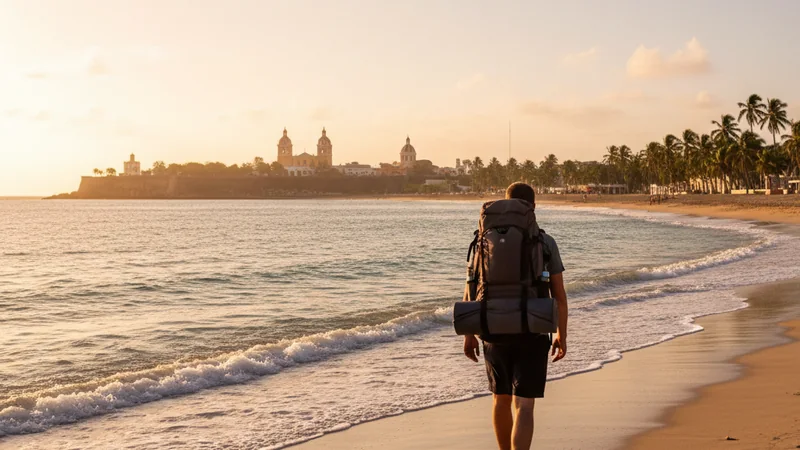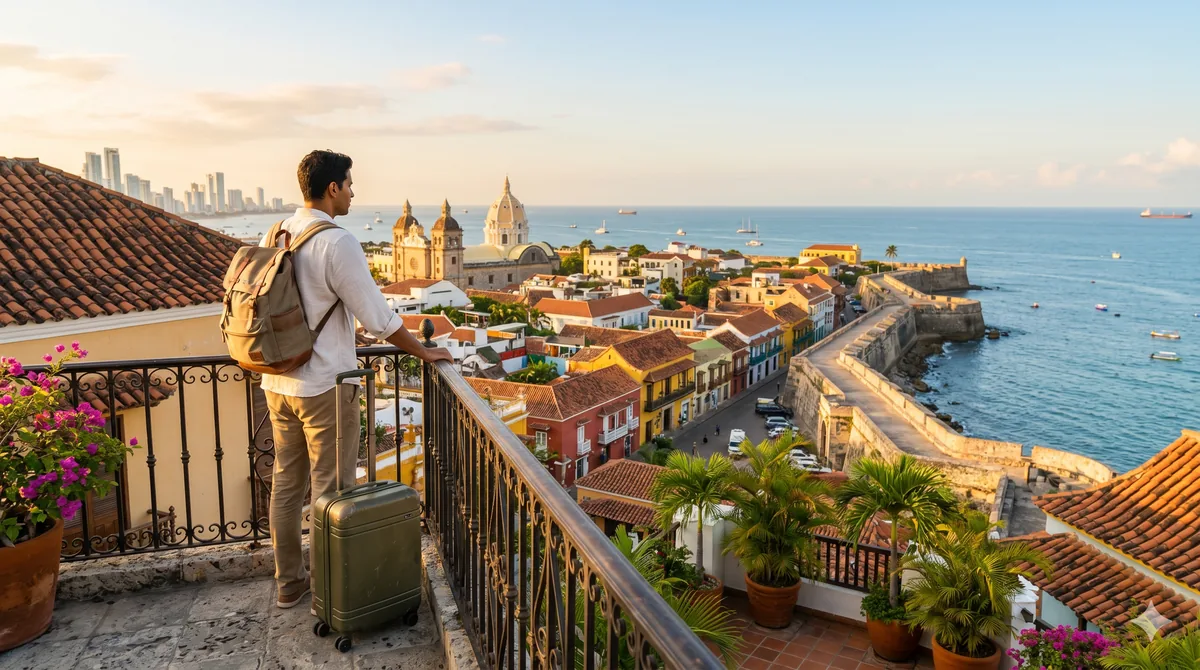
Last updated: May 2026. The first week sets the tone for the rest of your stay. Do the right handful of things in the right order and the next three months are easy. Get them wrong and you will be fighting the heat, the cash machines, and the taxi fares before you have had a single cold lemonade in the shade of the wall. This is a practical, priority-ordered arrival checklist for Cartagena, whether you are here for a week, a month, or to stay. Cartagena rewards arriving slow.
Arriving at Rafael Nuñez airport (CTG) and getting to your neighborhood
Cartagena's Rafael Nuñez International Airport (CTG) sits in the Crespo neighborhood, unusually close to the city, only about 10 to 15 minutes from the Walled City when traffic is light. That short distance is exactly why the airport taxi situation traps people: a 12-minute ride should not cost what some drivers will quote a fresh arrival hauling luggage.
- Use the official taxi stand, and agree the fare before the car moves. Cartagena taxis do not run meters, so the price is whatever you settle on. There is an authorized airport-taxi desk in the arrivals hall that hands you a fare slip with a fixed rate by zone. Take the slip. A ride to Bocagrande, Centro, or Getsemaní typically runs around COP 18,000 to 30,000 (about USD 5 to 8 at 4,000 COP to the dollar). To Manga, similar. Confirm the number out loud before you load the trunk.
"¿Cuánto me cobra hasta [barrio / dirección]? Necesito el precio antes de subir, por favor."
How much do you charge to [neighborhood / address]? I need the price before I get in, please.
- Rideshare apps are the cleaner option. Uber, DiDi, and inDrive all operate in Cartagena and show you the price up front, no negotiating. The catch is that pickup at the airport can be slightly awkward (drivers sometimes ask you to walk out past the official rank), but the transparent fare is worth it. Have the app installed and your destination pinned before you land.
- Do not change money at the airport counter. The rate is poor. Withdraw pesos from an ATM instead (more on that below), or use the small amount of cash you arrived with for the taxi and sort the rest in town.
- Have your exact address written down. Tell the driver the neighborhood first (Bocagrande, Getsemaní, Centro, Manga), then the street. Drivers orient by barrio before street number.
If you land late
CTG handles plenty of evening arrivals and the airport-taxi desk runs late, so a night landing is not a problem. Still, a rideshare with a tracked route and a known price beats flagging an unfamiliar car after dark. Arrive, breathe, get a cold water, then sort transport calmly.
Get a SIM card and mobile data
Being reachable and online is the single most useful thing you can fix on day one. Without data you cannot call a rideshare, message a host, or pull up a map, and Cartagena's heat makes standing on a corner hunting for Wi-Fi genuinely unpleasant.
- Carrier kiosks are right past baggage claim. Claro, Tigo, and Movistar all sell prepaid SIMs at the airport. Claro generally has the strongest coverage on the Coast. A prepaid plan with 15 to 25 GB of data runs roughly COP 25,000 to 45,000 (about USD 6 to 11). Bring your passport, activation takes 10 to 15 minutes.
"Quiero una SIM prepago con datos. Tengo pasaporte. ¿Cuál plan tiene más datos y buena señal aquí en Cartagena?"
I want a prepaid SIM with data. I have my passport. Which plan has the most data and good signal here in Cartagena?
- An eSIM is the plug-and-play alternative. Set one up before you fly (Airalo, Holafly, Nomad) and you walk out connected. It costs more than a local prepaid SIM but skips the kiosk entirely. Many travelers run an eSIM for the first day or two, then switch to a cheaper local Claro SIM once settled.
- Top-ups are everywhere. Once you have a local number, you recharge (a recarga) at any corner shop, drugstore, or via the carrier app. You do not need to return to a store.
For carrier comparison, current data-pack prices, and exactly how activation works, see our SIM cards and mobile data guide.
Cash, cards, ATMs, and setting up Nequi
Cartagena runs on a mix of cash and cards, and the tourist core takes cards more readily than most Colombian cities. Still, you want pesos in your pocket from day one: taxis, corner shops, beach vendors, and small tiendas are cash-first.
- Withdraw from ATMs inside malls or bank branches, not freestanding street machines. Stick to ATMs in places like a shopping center, a supermarket, or inside a bank during business hours. They are safer, less likely to be tampered with, and you are not counting cash on an open sidewalk. Good first withdrawal: COP 400,000 to 800,000 (about USD 100 to 200).
- Always choose "pesos," never the home-currency conversion. When the ATM offers to charge you in your own currency (dynamic currency conversion), decline it and pick COP. The home-currency option bakes in a bad exchange rate.
- Tell your home bank you are traveling. Many North American and European banks still flag Colombian transactions and freeze cards on the first withdrawal. A two-minute call before you fly prevents a day-one headache.
- Set up Nequi. Nequi is Colombia's dominant phone-to-phone payment app, and you will be asked for it constantly, splitting a bill, paying a small vendor, settling up with someone you just met. Download Nequi, register with your local cell number plus your passport or cédula de extranjería, and you are running in about 10 minutes. It is free.
"Sí, tengo Nequi. Mi número es [número]. ¿Me puede confirmar a nombre de quién está registrado el suyo antes de transferir?"
Yes, I have Nequi. My number is [number]. Can you confirm the name the account is registered under before I transfer?
- Keep small bills. Vendors and taxis rarely have change for a 50,000 note. Break large bills at supermarkets and hang on to 10,000 and 20,000 notes.
For how to open a real Colombian account, card-vs-cash details, and ATM fee specifics, see our banking and money guide.
Transport orientation: getting around in week one
Cartagena is more walkable than most Colombian cities in its tourist core, but the heat changes the math. Here is how to move:
- Walk the Walled City and Getsemaní. The Centro Histórico and neighboring Getsemaní are compact, flat, and best on foot. This is the part of Cartagena you came for. Walk early morning or after about 4 pm to dodge the worst sun. Midday, stay in the shade or indoors.
- Taxis have no meters, so agree the fare first. Every single time, before you get in. Within the city, most short rides are COP 10,000 to 25,000 (about USD 2.50 to 6). If a quote feels high, it probably is. Knowing the rough rate to your neighborhood (ask your host or your portero) keeps you from overpaying. If the driver hesitates or tries to get you in the car first, step back and try the next taxi or open a rideshare app.
"¿Cuánto me cobra hasta [barrio]? Si es [monto], listo. Si no, gracias."
How much to [neighborhood]? If it is [amount], let's go. If not, thank you.
- Rideshare apps fix the fare problem. Uber, DiDi, and inDrive show the price before you book, no haggling, with a tracked route. For longer hops (Bocagrande to Manga, Centro to the airport) they are usually the easiest and most transparent choice.
- Transcaribe is the mass-transit backbone. Cartagena's articulated-bus rapid-transit system runs along the main corridors and is cheap (a single fare is a few thousand pesos, paid with a rechargeable card). It is useful for longer north-south trips once you know the routes, less so for the tourist core, which you will mostly walk.
- Confirm the car before you climb in. Whether taxi or rideshare, glance at the plate and the driver against the app. Basic habit, takes two seconds.
Groceries, pharmacy, and water
Settle the basics around your block in the first couple of days and the rest of the week gets easy.
- Do not drink the tap water in week one. Cartagena tap water is treated, and many long-term residents drink it, but as a new arrival your stomach has not adjusted. Play it safe: buy bottled, or use a filter. A large jug (a botellón or 6-liter) from the corner shop is only a few thousand pesos. If you are staying a while, ask your building whether it has filtered water (agua pura), many do.
- Supermarkets cover everything. The main chains stock groceries, toiletries, and household basics. Budget roughly COP 150,000 to 250,000 (about USD 38 to 63) for a first week of staples. Corner tiendas handle the in-between top-ups: water, snacks, a cold drink.
- Pharmacies (droguerías) are plentiful and helpful. They sell sunscreen, electrolyte sachets (suero oral), basic medicines, and many over-the-counter items that need a prescription back home. Pharmacists give practical advice for minor issues. Pick up SPF 50 and rehydration salts on your first visit, you will use both.
Beating the heat in week one
This is the thing first-time visitors most underestimate. Cartagena is hot and humid year-round, sitting just 10 degrees north of the equator at sea level. The heat is not a backdrop, it sets the daily schedule.
- Schedule errands for morning and evening. Locals run around in the cooler hours: out early (roughly 7 to 10 am), indoors or slow through the worst midday heat, out again from late afternoon. Fight this rhythm in week one and you will burn out by Wednesday.
- Hydrate constantly. Carry water everywhere and drink more than you think you need. Add an electrolyte sachet on heavy days. The humidity means you sweat without noticing.
- Sun protection is non-negotiable. SPF 50, a hat, and sunglasses. The midday sun is genuinely strong, even on overcast days.
- Confirm A/C before you book or settle in. If you are choosing accommodation, air conditioning (aire acondicionado) in the bedroom is the difference between sleeping and not. Many older or budget places have only fans. Check before you commit.
- Dress for it. Light, breathable, loose. Linen and cotton. You will change clothes more often than you expect, plan laundry accordingly.
Orienting to your neighborhood
Cartagena's character changes sharply from one barrio to the next. Knowing where you are anchors everything else. The expat-relevant areas in brief:
- Centro (Ciudad Amurallada): the Walled City itself. Postcard colonial Cartagena, balconies and bougainvillea, restaurants, boutiques. Mostly short-term rentals and tourism. Beautiful to stay in, lively, and pricier.
- Getsemaní: just outside the walls, the old working-class quarter turned creative and nightlife hub. Street art, plazas that fill in the evening, hostels and small hotels. Walkable, social, energetic.
- Bocagrande: the high-rise beach peninsula. Towers, condos, beachfront, supermarkets, a more modern-city feel. Convenient and full of services, less historic charm.
- Manga: a quieter residential island just south of Centro, with large old homes and newer mid-rises. More local, calmer, popular with people staying longer.
On day one or two, walk your immediate block and locate the nearest corner shop (tienda), bakery (panadería), fruit seller, and pharmacy. If your building has a doorman (portero), introduce yourself, they are the single most useful person on any block. For a fuller read on who lives where and how each area feels, see our neighborhoods guide, and if you are renting, our housing and renting guide.
Safety habits for your first week
Cartagena's tourist core is well-policed and walkable, and most visits are completely uneventful. The smart move is to build a few habits early so you are not learning them the hard way.
- "No dar papaya." This Colombian phrase translates loosely as "do not give an opportunity." Do not flash an expensive phone or wad of cash, do not leave a bag unattended on the beach, do not wander unfamiliar areas alone late at night. Remove the temptation and most problems never start.
- Know the common scams. Two stand out for arrivals. Beach vendors in tourist zones can be persistent, the massage, bracelet, or fruit offered "as a gift" that turns into a demand for payment, agree a price and confirm it is the total before accepting anything, or simply say "no, gracias" firmly and keep walking. Taxi overcharging, covered above, agree the fare first, or use a rideshare app.
- Keep your phone out of sight on the street, especially at night and in unfamiliar areas. If you need to navigate, step into a shop or restaurant to check the map.
- The emergency number is 123. It connects you to police, medical, and fire across Colombia. Save it now. For anything serious, call 123.
- Use rideshare or a known taxi after dark rather than flagging a random car, and share your trip with someone if you are out late.
For neighborhood-by-neighborhood detail and an honest read on which areas to be careful in, see our safety guide.
Starting Spanish
The tourist core of Cartagena has more English than the rest of Colombia, but lean on that and you will stay a tourist. Even a small amount of Spanish changes how the city treats you.
- Twenty minutes a day is the difference between surviving and connecting. Learn greetings, numbers, "how much is it" (cuánto cuesta), and the food words you will use daily. Vendors, drivers, and neighbors warm up fast when you try.
- Download Google Translate with Spanish offline before you land. The camera-translate feature is handy for menus and signs.
- Learn the costeño rhythm. Caribbean-coast Spanish is fast and clips the ends of words. Do not be discouraged if textbook Spanish does not match what you hear, ask people to repeat "más despacio, por favor" and they will slow down.
Healthcare basics
You almost certainly will not need a doctor in your first week, but knowing the lay of the land removes a worry.
- Pharmacies handle the small stuff. For minor ailments, an upset stomach, a sunburn, a cut, the droguería on your block is the first stop and the pharmacist will advise you.
- Carry proof of travel insurance. If you are on a tourist stay, keep your insurance card in your wallet and a screenshot on your phone. Private clinics in Cartagena are good, but you want coverage before you need it.
- For an emergency, call 123. It dispatches medical services along with police and fire.
For how the Colombian system works, EPS enrollment if you are staying long term, and which clinics serve expats, see our healthcare guide.
Meeting people
Week one is the right time to plant a social seed, even if you are exhausted. The people you meet early shape the rest of your stay.
- Show up to one thing. A language exchange, an expat meetup, a dance class, anything with other humans and a repeating time slot. Getsemaní's evening plazas are a low-pressure place to be around people.
- Be a regular somewhere. Pick one café or one corner restaurant and go back. Familiar faces turn into conversations turn into a circle faster than you would think.
- Mix expats and locals. Expat groups help you settle quickly, but the locals are why you came. Both matter.
For where to actually find your people and build a circle, see our networking and social life guide.
Your priority-ordered first-week checklist
If you do nothing else, do these, roughly in this order:
- Get from the airport without overpaying: official taxi stand with a fixed fare slip, or a rideshare app. Agree the price first.
- Get connected: a local SIM (Claro) or an eSIM, so you can call rides, message hosts, and pull up maps.
- Get pesos safely: withdraw from an ATM inside a mall or bank, choose "pesos" not home currency, keep small bills.
- Set up Nequi: 10 minutes, free, and you will be asked for it constantly.
- Buy water, sunscreen, and electrolytes: do not drink tap water in week one, and respect the sun.
- Learn the heat schedule: errands morning and evening, slow through midday, confirm A/C where you sleep.
- Orient to your neighborhood: find the nearest tienda, bakery, fruit seller, and pharmacy, and meet the portero.
- Build safety habits: no dar papaya, agree taxi fares, phone out of sight at night, save 123.
- Start Spanish: 20 minutes a day, offline Translate installed.
- Plant one social seed: show up to one meetup, class, or exchange.
One mindset note
Cartagena is two cities at once: the polished, photogenic Walled City and the hot, loud, real Caribbean port wrapped around it. Both are the point. Your first week will feel like a lot, the heat, the vendors, the fare-haggling, the unfamiliar rhythm. Give it a few days. By the second week you stop fighting the city and start moving with it, slow in the heat, alive in the evening, and far easier than it looked on day one.
Further reading on this site
Cartagena neighborhoods, decide where you want to be
SIM cards and mobile data
Banking and money
Housing and renting
Healthcare basics
Is Cartagena safe
Networking and social life
Practical advice, not official guidance. Prices are indicative and shift; verify current fares and rates locally. For emergencies in Colombia, call 123. Last review: May 2026.
Still have questions?¿Todavía tienes preguntas?
Catalina is our concierge. Ask her about visas, neighborhoods, healthcare, prices, anything Cartagena. She answers in chat or WhatsApp, English or Spanish, free.Catalina es nuestra concierge. Pregúntale sobre visas, barrios, salud, precios, cualquier cosa de Cartagena. Responde por chat o WhatsApp, en inglés o español, gratis.
Chat with Catalina ›Habla con Catalina ›